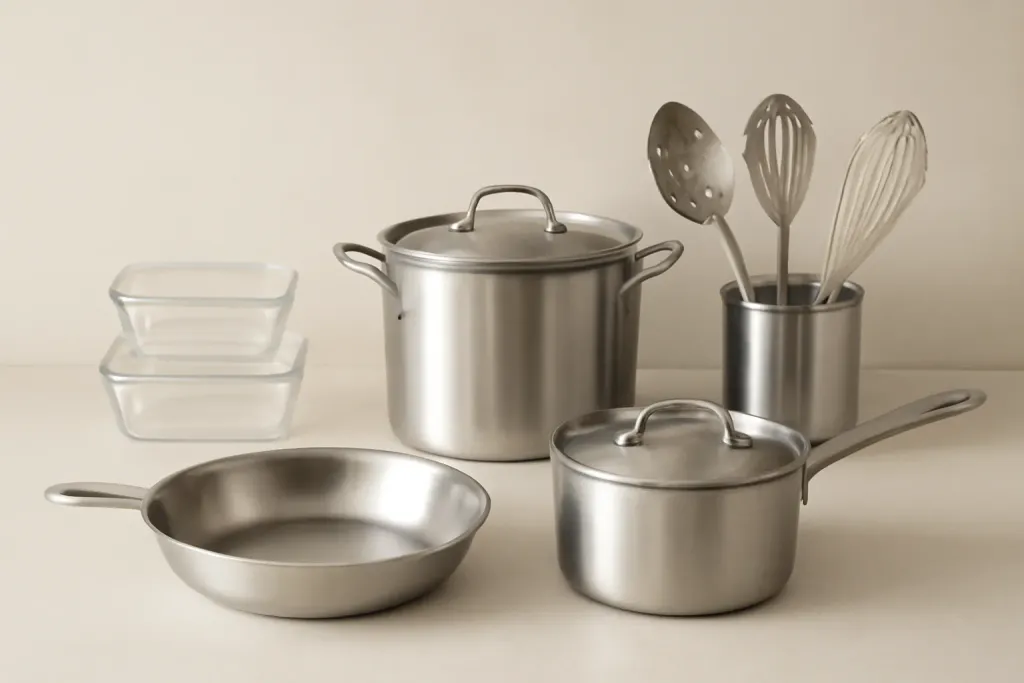
What the Choice Really Means
When shoppers compare cookware set vs individual pots and pans, the decision usually comes down to convenience versus customization. A set bundles several matching pieces together, while individual purchases let you build a collection one item at a time. Both approaches can work well, but they solve different problems.
The best option depends less on brand and more on how you cook. If you are starting from scratch, replacing a worn-out collection, or want an easy way to cover the basics, a set can simplify the process. If you already own some cookware, have limited storage, or know exactly which pieces you use most, buying separately may be the smarter path.
It also helps to remember that more pieces are not automatically better. Some sets include specialty items that sound useful but rarely get used. Individual shopping reduces that risk, though it takes more time and attention to make sure sizes, lids, and handles work together.
Why Cookware Sets Appeal
Cookware sets appeal to many buyers because they create a ready-made foundation. Instead of comparing many separate products, you can choose one package that often includes core essentials such as saucepans, a stockpot, and skillets. That convenience matters most when you want a straightforward first purchase or need to replace several pieces at once.
Sets also offer a simple visual benefit: matching cookware tends to look tidy and organized. Uniform materials can make storage and lid management easier, especially if you prefer a coordinated kitchen. For some households, that sense of order is part of the appeal.
Another reason sets are popular is that they reduce decision fatigue. Shopping piece by piece can take time, especially when you are comparing materials, coatings, handle shapes, and lid styles. A set narrows the choices and can make the first step less overwhelming.
Still, a bundle only helps if the included sizes fit your real habits. A larger piece count does not guarantee better value if several items duplicate one another or stay in the cabinet most of the time.
Why Individual Pots and Pans Work Well
Buying individual pots and pans gives you control over what enters your kitchen. You can choose only the pieces you need, which is useful if you already own part of a collection or cook in a very specific way. Instead of paying for a full bundle, you can focus your budget on the skillet, saucepan, or pot you will use most often.
This approach is especially practical for cooks who know their routines. Someone who sautés often may want a particular skillet size, while another person may care more about a saucepan with a lid that fits well. Separate purchases make that kind of targeted selection easier.
Individual shopping also supports gradual upgrading. If one pan wears out or you realize you need a different size, you can replace just that item rather than repurchasing an entire set. Over time, that can create a more tailored collection with fewer unused extras.
There is a tradeoff, of course. Buying piece by piece usually requires more research, and separate items may not match perfectly in appearance or design. But for many households, the added precision is worth the effort.
How to Evaluate Your Needs Before Buying
The most practical way to choose between a cookware set and individual pieces is to start with your cooking routine. Think about what you actually make in a typical week. Do you prepare one-pan dinners, simmer soups, or cook several dishes at once? The answer points toward the sizes and shapes you are most likely to use.
Storage matters just as much as cooking style. A large set may look attractive online, but it can become frustrating if your cabinets are tight or your drawers are already full. Before buying, consider where each piece will live, how lids will stack, and whether handles fit without crowding other items. In smaller kitchens, simplicity often matters more than quantity.
It is also worth thinking about who will use the cookware. A household with more than one cook may benefit from having overlapping sizes so different pans can be in use at the same time. A single cook with simpler meal patterns may do better with a smaller, more versatile collection.
Another useful question is whether you are building a first setup or filling gaps. A new cook may appreciate the clarity of a set that covers the basics, while someone upgrading a kitchen piece by piece may prefer individual purchases that complement what is already owned.
Browse our recommended products
Our featured picks refresh periodically. While we update them, our editorial guides can help you find the right pick.
See our guidesMaterials, Compatibility, and Everyday Fit
Whether you choose a set or individual cookware, material consistency matters. Different metals and coatings can behave differently on the stove and in the oven, and not every piece in a collection will suit every task. A set built around one material can simplify shopping, while individual pieces give you more freedom but also require more attention to compatibility.
Think about how each item will be used. A skillet for frequent sautéing may need different features than a saucepan used for simmering. Lid fit, handle shape, and overall weight also affect everyday comfort. It is easy to focus on piece count and overlook the details that make cookware pleasant to use.
Compatibility with your cooktop is another practical point. Some cookware works better on certain surfaces than others, so confirm that each item matches your kitchen setup before buying. If you are purchasing a set, review the entire bundle rather than assuming every piece suits your stove. If you are buying separately, keep the same standard in mind for each item so the collection functions well together.
Storage and stacking are worth checking too. Handle styles, lid shapes, and pan sizes can change how easy a collection is to live with. A smaller group that nests and stores well often outperforms a larger but awkward assortment.
Budget and Value Without Guesswork
Value in cookware is not just about the purchase total. It is about whether the pieces you buy are the ones you will actually use. A cookware set can seem economical because it packages multiple items together, but it only delivers real value if the included pans fit your cooking habits. Otherwise, extra pieces may add storage burden without much benefit.
Buying individual pots and pans can spread spending over time, which may help if you are working within a limited budget or upgrading gradually. This approach lets you prioritize the most important items first and add others later as your needs become clearer.
Sets can also make budgeting simpler because the cost is concentrated in one purchase. That may be useful if you want to equip a kitchen quickly and avoid multiple rounds of comparison shopping. The key is to evaluate the bundle by its contents, not by the idea of getting more pieces.
A careful way to judge value is to make a short list of your must-have sizes and compare that list against the set contents. If most of the bundle aligns with your needs, a set may be practical. If not, individual shopping can help you avoid paying for redundant pieces.
Common Mistakes and a Practical Way to Decide
One common mistake is choosing a cookware set simply because it has many pieces. More pieces can mean more flexibility, but they can also mean more storage challenges and more items that never leave the cabinet. Start with actual use cases, not with piece count.
Another mistake is buying individual cookware without checking whether the pieces work together. A collection assembled over time can become inconvenient if lids do not fit well, materials vary too widely, or handle styles feel inconsistent. Custom does not always mean coherent.
Size balance matters too. Some buyers end up with several small pans and no large pot, while others get the opposite problem. Mapping out the sizes you will use most often helps prevent gaps that become frustrating later.
If you want a simple rule of thumb, choose a cookware set when you are starting from zero, want a coordinated baseline, or need several common sizes at once. Choose individual pots and pans when you already own part of a collection, have specific preferences, or want to avoid paying for items you are unlikely to use.
A good middle ground is to begin with the essentials and expand only when your cooking patterns make a missing piece obvious. That approach works whether you start with a set or with separate purchases. The goal is a collection that fits your routine, not one that simply looks complete.
Final Thought
The cookware set vs individual pots and pans decision is really about matching your purchase to how you cook, how much space you have, and how much flexibility you want. Sets offer convenience and a quick start. Individual pieces offer precision and control. Both can be sensible choices when used thoughtfully.
If you want the simplest path, start by identifying the few pieces you use most. That will quickly show whether a set covers your needs or whether separate purchases make more sense. Either way, the right choice is the one that supports everyday cooking without adding unnecessary clutter or guesswork.