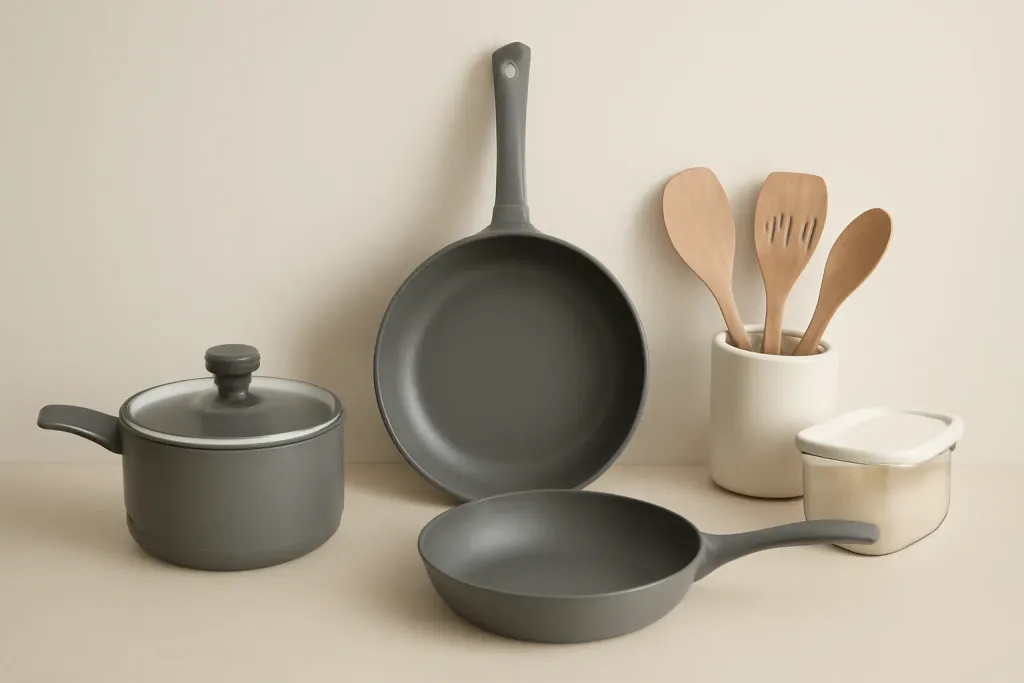
Why small kitchens need a tight pan edit
In a small kitchen, every pan has to earn its place. Counter space is limited, cabinet space is precious, and stacking the wrong mix of cookware can make a compact kitchen feel harder to use than it should. That is why the smartest approach is not to collect a full restaurant-style set, but to focus on the
essential pans for a small kitchen
that can cover most everyday cooking with as few duplicates as possible.The best pan lineup for a small space is usually built around versatility rather than volume. A few well-chosen pieces can handle eggs, sautéed vegetables, pan sauces, seared proteins, one-pan dinners, and stovetop-to-oven meals. Instead of buying specialty pans for every task, look for shapes and materials that overlap. A skillet that can sauté, fry, and finish in the oven is often more useful than several single-purpose pans.
Space constraints also make storage part of the buying decision. Wide handles, odd lid shapes, and deeply curved rims can make pans awkward to nest. Before adding a new piece, think about where it will live, how it stacks, and whether it will fit your burner sizes and oven if you plan to use it there. In a small kitchen, convenience is not a bonus; it is the whole point.
The core pan every small kitchen should have
If you only buy one pan first, make it a medium skillet, usually in the 10- to 12-inch range. This is the workhorse of a small kitchen because it can do so many things at once. It is large enough for family-style meals or batch cooking, but not so large that it becomes cumbersome in a compact layout. For most home cooks, this is the anchor of the essential pans for a small kitchen.
Look for a skillet with a relatively flat cooking surface, a sturdy handle, and sides that are high enough to contain food but not so tall that turning ingredients becomes awkward. A skillet in this category can handle scrambled eggs, pancakes, chicken cutlets, hash, sautéed vegetables, and quick pan sauces. If it is oven-safe, it becomes even more useful for finishing dishes or keeping food warm.
Material matters, but the best choice depends on how you cook. Stainless steel is valued for browning and versatility. Cast iron offers strong heat retention but is heavier and needs more care. Nonstick is convenient for delicate foods and easy cleanup, though it is usually best reserved for lower to moderate heat and gentler use. The right core skillet is the one you will reach for often because it fits your cooking style and your storage constraints.
The second pan that adds the most value
After a reliable skillet, the next most useful pan for a small kitchen is often a sauté pan or saucier-style pan, depending on your cooking habits. A sauté pan has straight sides and a broad base, which makes it helpful for simmering, shallow braises, and dishes with liquid that might splatter in a skillet. A saucier has rounded sides and is especially convenient for stirring sauces, risotto, and recipes that benefit from easy whisking around the edges.
This second pan earns its keep by covering tasks that a standard skillet does less comfortably. If you make pasta sauces, stews, rice dishes, or saucy chicken and vegetable recipes, the extra side height can be a real advantage. It also helps when you want to reduce the chance of spills in a tight kitchen, where a messy stovetop can quickly become frustrating.
For many households, a 3- to 4-quart sauté pan is a practical middle ground. It is large enough to be genuinely useful, but not so oversized that it dominates storage. Choose a lid if possible, because a covered pan can do more with less. In a small kitchen, a lid often means one pan can handle more cooking styles without requiring a separate covered pot right away.
When a small saucepan deserves a place
A small saucepan is one of the most efficient additions you can make, especially if you cook grains, heat sauces, make oatmeal, or prepare single portions of soups and vegetables. It is the pan many people underestimate until they need to warm butter, reduce a sauce, or cook a side dish without using a larger pot. In a compact kitchen, a saucepan with a lid often pulls more than its weight.
The most practical size for many homes is 1.5 to 2.5 quarts. That range is compact enough to store easily while still being broad enough to handle everyday cooking. If your meals are often for one or two people, a smaller saucepan may be enough. If you cook for more than one person or like to make leftovers, the larger end of that range is usually safer.
As with other pans, think about the fit between the pan and your routine. A saucepan is not just for boiling water. It can be used for reheating leftovers gently, finishing grains after draining, or making small batches of custard-style dishes when a recipe calls for consistent stirring. For a small kitchen, its value comes from doing several modest tasks well rather than one dramatic task rarely.
Browse our recommended products
Our featured picks refresh periodically. While we update them, our editorial guides can help you find the right pick.
See our guidesWhere nonstick fits and where it does not
Nonstick pans can be a smart part of a small-kitchen setup, but they work best when chosen with a clear purpose. They are especially helpful for eggs, pancakes, crepes, fish, and other foods that tend to stick or break apart easily. Because cleanup is usually simpler than with many other pan types, a good nonstick skillet can reduce friction in daily cooking.
That said, nonstick should be seen as a specialist, not a universal replacement. It is generally less ideal for aggressive searing, very high heat, or recipes that rely on deep browning. If your kitchen has room for only one or two pans, a nonstick skillet is usually better as the second or third pan rather than the only one. A small kitchen benefits most when each pan has a clear role.
When shopping, keep the pan's intended use in mind. If you want a pan for quick breakfasts and simple dinners, a nonstick skillet may be a good fit. If you want a do-it-all piece, stainless steel or cast iron may serve more broadly. In either case, using the pan within its intended heat range and care guidelines is the most sensible way to preserve its usefulness over time.
Materials that make sense in compact spaces
For a small kitchen, material choice should balance performance, weight, and ease of storage. Stainless steel is one of the most flexible choices because it handles a wide variety of cooking styles and does not require special seasoning. It is often a strong option for the main skillet or sauté pan in an essential set. If you cook a mix of proteins, vegetables, and sauces, stainless steel can be a dependable all-around material.
Cast iron is another common choice, especially for cooks who want a pan that can move from stovetop to oven and hold heat well. The tradeoff is weight and care. In a small kitchen, a heavy pan may be harder to lift, dry, and store, so it makes sense only if you are comfortable with that routine. Enameled cast iron can reduce seasoning concerns, but it is also typically bulky, so consider cabinet space carefully before adding it.
Hard-anodized aluminum and nonstick-coated pans can be attractive in small spaces because they are often lighter and easier to move. These can be helpful for quick meals and limited storage, though they may not replace a more versatile stainless or cast-iron option. The key is not to choose a material because it is popular, but because it matches how you cook and how much room you have to live with it.
The minimum set and the smart expand-from-there
A realistic starting point for the essential pans for a small kitchen is a three-pan plan: one medium skillet, one sauté pan or saucier, and one small saucepan. With those pieces, you can cook a wide range of breakfasts, weeknight dinners, side dishes, and simple sauces without crowding your cabinets. For many households, that is enough.
If you have more room or cook more often, a second skillet can be worth considering. Some people prefer a nonstick skillet for eggs and delicate foods while keeping a stainless skillet for browning and general-purpose cooking. Others choose a small saucepan plus a larger saucepan if they cook grains, pasta, or soups frequently. The right expansion depends on what you make most often, not on what a cookware set advertises as complete.
Be cautious about buying extra pans just because they seem economical as a bundle. In a small kitchen, unused cookware creates clutter and makes the pieces you do use harder to reach. It is usually better to buy one good pan at a time and only add another when you can point to a real gap in your cooking routine. That keeps the collection lean, practical, and easier to store.
Buying checklist for small-kitchen pans
Before you buy, use a short checklist to keep the decision practical. First, consider size: will the pan fit your burners, cabinet, and dishwasher or drying rack if you use one? Second, think about handle design: is it comfortable, and will it make stacking difficult? Third, check whether a lid is included, because a compatible lid can increase usefulness without adding another item to store.
Also pay attention to shape. Straight-sided pans often hold sauce and liquid better, while flared skillets make flipping and stirring easier. A pan with a helper handle may be worth the extra footprint if you plan to cook heavier dishes. If you have limited hand strength or a small sink, lighter cookware may be easier to manage day to day.
Finally, shop with maintenance in mind. A pan that sounds appealing but is awkward to wash, dry, or put away may not stay in regular use. In a compact kitchen, the most successful cookware is usually the one that balances function with friction-free storage and cleanup. That is the real standard for a good small-kitchen pan.