Kitchen tool
Baking pan size converter
Pick the pan the recipe names and the pan you own. The converter works out the area and volume of both, the multiplier that keeps the batter at the same depth, and where bake time is likely to move.
Kitchen gear on Amazon
SponsoredAs an Amazon Associate, KitchenProds earns from qualifying purchases. See our affiliate disclosure.
Koolstuffs Silicone Baking Mat, Nonstick and Reusable, 3 Pack | Easy Cleanup, Half- and Quarter-Sheet Sizes for Cookies, Bread, Pastries, Roasted Vegetables, Gray
$9.99$8.98
View on Amazon (Koolstuffs Silicone Baking Mat, Nonstick and Reusable, 3 Pack | Easy Cleanup, Half- and Quarter-Sheet Sizes for Cookies, Bread, Pastries, Roasted Vegetables, Gray)34 PCS Stackable Bakeware Set with Wider Grips, Nonstick, Toxin-Free, Complete Set with Cookie Sheet, Cooling Racks, Cake Pans & More, Space-Saving 70% Storage, Great Gift
$65.99$39.97
View on Amazon (34 PCS Stackable Bakeware Set with Wider Grips, Nonstick, Toxin-Free, Complete Set with Cookie Sheet, Cooling Racks, Cake Pans & More, Space-Saving 70% Storage, Great Gift)Farberware Nonstick Bakeware 9-Inch x 13-Inch Rectangular Cake Pan, Gray | Bake brownies and casseroles, 13x9 baking pan for even heating, non stick baking pans, dishwasher safe, 450F safe
$15.99$11.40
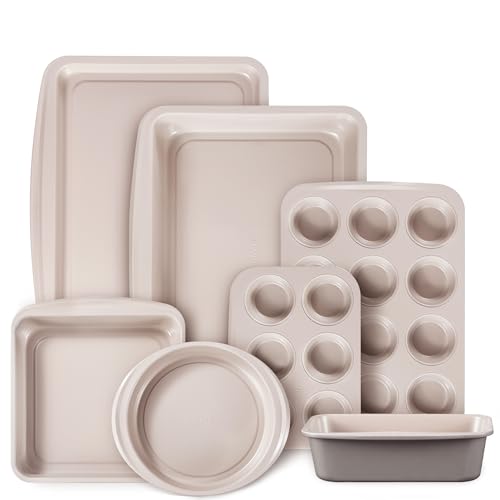
View on Amazon (Farberware Nonstick Bakeware 9-Inch x 13-Inch Rectangular Cake Pan, Gray | Bake brownies and casseroles, 13x9 baking pan for even heating, non stick baking pans, dishwasher safe, 450F safe)CAROTE 7-Piece Baking Pans Set, Nonstick Bakeware Sets, Gray & Khaki | Cookie Sheets, Muffin, Bread, Cake, Loaf, Roasting Pan, Easy-Release, Oven Safe Up to 446°F, PFAS-Free, Stackable, Home, Gift
$59.99$35.99
View on Amazon (CAROTE 7-Piece Baking Pans Set, Nonstick Bakeware Sets, Gray & Khaki | Cookie Sheets, Muffin, Bread, Cake, Loaf, Roasting Pan, Easy-Release, Oven Safe Up to 446°F, PFAS-Free, Stackable, Home, Gift)EWFEN 8 Inch Cake Pan Set of 2, Stainless Steel Round Layer Cake Baking Pans Tins, Non-Toxic & Healthy, Leak-proof & Easy Clean & Dishwasher Safe
$13.69
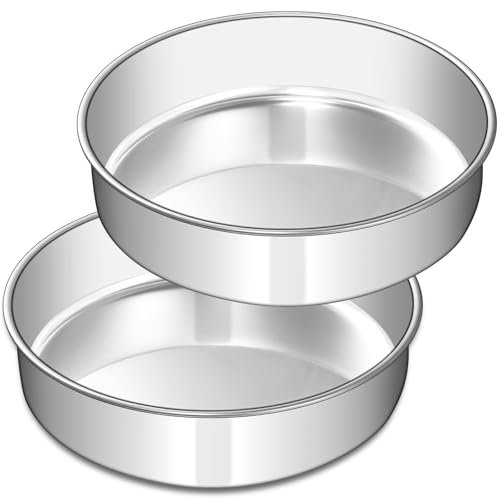
View on Amazon (EWFEN 8 Inch Cake Pan Set of 2, Stainless Steel Round Layer Cake Baking Pans Tins, Non-Toxic & Healthy, Leak-proof & Easy Clean & Dishwasher Safe)Gymdin 12PCS Nonstick Bakeware Set, Non-Toxic Carbon Steel Baking Pans Set with Wider Grip, Includes Roasting Pan, Cookie Sheet, Cake Pans, Muffin Pans, Cooling Rack, Oven Mitts, Easy Release
$47.99$35.99
View on Amazon (Gymdin 12PCS Nonstick Bakeware Set, Non-Toxic Carbon Steel Baking Pans Set with Wider Grip, Includes Roasting Pan, Cookie Sheet, Cake Pans, Muffin Pans, Cooling Rack, Oven Mitts, Easy Release)GoodCook Everyday Nonstick Baking Sheet Set, 3 Pack Includes Small (13×9) Medium (15×10) and Large (17×11) Pans Carbon Steel Construction Cookie Sheets Bakeware Set, Gray
$17.99
View on Amazon (GoodCook Everyday Nonstick Baking Sheet Set, 3 Pack Includes Small (13×9) Medium (15×10) and Large (17×11) Pans Carbon Steel Construction Cookie Sheets Bakeware Set, Gray)11-Piece Nonstick Baking Pans Set - Professional Grade Carbon Steel Bakeware with Premium Coating- Dishwasher Safe, Stackable, Oven Safe to 450°F (Black)
$27.99
View on Amazon (11-Piece Nonstick Baking Pans Set - Professional Grade Carbon Steel Bakeware with Premium Coating- Dishwasher Safe, Stackable, Oven Safe to 450°F (Black))Commercial Quality Baking Sheet Pan Set, Natural Aluminum Cookie Sheet, Umite Chef Warp Resistant Baker's Half Sheet Pan, Large Thick Cookie Tray Pans for Baking, Roasting(2 Pack, 18X13In)
$24.99
View on Amazon (Commercial Quality Baking Sheet Pan Set, Natural Aluminum Cookie Sheet, Umite Chef Warp Resistant Baker's Half Sheet Pan, Large Thick Cookie Tray Pans for Baking, Roasting(2 Pack, 18X13In))USA Pan Bakeware Nonstick Rectangular Cake Pan, 9 x 13-inch | Cake pans, rectangular cake pans, 9 x 13-inch size, nonstick bakeware, baking pan for cakes, cake baking
$28.99$25.23
View on Amazon (USA Pan Bakeware Nonstick Rectangular Cake Pan, 9 x 13-inch | Cake pans, rectangular cake pans, 9 x 13-inch size, nonstick bakeware, baking pan for cakes, cake baking)




Prices and availability were accurate when retrieved from Amazon and may change. Retrieved Nov 15, 2026.
Quick answer
Compare the area of the two pans: a recipe made for an 8 x 8 (64 sq in) fits a 9 x 13 (117 sq in) at about 1.8 times the amount. Keep the batter the same depth and start with the original bake time, then check early.
Compare two pans
Multiply the recipe by
×1.83
- Area, recipe pan
- 64 sq in
- Area, your pan
- 117 sq in
- Volume, recipe pan
- 8.9 cups
- Volume, your pan
- 16.2 cups
Start with the original bake time and check early. If the new pan is deeper, expect longer; if it is shallower, shorter. Scale the ingredient list
Pan size chart: area and volume
Area is length times width (pi times radius squared for rounds), volume is area times depth, and a US cup is 14.4375 cubic inches. The volume is to the brim and computed; King Arthur Baking states the areas marked in the last column, and ours match.
| Pan | Area (sq in) | Depth (in) | Volume to brim (cups, computed) | Area stated by King Arthur |
|---|---|---|---|---|
| 9 x 13 x 2 in rectangle | 117 | 2 | 16.2 | 117 |
| 7 x 11 x 2 in rectangle | 77 | 2 | 10.7 | 77 |
| 10 x 15 x 1 in jelly-roll pan | 150 | 1 | 10.4 | 150 |
| 13 x 18 x 1 in half-sheet pan | 234 | 1 | 16.2 | computed only |
| 8 x 8 x 2 in square | 64 | 2 | 8.9 | 64 |
| 9 x 9 x 2 in square | 81 | 2 | 11.2 | 81 |
| 8 in round, 2 in deep | 50.3 | 2 | 7 | 50 |
| 9 in round, 2 in deep | 63.6 | 2 | 8.8 | 64 |
| 10 in round, 2 in deep | 78.5 | 2 | 10.9 | computed only |
| 9 x 5 x 3 in loaf | 45 | 3 | 9.4 | computed only |
| 8 x 4 x 2 1/2 in loaf | 32 | 2.5 | 5.5 | computed only |
Bundt pans
| Pan | Stated capacity (cups) | King Arthur note |
|---|---|---|
| 10-cup Bundt | 10 | King Arthur: a 9" to 10" Bundt with a "capacity of 10 cups" holds about 6 cups of batter; bake it about 30 % longer than a 9 x 13. |
| 12-cup Bundt | 12 | King Arthur: bake a 12-cup Bundt about 15 % to 20 % longer than a 9 x 13. |
How the scale factor is worked out
King Arthur Baking compares pans by area rather than by volume, because volume forces you to make the recipe first. A cake keeps its depth when you multiply the recipe by the ratio of the two areas: an 8-inch round is 50 sq in and a 9-inch round is 64 sq in, so a recipe for the smaller pan is multiplied by about 1.3.
Depth is the part a ratio cannot fix. King Arthur recommends pans 2 inches deep for cake recipes, and says bars baked in a smaller pan come out thicker and need a bit longer. If the new pan is shallower the batter is thinner and bakes faster, and the other way round.
Bundt pans are different: King Arthur says a 9 to 10-inch Bundt marked as a 10-cup pan holds about 6 cups of batter, and suggests baking it about 30 % longer than a 9 x 13. A 12-cup Bundt takes about 15 to 20 % longer. Because brim capacity is not batter capacity, Bundt pans are listed in the chart but left out of the converter.
- King Arthur Baking, The essential alternative baking pan sizes (Apr 23, 2019)
- NIST Handbook 44 (2026), Appendix C
Last checked November 15, 2026. Every value is logged with its URL in content/data/sources.json.
Frequently asked questions
What can I use instead of a 9 x 13 pan?
Two 8-inch rounds (100 sq in together) or a 9 x 9 and a 7 x 11 together come close to the 117 sq in of a 9 x 13. For a single pan, a half-sheet pan at about 234 sq in is twice the area.
Is a 9-inch round the same as an 8-inch square?
Close in area: 63.6 sq in against 64 sq in. A recipe for one can go in the other at the same depth with a similar bake time.
Why does the chart show volume if scaling uses area?
Volume is how much the pan holds to the brim, useful for a casserole or a no-bake filling. Cake and bar recipes are better scaled by area so the batter keeps the same depth.
More kitchen tools
- Cups to gramsPick an ingredient and an amount, get grams and ounces.
- Grams to cupsStart from the scale reading and get cups, tablespoons and teaspoons.
- Kitchen conversion chartVolume converter, butter sticks, oven temperatures. Print it.
- Recipe scalerPaste a recipe, change the servings, get clean amounts.
- Air fryer converterOven temperature and time in, an air fryer starting point out.