Kitchen tool
Kitchen conversion chart and volume converter
Convert any US volume unit to any other, then scroll to the printable sections: volume equivalents, butter, oven temperatures and weights. Every row is computed from the unit definitions or taken from a named source.
Kitchen gear on Amazon
SponsoredAs an Amazon Associate, KitchenProds earns from qualifying purchases. See our affiliate disclosure.
Oven Thermometer Extra Large 3" with Easy-Read Dial | 150-600F Pro Accurate Temp Gauge for Kitchen, Baking, Grill & Meat | Hang or Stand for Gas/Electric Ovens
$5.97
View on Amazon (Oven Thermometer Extra Large 3" with Easy-Read Dial | 150-600F Pro Accurate Temp Gauge for Kitchen, Baking, Grill & Meat | Hang or Stand for Gas/Electric Ovens)Thickened Heavy-Duty 26pcs Stainless Steel Bowl, Mixing Bowl Set with Lid, Grater Attachment, Non-Slip Bottom and Kitchen Gadget Set, Sizes 7, 4, 2.5, 2.0, 1.5, 1QT, Ideal for Mixing and Serving
$45.99$35.98
View on Amazon (Thickened Heavy-Duty 26pcs Stainless Steel Bowl, Mixing Bowl Set with Lid, Grater Attachment, Non-Slip Bottom and Kitchen Gadget Set, Sizes 7, 4, 2.5, 2.0, 1.5, 1QT, Ideal for Mixing and Serving)Measuring Spoons, 6-Piece Heavy Duty Stainless Steel Measuring Spoons Set | Small Tablespoon with Metric and US Measurements, Set of 6 for Measuring Dry and Liquid Ingredients
$13.99$5.99
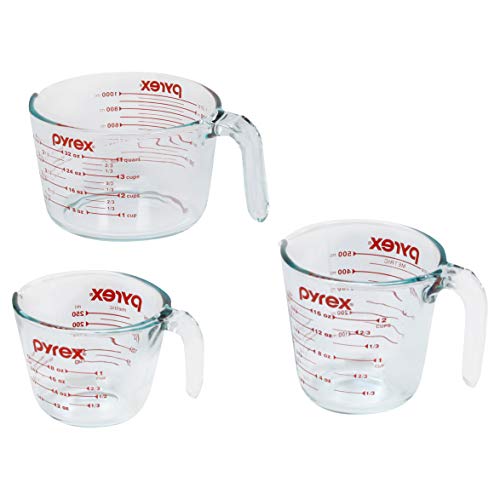
View on Amazon (Measuring Spoons, 6-Piece Heavy Duty Stainless Steel Measuring Spoons Set | Small Tablespoon with Metric and US Measurements, Set of 6 for Measuring Dry and Liquid Ingredients)Pyrex Essentials (3-Pack) Glass Measuring Cups Set (1, 2 & 4 Cup) | For prepping, baking and cooking, preheated oven, dishwasher, freezer, and microwave safe
$25.99$19.99
View on Amazon (Pyrex Essentials (3-Pack) Glass Measuring Cups Set (1, 2 & 4 Cup) | For prepping, baking and cooking, preheated oven, dishwasher, freezer, and microwave safe)TILUCK Stainless Steel Measuring Cups & Spoons Set, Cups and Spoons | Stainless Steel Nesting Measure Cups , Kitchen Gadgets for Cooking & Baking (10)
$15.99
View on Amazon (TILUCK Stainless Steel Measuring Cups & Spoons Set, Cups and Spoons | Stainless Steel Nesting Measure Cups , Kitchen Gadgets for Cooking & Baking (10))ChefAide Set of 8 Magnetic Measuring Spoons, Stainless Steel, Dual Sided | Stackable Metal Teaspoon & Tablespoon, with Leveler for Dry & Liquid Ingredients, Nesting, Dishwasher Safe, Practical Kitchen
$6.99
View on Amazon (ChefAide Set of 8 Magnetic Measuring Spoons, Stainless Steel, Dual Sided | Stackable Metal Teaspoon & Tablespoon, with Leveler for Dry & Liquid Ingredients, Nesting, Dishwasher Safe, Practical Kitchen)Etekcity Food Kitchen Scale, Digital Grams and Ounces, 11lb | Tare function, ideal for baking, weight loss, keto, meal prep, packages, liquids and jewelry, 304 Stainless Steel
$13.99
View on Amazon (Etekcity Food Kitchen Scale, Digital Grams and Ounces, 11lb | Tare function, ideal for baking, weight loss, keto, meal prep, packages, liquids and jewelry, 304 Stainless Steel)Rubbermaid Commercial Products Stainless Steel Oven Monitoring Thermometer | Safe for Inside Oven/Grill/Smoker, 60-580 Degrees F Range, Easy to Read Food Thermometer For Food Restaurant/Home Cooking
$10.85$9.22
View on Amazon (Rubbermaid Commercial Products Stainless Steel Oven Monitoring Thermometer | Safe for Inside Oven/Grill/Smoker, 60-580 Degrees F Range, Easy to Read Food Thermometer For Food Restaurant/Home Cooking)Spring Chef Stainless Steel Magnetic Measuring Spoons Set of 8, Black | Dual Sided Metal Teaspoon & Tablespoon Measuring Spoons with Leveler for Dry & Liquid Ingredients, Nesting, Dishwasher Safe
$9.99
View on Amazon (Spring Chef Stainless Steel Magnetic Measuring Spoons Set of 8, Black | Dual Sided Metal Teaspoon & Tablespoon Measuring Spoons with Leveler for Dry & Liquid Ingredients, Nesting, Dishwasher Safe)




Prices and availability were accurate when retrieved from Amazon and may change. Retrieved Nov 15, 2026.
Quick answer
1/4 cup is 12 teaspoons or 4 tablespoons. 1 quart is 4 cups. 1 stick of butter is 1/2 cup, 8 tablespoons or 113 g. 350 °F is about 177 °C, usually written 180 °C, gas mark 4.
Volume converter
Result
16 tablespoons
1 cup = 16 tablespoons = 48 teaspoons = 236.6 ml
Volume equivalents
US customary units; 1 US gallon is 231 cubic inches (NIST Handbook 44). Millilitres are rounded.
| Unit | Teaspoons | Tablespoons | Fluid ounces | Cups | Millilitres |
|---|---|---|---|---|---|
| 1 tablespoon | 3 | 1 | 0.5 | 0.063 | 15 |
| 1 fluid ounce | 6 | 2 | 1 | 0.125 | 30 |
| 1 cup | 48 | 16 | 8 | 1 | 237 |
| 1 pint | 96 | 32 | 16 | 2 | 473 |
| 1 quart | 192 | 64 | 32 | 4 | 946 |
| 1 gallon | 768 | 256 | 128 | 16 | 3785 |
| Fraction of a cup | Teaspoons | Tablespoons | Fluid ounces | Millilitres |
|---|---|---|---|---|
| 1/8 cup | 6 | 2 | 1 | 30 |
| 1/4 cup | 12 | 4 | 2 | 59 |
| 1/3 cup | 16 | 5.3 | 2.7 | 79 |
| 1/2 cup | 24 | 8 | 4 | 118 |
| 2/3 cup | 32 | 10.7 | 5.3 | 158 |
| 3/4 cup | 36 | 12 | 6 | 177 |
Butter: sticks, cups, tablespoons and grams
A US stick is 1/2 cup. The 113 g per stick figure is from the King Arthur Baking chart; grams per tablespoon and per quarter stick are that figure divided.
| Butter | Sticks | Cups | Grams | Ounces |
|---|---|---|---|---|
| 1 tablespoon | 1/8 | 1/16 cup | 14.1 g | 0.5 oz |
| 2 tablespoons | 1/4 | 1/8 cup | 28.3 g | 1 oz |
| 4 tablespoons | 1/2 | 1/4 cup | 56.5 g | 2 oz |
| 8 tablespoons | 1 | 1/2 cup | 113 g | 4 oz |
| 16 tablespoons | 2 | 1 cup | 226 g | 8 oz |
| 32 tablespoons | 4 | 2 cups | 452 g | 15.9 oz |
Oven temperatures
Celsius is calculated from Fahrenheit and shown exact; the third column is the figure recipes normally print, with the gas mark. The last column says how many sources back each gas mark: gas 3 is 160 °C in Which? and 170 °C in Wikipedia, and gas 1/4, 1/2, 8, 9 and 10 have one source.
| Fahrenheit | Celsius (calculated) | Celsius (as printed) | Gas mark | Gas mark source |
|---|---|---|---|---|
| 225 °F | 107.2 °C | 110 °C | Gas 1/4 | single source (Wikipedia) |
| 250 °F | 121.1 °C | 120 °C | Gas 1/2 | single source (Wikipedia) |
| 275 °F | 135 °C | 140 °C | Gas 1 | 2 sources (Wikipedia, Which?) |
| 300 °F | 148.9 °C | 150 °C | Gas 2 | 2 sources (Wikipedia, Which?) |
| 325 °F | 162.8 °C | 160-170 °C | Gas 3 | sources differ: Which? 160, Wikipedia 170 |
| 350 °F | 176.7 °C | 180 °C | Gas 4 | 2 sources (Wikipedia, Which?) |
| 375 °F | 190.6 °C | 190 °C | Gas 5 | 2 sources (Wikipedia, Which?) |
| 400 °F | 204.4 °C | 200 °C | Gas 6 | 2 sources (Wikipedia, Which?) |
| 425 °F | 218.3 °C | 220 °C | Gas 7 | 2 sources (Wikipedia, Which?) |
| 450 °F | 232.2 °C | 230 °C | Gas 8 | single source (Wikipedia) |
| 475 °F | 246.1 °C | 240 °C | Gas 9 | single source (Wikipedia) |
| 500 °F | 260 °C | 260 °C | Gas 10 | single source (Wikipedia) |
Weight: ounces, pounds and grams
Avoirdupois ounce = 28.3495 g, pound = 16 ounces.
| Ounces | Grams | Pounds |
|---|---|---|
| 0.5 oz | 14.2 g | 0.031 lb |
| 1 oz | 28.3 g | 0.063 lb |
| 2 oz | 56.7 g | 0.125 lb |
| 4 oz | 113.4 g | 0.25 lb |
| 8 oz | 226.8 g | 0.5 lb |
| 12 oz | 340.2 g | 0.75 lb |
| 16 oz | 453.6 g | 1 lb |
| 1 lb | 453.6 g | 16 oz |
| 1 kg | 1000 g | 35.3 oz |
Frequently asked questions
How many teaspoons are in 1/4 cup?
12. A cup is 48 teaspoons, a tablespoon is 3 teaspoons, so 1/4 cup is 12 teaspoons or 4 tablespoons.
How many cups are in a quart?
Four. A quart is 2 pints or 32 fluid ounces, and a gallon is 4 quarts, which is 16 cups.
What is a stick of butter in grams?
113 g, which is 4 ounces, 8 tablespoons or 1/2 cup. Half a stick is 56.5 g and a single tablespoon is about 14 g.
Why do 350 °F and 180 °C not match exactly?
350 °F is 176.7 °C. Recipes round to the nearest 5 or 10 degrees, which is why 350 °F is normally printed as 180 °C. Ovens swing by more than that between heating cycles.
More kitchen tools
- Cups to gramsPick an ingredient and an amount, get grams and ounces.
- Grams to cupsStart from the scale reading and get cups, tablespoons and teaspoons.
- Recipe scalerPaste a recipe, change the servings, get clean amounts.
- Air fryer converterOven temperature and time in, an air fryer starting point out.
- Baking pan size converterSwap one pan for another and get the scale factor.