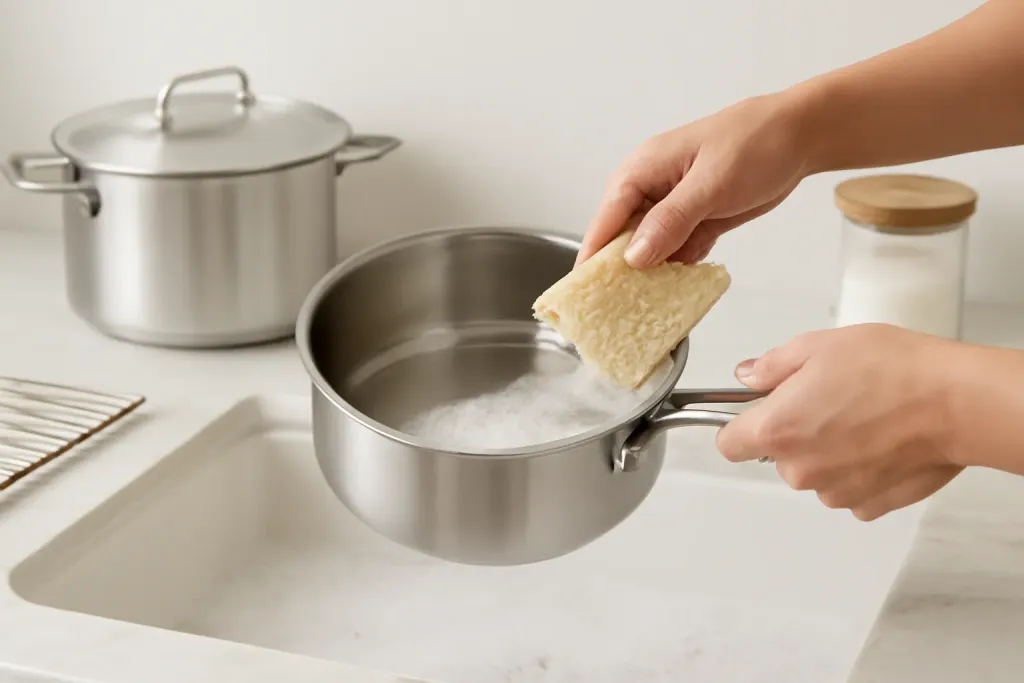
Why Stainless Steel Appeals
When shoppers research stainless steel cookware sets what to look for, the first question is often why stainless steel remains so common. The answer is simple: it is a versatile material that fits a wide range of cooking tasks and kitchen styles. It can suit everyday simmering, boiling, sautéing, and oven finishing in many designs, which makes it appealing to cooks who want one set to cover multiple jobs.
Another reason for its popularity is that stainless steel is usually chosen for its practical, not flashy, benefits. It resists corrosion better than many uncoated metals, it has a clean appearance, and it is offered in everything from basic starter sets to more advanced multi-ply collections. That variety is useful, but it also means buyers have to look more closely at the details instead of relying on the outer finish alone.
It also helps to remember that stainless steel on its own is not the whole story. Many better-equipped pieces use an aluminum or copper core inside the stainless exterior. That inner structure is often what makes the difference between an ordinary set and one that feels more responsive and consistent in day-to-day use.
Construction and Clad Design
Construction is the most important place to start. In many stainless steel cookware sets, the cooking surface is stainless steel while the interior layers include aluminum, copper, or both. This is commonly described as clad cookware. The purpose of those layers is to improve how heat moves through the pan compared with stainless steel alone.
When comparing sets, pay attention to whether the cookware is fully clad or only has an encapsulated base. Fully clad cookware carries the conductive core up the sides of the pan, while an encapsulated-base design concentrates that core at the bottom. Both can be useful, but they behave differently, especially when a recipe depends on more even sidewall heating.
You may also see terms like tri-ply or multi-ply. These labels refer to the number of bonded metal layers. In general, more layers can mean a more substantial build, but that does not automatically make one set the right choice for every kitchen. Weight, feel, and price all tend to rise along with complexity, so it is worth comparing the whole design rather than assuming the thickest option is the best fit.
Look closely at the details that suggest solid construction: sturdy rims, secure handle attachment points, and even joins where the layers are bonded. These are small cues, but they help show whether the set is made for regular cooking or simply for a polished showroom look.
Pieces and Sizes
A cookware set can look impressive on a product page and still be poorly matched to your needs. The most useful question is not how many pieces are included, but which pieces you will actually use. A compact lineup with the right saucepan, skillet, sauté pan, and stockpot may be more practical than a larger set crowded with specialty items.
Common pieces in stainless steel sets include saucepans, skillets, a sauté pan, and a stockpot. Some also add steamer inserts, extra lids, or Dutch-oven-style pots. Those additions can be helpful, but only if they match how you cook. If you mostly prepare weeknight meals, the essentials may matter more than extra accessories.
It is also worth comparing sizes rather than piece counts alone. Two sets may each claim to be complete, yet one may include more useful mid-sized pans while the other relies on very small or oversized pieces. For a household that cooks in batches, a larger stockpot may be worthwhile. For smaller households, a balanced saucepan and a versatile skillet may deliver more real value.
Think about storage as well. If cabinet space is limited, a set with nesting shapes or fewer redundant pieces can be easier to manage. Practical coverage, not sheer quantity, should drive the decision.
Handles and Lids
Handles and lids matter more than many buyers expect. A cookware set can have excellent materials and still feel awkward if the handles are too small, poorly shaped, or placed in a way that makes lifting difficult. When evaluating stainless steel cookware sets what to look for, comfort should be part of the checklist from the beginning.
Skillet and sauté pan handles should offer enough grip to feel secure, while larger pots often benefit from helper handles. Shape matters too. A slightly contoured handle may feel more comfortable than a narrow, sharply edged one, especially when the pan is full. Because cookware heats up during use, handle design should be considered alongside safe handling habits rather than as a substitute for them.
Lids deserve the same attention. Tight-fitting lids can help keep cooking more controlled, and transparent lids make it easier to check progress without lifting the cover. Glass lids are convenient for visibility, while stainless steel lids often create a more uniform look and may be simpler in design. Neither is automatically better; the right choice depends on how you cook and what you prefer to clean and store.
Also notice whether lids fit one specific pot or multiple pieces in the set. Shared lids can be convenient, but they may not be as tailored as dedicated ones. The lid handle or knob should be easy to grasp, since steam and heat make a secure hold especially important.
Browse our recommended products
Our featured picks refresh periodically. While we update them, our editorial guides can help you find the right pick.
See our guidesHeat Behavior and Cooktop Fit
Even without making performance claims, it helps to understand what influences how a stainless steel pan behaves. Thickness, bonded layers, base shape, and pan geometry all affect heat response. A heavier pan may feel more stable, while a lighter pan may respond more quickly to changes in burner temperature. The better choice depends on the type of cooking you do most often.
If you make sauces or dishes that need careful temperature control, you may prefer a set with a more predictable response. If you often sear, a pan with solid base contact and a shape that suits high-heat cooking may matter more. If you cook soups or grains frequently, a stockpot with a stable base and a well-fitted lid may be the most useful piece in the set. Matching the design to the task is usually more practical than chasing broad marketing language.
Cooktop compatibility is another essential check. Many stainless steel cookware sets work on gas and electric ranges, but induction compatibility depends on magnetic materials in the base and should never be assumed. Smooth-top use and oven use also need to be verified in the product details. If you plan to finish dishes in the oven, pay attention to the stated oven-safe temperature and whether lids and handles have different limits from the pots and pans.
Care and Cleaning
Stainless steel is often chosen because it can be relatively straightforward to care for, but it is not maintenance-free. Some sets are labeled dishwasher-safe, while others are better hand-washed to preserve appearance. Even when a dishwasher is allowed, many owners still prefer hand washing for more control over the finish.
Surface type can affect how the set looks over time. Polished stainless steel may show fingerprints, smudges, and heat tint more readily than a brushed or satin finish. That does not change the basic function of the cookware, but it can influence how often you want to clean and polish it. If a lower-maintenance look matters to you, a less reflective finish may be more forgiving.
Design also affects cleaning effort. Rivets, seams, and decorative embossing can collect residue, while simpler interiors and exteriors are often easier to wipe down. For many shoppers, ease of cleaning is part of the value equation, especially if the cookware will be used frequently. Clear care guidance from the manufacturer is usually a positive sign that the set was designed with regular ownership in mind.
Basic habits help as well. Avoid overheating empty pans, use utensils that suit the surface, and let the cookware cool before washing when possible. Those are general care practices, not special procedures, but they can help keep the set in good condition.
Value and Long-Term Fit
Value is more than the sticker price, and it is not determined by piece count alone. A smaller set with well-chosen sizes, sturdy construction, and comfortable handles can be a better purchase than a larger set padded with pieces you will rarely use. The best approach is to compare the features that matter most to your kitchen, not the largest number on the box.
A useful comparison list usually includes construction, included sizes, handle comfort, lid design, cooktop compatibility, oven limits, and care requirements. Once those basics are clear, it becomes easier to separate genuinely practical sets from ones that rely on broad product claims. If a listing is vague about materials or compatibility, that can be a reason to keep looking.
It also helps to compare like with like. Two sets may both be described as tri-ply, but still differ in thickness, lid material, storage footprint, or included accessories. Those differences can affect how the set fits into everyday cooking. A good match should feel balanced: enough pieces for your routine, a structure that suits how you cook, and handles and lids that make the set comfortable to use.