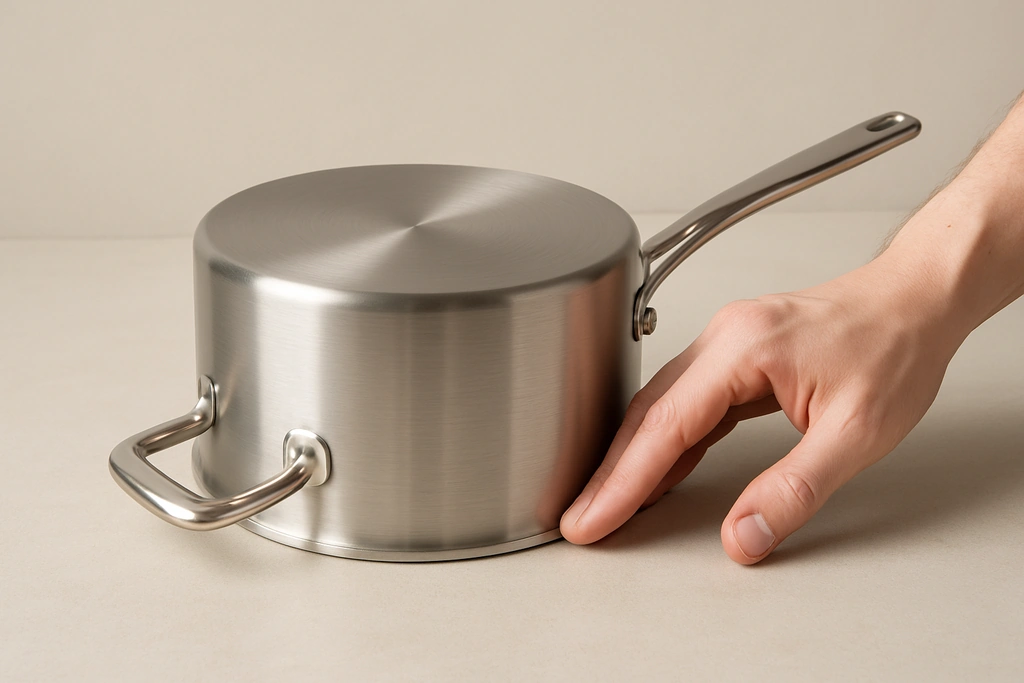
What to compare first
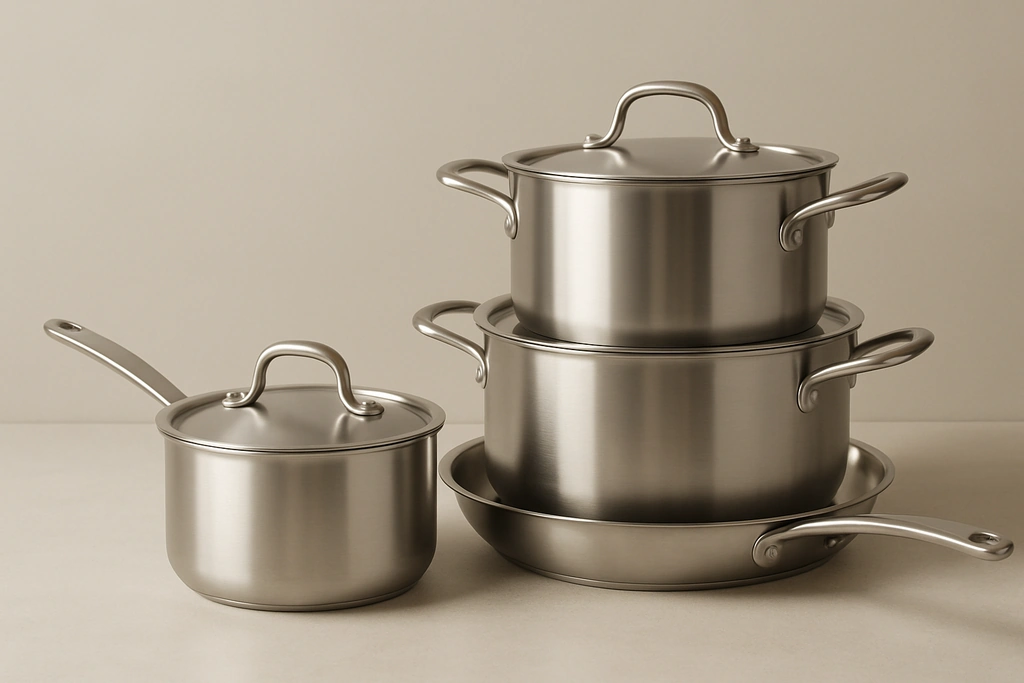
Shopping for a cookware set can feel overwhelming because the category spans a wide range of materials, piece counts, and price points, and the packaging rarely explains what actually matters for how you cook day to day. Before comparing specific sets, it helps to slow down and identify the handful of variables that will determine whether a set fits your kitchen: material, piece count, compatibility with your stovetop, and how the set will be stored and cleaned. Getting these basics straight first makes every other decision easier.
Material is usually the first fork in the road. Stainless steel is common because it is durable, resists staining from acidic foods, and works on most stovetops, though it typically requires more attention to prevent sticking. Nonstick coatings make everyday cooking and cleanup easier but generally have a limited effective lifespan and need gentler utensils and lower heat. Cast iron and enameled cast iron retain heat well and can move from stovetop to oven, but the pieces are heavier, which matters if you have limited wrist strength or store cookware on a high shelf. Some sets mix materials, pairing a nonstick skillet with stainless steel saucepans, which can be a reasonable way to get material-specific benefits without buying separate collections.
Piece count is the second variable, and it deserves more scrutiny than it usually gets. Sets are often marketed by a total piece count that includes lids, and sometimes storage components, so a "10-piece set" might only include four or five actual cooking vessels. Before comparing sets by piece count alone, list the pan sizes you actually use in a typical week, such as a small saucepan for sauces, a larger stockpot for soups or pasta, and a skillet for searing. Matching a set's contents against that list is more useful than comparing raw piece counts across brands.
Stovetop compatibility is the third factor, and it is easy to overlook if you are shopping before a move or an appliance upgrade. Induction cooktops require cookware with a magnetic base, so a set that works fine on gas or electric coil may not work at all on induction. If there is any chance you will switch to induction, check whether the manufacturer specifies induction compatibility rather than assuming stainless steel is always compatible, since some stainless alloys are not sufficiently magnetic on their own.
Finally, think about storage and handle design. Sets with nesting pans or removable handles save cabinet space, while sets with oven-safe handles expand what you can do with a given pan. None of these factors make one set objectively superior to another; they simply narrow the field to sets that match your actual cooking habits and kitchen constraints.
Decision criteria for choosing a set
Once you understand the basic variables, it helps to apply a consistent set of criteria rather than picking based on appearance or price alone. The following criteria are not ranked in order of importance, because their relative weight depends on your own cooking habits, but together they cover the questions that tend to matter most when choosing between cookware sets.
Cooking frequency and style. Someone who cooks a few simple meals a week has different needs than someone who cooks daily and uses high heat for searing. If you cook infrequently, a smaller set with lower-maintenance materials, such as nonstick, may reduce daily friction. If you cook often and use techniques like deglazing or braising, stainless steel or cast iron may hold up better to that pattern of use over time.
Household size and typical batch size. A stockpot's capacity should reflect how much you actually cook at once. A set built around small saucepans will fall short if you regularly cook for a large household or batch-cook for the week, while oversized pots are awkward and slower to heat for someone who mostly cooks single portions.
Stovetop and oven compatibility. As noted earlier, confirm induction compatibility if relevant, and check the maximum oven-safe temperature listed by the manufacturer if you plan to move pans from stovetop to oven. This information is usually in the product specifications rather than the marketing copy, so it is worth checking directly.
Weight and handle comfort. Heavier cookware, such as cast iron, retains heat differently than lighter stainless steel or aluminum, but it is also harder to lift one-handed, which matters for pouring or transferring hot contents. If you have any difficulty gripping or lifting heavier objects, prioritize sets with lighter pieces or handles designed for two-handed lifting.
Cleaning method you'll actually use. Check whether pieces are labeled dishwasher-safe, and be honest about whether you will hand-wash delicate coatings consistently. A set that requires more careful handwashing than your household is willing to do will likely show wear faster regardless of its underlying quality.
Budget as price-per-piece, not just total price. Because sets often include pieces you may rarely use, calculating an approximate price per piece you'll actually use, rather than the total set price, gives a clearer picture of value for your specific needs. A smaller set made of fewer, well-matched pieces can be a better use of your budget than a large set padded with rarely used sizes.
Weighing these criteria against each other, rather than searching for a single best set, is the most reliable way to land on cookware that fits your kitchen rather than a generic household.
Browse our recommended products
Our featured picks refresh periodically. While we update them, our editorial guides can help you find the right pick.
See our guidesLimitations to keep in mind
Buying cookware as a set has real advantages, including matched aesthetics and often a lower combined price than buying pieces individually, but the format also comes with tradeoffs worth understanding before you buy.
The most common limitation is that sets frequently include at least one or two pieces you will rarely reach for, such as a small saucepan duplicating a size you already own or a specialty pan that does not fit your typical cooking. Because manufacturers design sets to appeal to a broad range of shoppers, they tend to include a spread of sizes rather than the specific combination any one household needs. This is why comparing a set's actual pan sizes against your own cooking list, as described earlier, matters more than the advertised piece count.
A second limitation is that sets bundle materials and construction quality across all pieces, so if you have a strong preference for one material in a specific pan type, such as cast iron for a skillet but lightweight stainless steel for a stockpot, a single-material set will require some compromise. Mixed-material sets exist, but they narrow your options and may cost more per piece than single-material sets.
Third, lids and handles across a set are usually standardized, which can mean a lid that fits reasonably well across multiple pan sizes rather than a precise match for each one. This is rarely a significant problem, but it is a tradeoff of the set format compared to selecting each lid individually.
Fourth, storage space is a real constraint that sets do not solve by themselves. Even sets marketed as space-saving or nesting still require enough cabinet or drawer space for the largest pieces, and buying a large set without measuring your available storage can lead to pieces being stored inconveniently or not used at all.
Finally, it is worth acknowledging that no single set, regardless of material or piece count, will be the right choice for every cooking style, and claims that a given set is universally "the best" should be treated skeptically unless they are paired with a clear explanation of who that set is and isn't suited for. If you have specialized needs, such as frequent high-heat searing or induction-only cooking, you may ultimately be better served by selecting individual pieces rather than a set, even if it costs slightly more upfront.
Care and maintenance
How you care for a cookware set has a meaningful effect on how well it performs over time, and different materials call for different routines. Reading the manufacturer's care instructions that come with a specific set is the most reliable source of guidance, but a few general principles apply across most cookware categories.
For stainless steel, preheating the pan before adding fat or food, and avoiding sudden extreme temperature changes such as running a hot pan under cold water, can help reduce warping over time. Most stainless pieces tolerate metal utensils reasonably well, but check the manufacturer's guidance if the set includes any nonstick components mixed in.
For nonstick cookware, using wood, silicone, or nylon utensils instead of metal helps protect the coating, and cooking on low to medium heat is generally recommended since nonstick coatings are more sensitive to very high temperatures than bare metal. Stacking nonstick pans directly on top of each other without a protective liner can scratch the coating, so consider a pan protector or dish towel between stacked pieces.
For cast iron and enameled cast iron, avoid soaking pieces for extended periods, and dry them promptly after washing to prevent rust on bare cast iron surfaces. Enameled versions are generally more forgiving of acidic foods than bare cast iron, but sudden temperature shocks, such as adding cold liquid to a very hot enameled pan, can cause the enamel to crack, so gradual heating and cooling is safer.
Across all materials, periodically check that handles remain firmly attached and that the base of each pan still sits flat on your stovetop, since a warped base can affect how evenly a pan heats. If you notice loose rivets, cracked enamel, damaged handles, or any other structural issue, consult the manufacturer's manual or a qualified repair professional rather than attempting to fix or modify the cookware yourself, since improvised repairs can create safety hazards.
Finally, store lids and pans in a way that avoids unnecessary scraping or stacking pressure on coated surfaces, and dry every piece fully before putting it away to reduce the chance of moisture-related wear. Consistent, straightforward care like this does more to extend the useful life of a cookware set than any single material choice, and it is a routine worth establishing from the day you unbox a new set.