What actually differs between the two
Stainless steel and nonstick cookware solve different problems in the kitchen, and understanding what actually separates them helps you avoid buying based on marketing alone. The core difference is the cooking surface itself: stainless steel is a bare metal alloy, usually clad with an aluminum or copper core for heat conduction, while nonstick cookware has a coated interior designed to release food with minimal added fat.
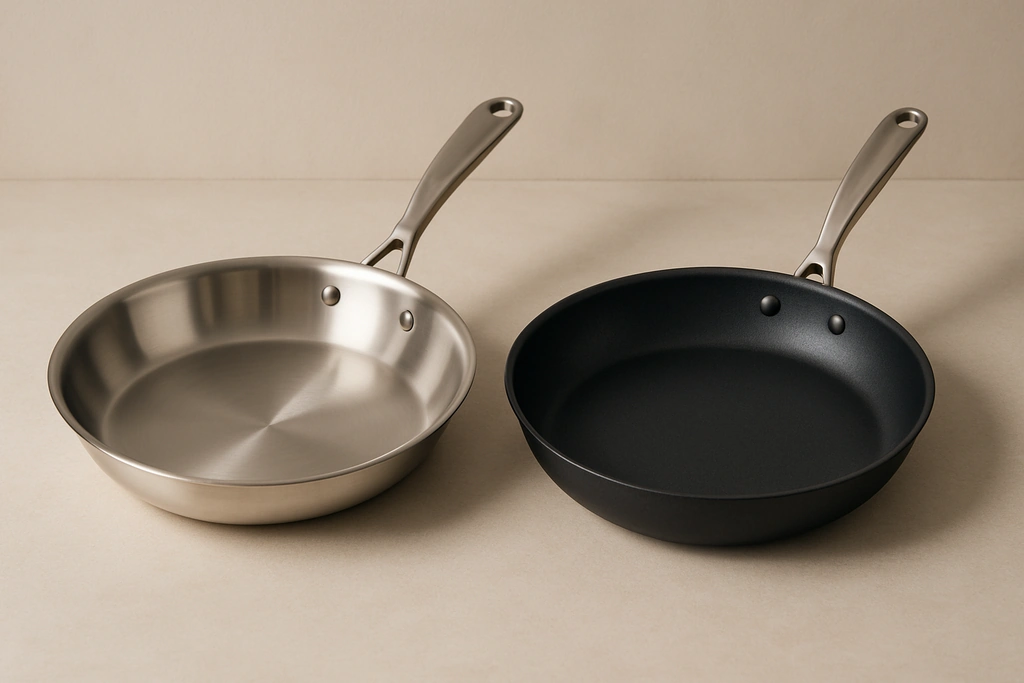
Stainless steel is prized for its ability to develop a fond, the browned bits left behind after searing meat or sautéing vegetables. That fond is the foundation for pan sauces and deglazing, and it happens because food can adhere briefly to the hot metal surface before releasing. Nonstick surfaces are engineered to prevent that adhesion almost entirely, which makes them well suited to eggs, delicate fish fillets, pancakes, and other foods that tear or stick easily on bare metal.
Heat behavior is another meaningful difference. Multi-clad stainless steel cookware tends to distribute heat evenly across the base and partway up the sides, which supports techniques like searing at higher temperatures. Nonstick cookware is more often built with a single layer of aluminum and a thinner overall profile, and manufacturers typically recommend keeping the burner at low to medium heat to protect the coating, which limits how aggressively you can sear or caramelize.
Weight and handling differ too. Fully clad stainless pieces are often heavier because of the multiple bonded layers, while nonstick pans are usually lighter, which some cooks find easier to lift and maneuver during fast cooking like stir-frying or flipping pancakes. Compatibility with cooktops is worth checking either way: look at the product listing for confirmation of induction compatibility, oven-safe temperature limits, and whether the handle material is riveted metal or a heat-resistant polymer, since these details vary by product line rather than by material category alone.
Price points overlap across both categories, so material alone is not a reliable stand-in for quality. What matters more is construction: the number of clad layers in stainless steel, or the type and application method of the coating in nonstick cookware, both of which affect performance and how long the piece holds up under regular use.
Decision criteria: which fits your cooking
Choosing between stainless steel and nonstick cookware comes down to matching the material to how you actually cook, rather than picking whichever one is framed as superior. A few practical questions can narrow the decision quickly.
What do you cook most often? If your weekly rotation leans toward eggs, omelets, crepes, or delicate fish, a nonstick pan reduces sticking and cleanup friction with little technique required. If you regularly sear steaks, brown ground meat for sauces, or want to deglaze a pan for a quick reduction, stainless steel is generally the more capable surface because it tolerates higher, sustained heat and rewards the fond it creates.
How much oil or butter do you want to use? Nonstick surfaces are designed to perform with less added fat, which can matter for cooks managing dietary preferences around oil use. Stainless steel typically needs a reasonable amount of oil or butter and proper preheating to prevent sticking, so it is less forgiving for very low-fat cooking.
How do you feel about maintenance and replacement cycles? Stainless steel cookware, when it is fully clad and well built, can generally be used for a long time and still respond well to metal utensils and abrasive scrubbing when needed for stuck-on food. Nonstick cookware requires gentler tools and care from day one to protect the coating, and coatings do wear down with repeated use over time regardless of how carefully they are treated, which means nonstick pans are more often viewed as a periodic replacement rather than a decades-long investment.
What is your cooktop and oven setup? Check the specific product listing for induction compatibility and maximum oven-safe temperature before buying either type, since these figures vary between product lines within the same material category. A stainless pan with an all-metal handle often tolerates higher oven temperatures than a nonstick pan built with a silicone-wrapped handle, but this is a product-specific detail, not a blanket rule for the entire material class.
Do you want one pan or a small set of both? Many home cooks end up with both materials rather than choosing one exclusively: a nonstick skillet for eggs and delicate proteins, and a stainless sauté pan or skillet for searing, browning, and sauce-based cooking. Thinking in terms of a small, purpose-matched set rather than a single all-purpose pan often produces better everyday results than trying to make one material do every job.
Browse our recommended products
Our featured picks refresh periodically. While we update them, our editorial guides can help you find the right pick.
See our guidesLimitations of each material
Neither material is free of drawbacks, and being upfront about them helps set realistic expectations before you buy. Stainless steel's main limitation is a steeper learning curve: food sticks noticeably if the pan is not properly preheated or if not enough oil or butter is used, and cooks new to the material often find this frustrating with eggs or fish before they adjust technique and heat management. Stainless steel is also a poor insulator on its own, so unclad or thin single-layer pieces can develop uneven hot spots, which is why fully clad construction with an aluminum or copper core matters for even cooking.
Stainless steel can also discolor with heat, developing bluish or rainbow-tinted patches from overheating, and mineral deposits or light surface staining can appear from hard water or certain foods. These marks are typically cosmetic rather than a sign of damage, but they do affect appearance over time and may require dedicated stainless cleaners to fully remove.
Nonstick cookware's central limitation is that the coating is a consumable part of the pan rather than a permanent surface. With regular use, coatings gradually lose their release properties, and factors like metal utensil use, high heat, abrasive scrubbing, or stacking pans without protection can accelerate this wear. Once a coating is visibly scratched, flaking, or no longer releasing food the way it once did, manufacturers generally recommend replacing the pan rather than continuing to cook on a damaged surface, and checking the product's care instructions or the manufacturer's guidance is the right step if you notice significant wear.
Nonstick pans are also generally less suited to high-heat searing. Most manufacturer guidance caps recommended stovetop heat at low to medium for nonstick cookware, both to protect the coating and because very high heat is not needed for the foods nonstick pans handle best. This makes them a poor substitute for stainless steel when a recipe calls for a hard sear or a deeply browned crust.
Broiler and high-heat oven use is another point of divergence worth checking per product: some nonstick cookware has a lower maximum oven-safe temperature than comparable stainless steel pieces, largely because of coating tolerances and handle materials. Always confirm the specific oven-safe rating printed on the product listing or included manual rather than assuming one material's limit applies universally, since it varies by manufacturer and product line.
Care and maintenance differences
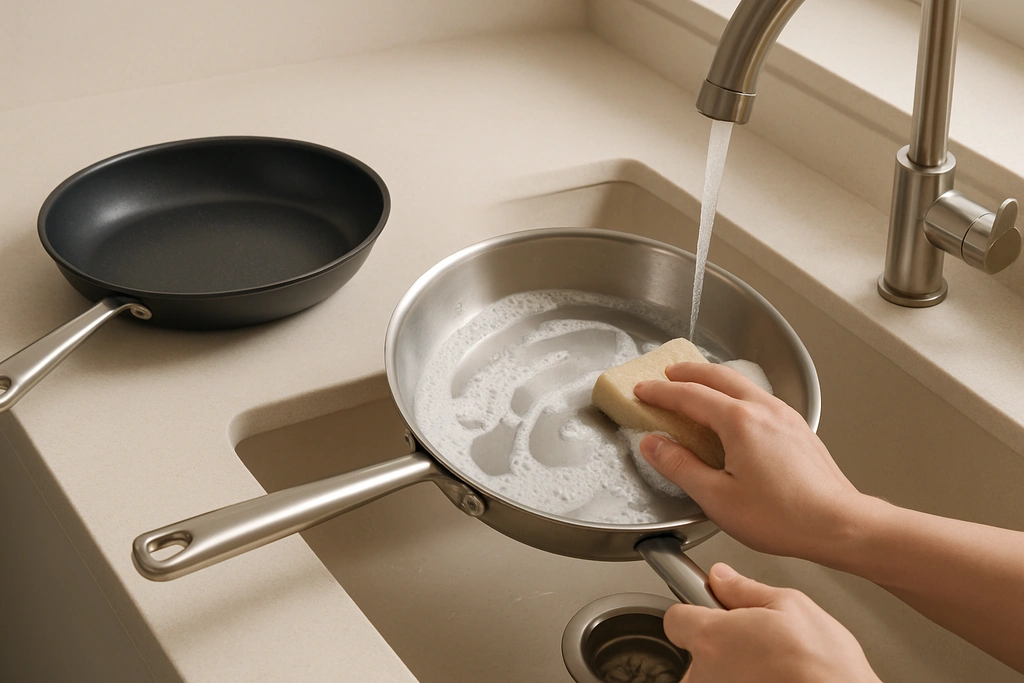
Day-to-day care is one of the more practical differences between these two materials, and it can influence how well a pan performs years down the line. Stainless steel is generally more forgiving to clean. It typically tolerates dish soap, non-abrasive scouring pads, and dedicated stainless steel cleaners for stuck-on residue, and many pieces are labeled dishwasher safe, although hand washing is often recommended to keep the exterior finish looking clean and to avoid dulling from harsh detergents over repeated cycles.
Nonstick cookware asks for a gentler routine. Manufacturers generally recommend hand washing with a soft sponge or cloth rather than the dishwasher, since dishwasher detergents and heat cycles can wear down coatings faster over time. Metal utensils are usually discouraged in favor of silicone, wood, or nylon tools, and stacking nonstick pans directly on top of one another without a protective liner or cloth between them can scratch the surface, so many cooks keep a towel or pan protector on hand for storage.
Preheating habits differ too. Stainless steel benefits from a proper preheat before adding oil, since this is part of what allows food to release cleanly once it has formed a sear, and gradually building cooking confidence with the material tends to solve most early sticking frustrations. Nonstick pans generally do not need aggressive preheating, and manufacturers often caution against heating them empty at high temperatures for extended periods.
Storage and drying also matter for longevity in both categories. Stainless steel should be dried promptly to avoid water spots, though this is a cosmetic concern rather than a structural one. Nonstick cookware benefits from being fully dried before storage to avoid trapped moisture affecting the coating over time, and keeping it away from other cookware that could scratch the surface during storage extends its useful life.
If a nonstick coating begins peeling, flaking, or showing damage, or if you notice unusual odors or residue that doesn't clean off with normal washing, refer to the manufacturer's care instructions or contact them directly rather than attempting to repair or continue using a compromised pan. The same applies to any cookware showing warping or handle looseness: check the manual or reach out to the manufacturer rather than improvising a fix, since a damaged pan can affect both cooking results and safe handling.