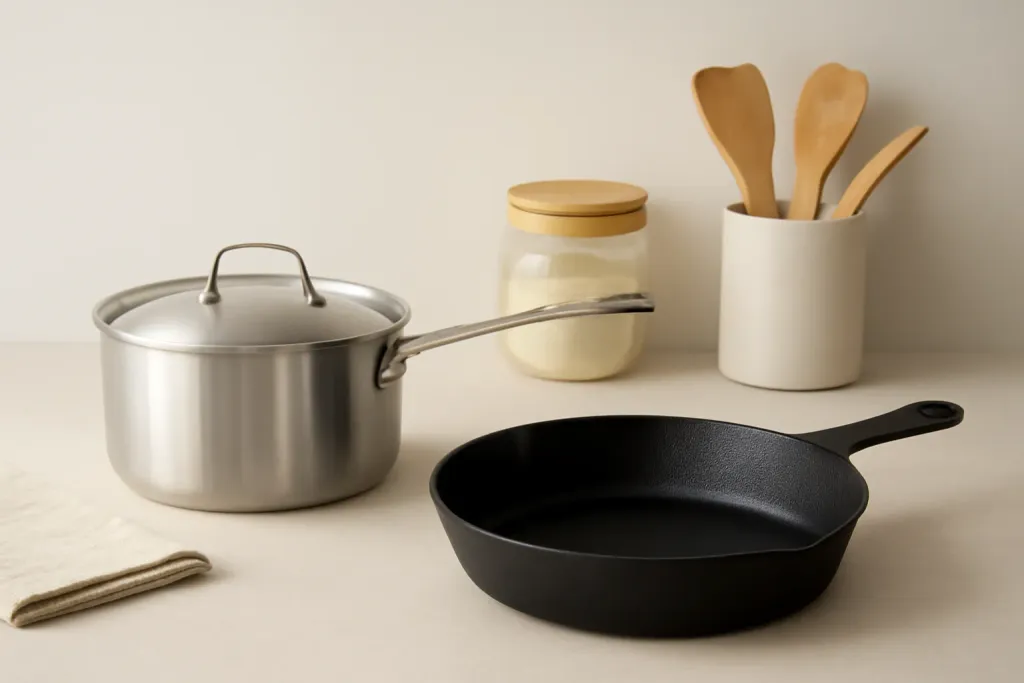
Stainless Steel vs Cast Iron Cookware: The Core Difference
When shoppers compare stainless steel vs cast iron cookware, they are usually choosing between two very different cooking experiences rather than two versions of the same pan. Stainless steel is often valued for responsiveness, relatively easy cleanup, and broad everyday usefulness. Cast iron is usually appreciated for heat retention, a sturdy feel, and the way it can stay hot once fully preheated.
The best choice depends less on which material is “better” in the abstract and more on how you cook at home. Some kitchens need a pan that moves quickly from sautéing to deglazing to simmering. Others need cookware that can hold steady heat for searing, oven finishing, or rustic one-pan meals. Both materials can earn a place in a home kitchen, and many cooks eventually keep both.
It also helps to separate the cooking surface from the overall construction. Stainless steel cookware often uses layered construction with aluminum or copper cores to improve heat distribution. Cast iron cookware is usually a thicker, heavier body that warms more slowly but tends to hold heat longer. Those design differences shape many of the practical decisions buyers make.
Because the materials behave differently, it is useful to think about cooking style first and product labels second. A pan that feels ideal for weeknight vegetables may not be the same one you want for a steak dinner or a skillet bake. That is why a careful comparison of stainless steel vs cast iron cookware is so helpful for shoppers building a practical set.
Heat Response and Cooking Control
For everyday cooking, heat response is one of the biggest differences in stainless steel vs cast iron cookware. Stainless steel pans with conductive cores generally react faster when the burner changes, which gives cooks more immediate control. That can be helpful for reducing sauces, adjusting simmer strength, or moving quickly between cooking steps.
Cast iron responds more slowly because it is denser and heavier. Once heated, though, it tends to keep that heat very steadily. That makes it useful for foods that benefit from a consistent pan temperature, such as seared meats, skillet cornbread, or dishes that go from stovetop to oven. The tradeoff is that cast iron is less nimble if you need to lower the temperature in a hurry.
Preheating is another practical difference. Cast iron usually needs more time to come up to cooking temperature, while stainless steel often reaches a usable heat sooner, depending on construction. For busy weeknights, that difference can matter. For slower, more deliberate cooking, cast iron’s pace may not be a drawback.
If you often cook delicate sauces or frequent small batches, stainless steel usually feels more forgiving. If you want a pan that acts more like a heat reservoir, cast iron tends to be the better fit. Neither material replaces good technique, but their different heat behavior can make one or the other easier to use for certain recipes.
Food Release, Browning, and Stickiness
Food release is a common reason shoppers weigh stainless steel vs cast iron cookware carefully. Neither material is naturally nonstick in the way coated cookware is, but each behaves differently. Stainless steel can release food well when properly preheated and used with enough fat, yet it may stick if the pan is too cool, too hot, or overcrowded. Cast iron can also stick, especially if the seasoning is thin, uneven, or neglected.
For searing and browning, both materials can be effective. Stainless steel is often preferred for fond development, the browned bits that build flavor in pan sauces. Its surface encourages strong browning and easier deglazing, which makes it a solid match for sautéed vegetables, proteins, and sauce-based meals. Cast iron also browns well, with the added advantage of steady retained heat that can support a more even sear over a larger surface.
Where cast iron can feel less convenient is with very sticky dishes or foods that need frequent stirring and careful temperature management. Stainless steel is generally easier for those tasks because it does not rely on seasoning layers for everyday performance. Still, either pan can stick if the cooking method is off, so technique matters regardless of material.
If your priority is predictable food release for a wide range of recipes, stainless steel often has an edge. If your priority is a deep sear and a classic heavy-pan feel, cast iron remains appealing. For many cooks, the right answer depends on whether they want flexibility or more thermal mass.
Maintenance, Cleaning, and Long-Term Care
Maintenance is where the difference between stainless steel vs cast iron cookware becomes especially clear. Stainless steel is usually the easier material to live with day to day. It can handle regular washing, and many pieces are simpler to clean after saucy or acidic cooking. Stubborn residue may still require soaking or a gentle scrub, but the material itself does not depend on a protective seasoning layer.
Cast iron asks for more deliberate care. Traditional cast iron usually needs to be dried promptly and kept in good condition to help reduce the risk of rust. It may also require periodic seasoning maintenance, which many cooks see as a normal part of ownership. That routine is not especially difficult, but it does add steps compared with stainless steel.
Cleanup habits also influence buyer satisfaction. Stainless steel tends to suit cooks who want a straightforward wash-and-store routine. Cast iron fits shoppers who do not mind drying the pan carefully and maintaining the surface over time. Some cast iron owners also reserve their skillet for certain foods to keep care simple and protect the seasoning.
If convenience matters most, stainless steel is typically less demanding. If you do not mind a bit of upkeep in exchange for a classic, substantial pan, cast iron can be a rewarding choice. The best long-term fit is usually the pan you are willing to care for consistently.
Browse our recommended products
Our featured picks refresh periodically. While we update them, our editorial guides can help you find the right pick.
See our guidesDurability and What Long-Term Ownership Means
Both materials are often described as durable, but they age differently. Stainless steel cookware is known for resisting rust and for standing up well to regular kitchen use when made properly. It can still dent or warp under abuse, and lower-quality construction can reduce performance, but the material itself is generally associated with low-fuss longevity.
Cast iron is famous for toughness and has a reputation for lasting across generations when cared for correctly. That does not mean it is maintenance-free. It can rust if neglected, and it is more vulnerable to chipping if enamel is damaged on enameled versions. Traditional bare cast iron can also feel unwieldy because of its weight, which may affect how comfortable it is to use day after day.
For consumers, durability should include more than the body of the pan. Handle comfort, weight, ease of storage, and how often a piece gets used all affect whether cookware feels durable in real life. A heavy skillet that stays in the cabinet because it is inconvenient is not as practical as a lighter pan that sees constant use.
In many kitchens, stainless steel wins on effortless day-to-day resilience, while cast iron wins on the sense of permanence and long service life when maintained carefully. Neither choice is automatically right for everyone, but each can be a sensible purchase depending on how much care and weight you are willing to accept.
Cooktop and Oven Compatibility
Compatibility is another important part of comparing stainless steel vs cast iron cookware. Both materials are commonly used on gas, electric, and induction cooktops, but their performance can vary based on the specific pan design. Stainless steel pans with magnetic bases or induction-ready construction are often versatile across cooktops. Cast iron is naturally compatible with induction because of its iron content and usually performs well on most standard cooking surfaces.
In the oven, both materials are widely useful, but the exact limit depends on handles, lids, and any added components. Stainless steel cookware is often convenient for recipes that begin on the stovetop and finish in the oven. Cast iron is also well suited to oven use, especially for baked skillet dishes, roasted vegetables, and bread-style recipes. Its ability to retain heat can be an advantage when transferring from burner to oven.
Weight is worth considering here. Cast iron pans can be heavy enough that lifting them in and out of the oven requires more care. Stainless steel is usually easier to handle, especially when a pan is full of food. That can matter for cooks who want flexibility without extra strain.
For maximum versatility with less heft, stainless steel has a practical edge. For a classic oven-to-table workhorse, cast iron remains a strong contender. The right choice often comes down to whether you prefer lighter handling or more thermal mass.
Bottom Line: Stainless Steel or Cast Iron?
For stainless steel vs cast iron cookware, the clearest takeaway is that each material solves different problems. Stainless steel is typically the better choice for cooks who want quicker response, easier cleanup, and more flexibility across a wide range of recipes. Cast iron is often the better choice for cooks who value heat retention, a classic heavy feel, and strong performance in dishes that benefit from steady temperature.
Neither material is a perfect substitute for the other, and neither one is automatically the “best” buy for every kitchen. If you cook many sauces, sautéed dishes, and recipes with frequent adjustments, stainless steel usually makes daily life easier. If you cook more searing, oven-finishing, and heat-holding meals, cast iron may be the more satisfying tool.
Many shoppers end up with both, not because they are redundant, but because they complement each other well. That is often the most practical outcome for an independent home cook building a dependable cookware collection.