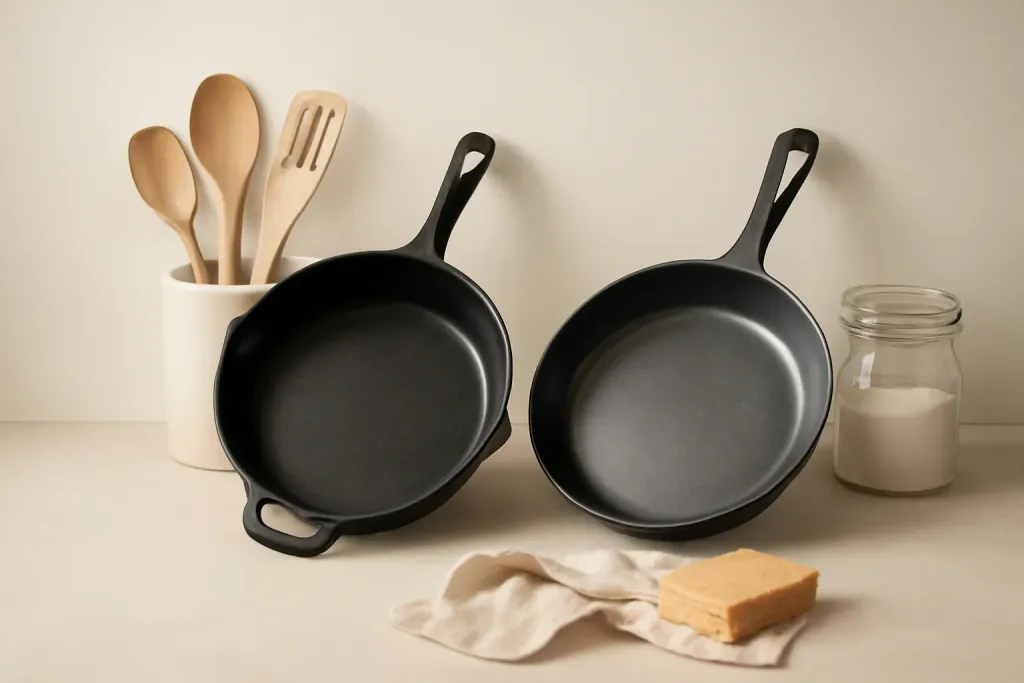
Cast Iron vs Carbon Steel Skillets: The Core Difference
When comparing cast iron vs carbon steel skillets, the most useful distinction is simple: cast iron is heavier and slower to change temperature, while carbon steel is lighter and more responsive. Both can be excellent long-term cookware, and both can develop a seasoned surface that improves with regular use. The better choice usually comes down to how you cook, how much weight you want to handle, and what kind of pan feel you prefer.
Cast iron is often associated with a traditional, sturdy skillet that feels substantial on the burner. Carbon steel tends to feel more agile, with a thinner profile that makes it easier to lift and maneuver. Those differences affect preheating, handling, cleanup, and the overall cooking experience. For many shoppers, the real question is not which material is universally better, but which one fits everyday kitchen habits more naturally.
It is also worth noting that the two materials can overlap in performance more than marketing copy sometimes suggests. Both are versatile, both are widely used for stovetop cooking, and both can work well for cooks who are willing to learn basic seasoning and care. The key is to match the pan to your priorities rather than expect one skillet type to do everything best.
How the Materials Are Made
Cast iron and carbon steel are related, but they are not built the same way. Cast iron is made by pouring molten iron into a mold, which creates a thick, rigid pan. Carbon steel is formed from steel sheet and shaped into a skillet, usually producing a slimmer and lighter body. That manufacturing difference is a major reason the pans feel so different in real use.
Thickness changes how a skillet behaves on the stove. A cast iron pan usually takes longer to heat through, but once it is hot, it tends to feel steady. A carbon steel skillet typically warms more quickly and responds faster when burner settings change or food is added. Neither is inherently superior; each construction style creates a different cooking tool.
Handle and sidewall design can also vary. Cast iron skillets often have shorter, sturdier handles and a more solid feel. Carbon steel skillets often use longer handles and slightly more sloped sides, which can make them feel closer to a sauté pan. If comfort and maneuverability matter to you, these design differences may be just as important as the material itself.
Heat Retention vs Responsiveness
Heat behavior is one of the biggest talking points in the cast iron vs carbon steel skillets discussion. Cast iron is commonly chosen for its heat retention. Once heated, it tends to hold temperature well, which can be helpful for searing and for cooking a full batch of food without the pan feeling as if it has cooled too quickly.
Carbon steel is usually the more responsive option. It tends to heat up and cool down faster, giving the cook more immediate control. That can be helpful when a recipe calls for quick adjustments, such as moving from browning to a gentler sauté. It can also make the pan feel a little easier to work with when cooking in stages.
This does not mean one pan cooks “better” in a general sense. It means they behave differently once they are on the burner. Cast iron often rewards patience and steady heat management. Carbon steel often rewards quicker adjustments and more active cooking. If you like a pan that feels anchored and consistent, cast iron may appeal. If you prefer a pan that reacts quickly, carbon steel may be the better fit.
Weight, Balance, and Everyday Comfort
Weight is often the deciding factor for home cooks. Cast iron skillets are usually much heavier, and that can be both a strength and a drawback. The extra mass can help the pan feel stable on the stovetop, but it can also make lifting, transferring to the oven, and washing in the sink more cumbersome.
Carbon steel skillets are generally lighter, which makes them easier to carry, tilt, and reposition while cooking. That lighter feel can matter if you cook often, use larger cookware, or prefer a pan that is easier to move with one hand. For some cooks, especially those who dislike handling heavy pans, the difference is significant.
Handle comfort also plays a role. A short, thick cast iron handle may feel secure, but it is not always the easiest to manage for long cooking sessions. Carbon steel handles are often longer and more angled, which can improve leverage and make the pan feel more nimble. If you want a skillet that feels easy to live with day after day, weight and balance deserve as much attention as cooking performance.
Browse our recommended products
Our featured picks refresh periodically. While we update them, our editorial guides can help you find the right pick.
See our guidesSeasoning and Surface Behavior
Both cast iron and carbon steel can be seasoned, which means oil is heated onto the surface to help create a more usable cooking layer over time. Seasoning is part of owning either type of skillet, and it can improve food release, but it is not the same as a modern nonstick coating. It also takes regular care to maintain.
Carbon steel often seems to build seasoning a bit more quickly because the pan is thinner and easier to heat evenly. Cast iron can season well too, although its greater mass may make the process feel slower. In both cases, the pan benefits from proper preheating, a light application of oil when needed, and careful drying after washing.
It is best not to expect instant nonstick performance from either material. Eggs, fish, and other delicate foods can still stick if the skillet is not properly preheated or if the surface is not yet well developed. For shoppers, the practical takeaway is that seasoning is a normal part of the ownership experience, not a one-time fix.
Which Skillet Fits Which Cooking Style?
Thinking about how you cook is the easiest way to narrow the choice. Cast iron is often a good match for recipes that benefit from steady heat, such as searing proteins, oven finishes, cornbread, and roasted vegetables. Its mass can help the pan stay consistent when ingredients are added or when the cooking moves from stovetop to oven.
Carbon steel is often better suited to quicker, more flexible cooking. It can be appealing for sautéing, browning smaller portions, and recipes where moving the pan or adjusting heat frequently is part of the process. The lighter body can make it easier to shake ingredients, tilt the skillet, or work briskly at the stove.
Both materials are versatile, so the distinction is not absolute. Still, the typical strengths are clear enough to be useful. If your kitchen style leans toward hearty, steady cooking, cast iron may feel natural. If you prefer a pan that moves quickly with your pace, carbon steel may be more practical.
Care, Cleaning, and Long-Term Use
Care is an important part of owning either skillet. Cast iron and carbon steel are usually washed by hand, dried promptly, and stored in a dry place. A light coating of oil may be used when needed to help protect the surface. The core habit is the same for both: avoid leaving moisture on the pan.
Carbon steel can feel a little easier to manage during cleanup because it is lighter and simpler to move from sink to rack. Cast iron is more awkward to wash and dry simply because of its weight. On the other hand, some cooks do not mind that extra heft and appreciate the solid feel of the pan.
It is also wise to avoid overly abrasive cleaning methods unless a manufacturer specifically allows them. Harsh scrubbing can damage seasoning on either skillet. The goal is not to baby the cookware, but to treat the seasoned surface gently enough that it can improve over time with regular use.
How to Choose Without Overthinking It
If you are deciding between cast iron vs carbon steel skillets, start with the basics: weight, handling, and cooking style. Choose cast iron if you want a heavy, stable pan that holds heat well and feels dependable for stovetop-to-oven cooking. Choose carbon steel if you want something lighter, easier to maneuver, and more responsive to quick heat changes.
It can also help to think about your kitchen setup. If storage space is tight, or if you do not want to wrestle with a heavy pan during cleanup, carbon steel may be the more comfortable choice. If you enjoy the feel of substantial cookware and do not mind the extra weight, cast iron may suit you better.
For many households, either skillet can serve as a daily workhorse. The better choice is the one you are most likely to reach for often. A pan that fits your habits is usually more satisfying than one chosen only for its reputation. In practice, both materials have earned their place because they offer durable, reusable cooking surfaces with different strengths.