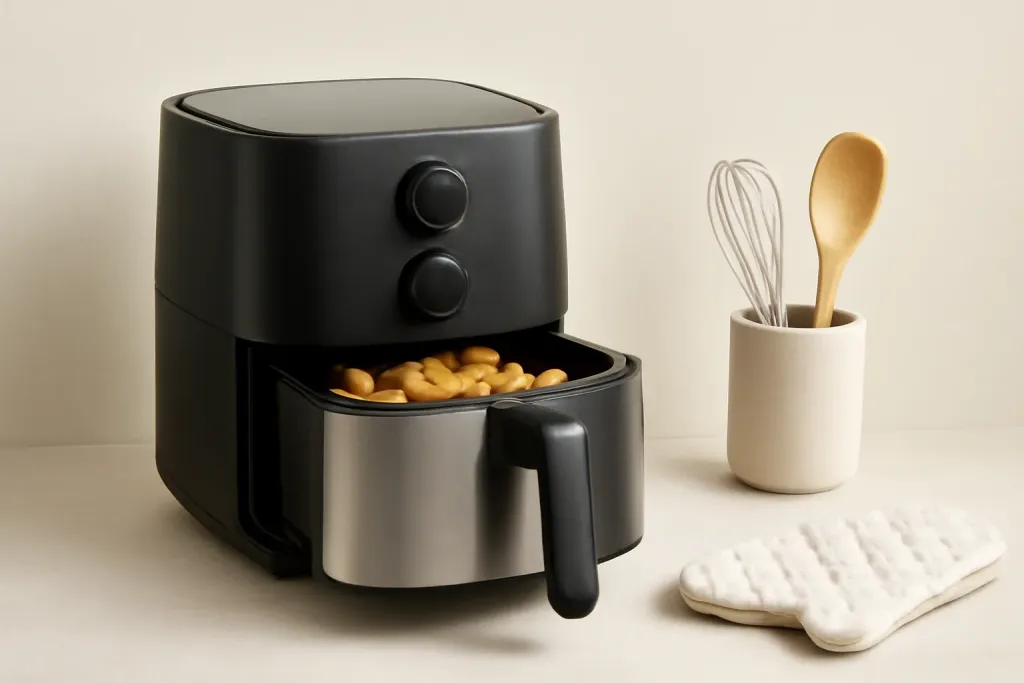
Basket vs Oven-Style Air Fryers: The Core Difference
When people compare basket vs oven-style air fryers, they are usually deciding between two very different layouts that can change how easy the appliance is to use day to day. Basket models are typically compact, with a pull-out drawer and a single cooking chamber. Oven-style models are shaped more like a small countertop oven, usually with shelves, racks, or trays that let food cook on multiple levels.
The choice is not only about size. It also affects how you load food, how often you need to shake or rotate it, and how much counter space the appliance will occupy. In practical terms, basket units tend to suit simpler, smaller batches, while oven-style models are often chosen for more varied cooking setups and larger portions.
For shoppers trying to narrow down the best fit, it helps to start with the kind of meals you make most often. If you mainly cook fries, nuggets, vegetables, or a few chicken pieces at a time, a basket design may feel straightforward. If you want to toast, broil, bake, or cook on multiple levels, an oven-style layout may be more flexible.
How Basket Air Fryers Work in Everyday Use
Basket air fryers are built around a removable drawer or basket that slides in and out of the main unit. Food is arranged in a single layer or a loose pile, depending on the recipe and the basket size. Because the cooking chamber is enclosed and relatively compact, basket models are often associated with simple setup and quick preheating.
One common advantage of this style is ease of use. You usually place the food in the basket, set the temperature and time, and let the appliance run. For many households, that straightforward process is the main appeal. The basket design also makes it easy to check progress partway through and shake or toss the contents if the recipe calls for even browning.
That said, basket air fryers can feel limiting when the food volume grows. A crowded basket can reduce airflow around the food, so users often need to cook in batches. For small families, couples, or anyone cooking side dishes and snacks, that may not be a problem. For larger households or mixed meals, the batch-by-batch approach can become less convenient.
Cleaning is another factor. Many basket models have removable, dishwasher-safe parts, but exact care depends on the manufacturer’s instructions. Even when cleanup is simple, it is worth considering the shape of the basket, the nonstick coating used, and whether food residue tends to collect around the basket rails or crisper insert.
How Oven-Style Air Fryers Work and What They Add
Oven-style air fryers take the same general idea and place it into a larger countertop oven format. Instead of a single drawer, they often include one or more racks, trays, or baskets that slide into a front-opening compartment. This design can make the appliance feel more like a compact secondary oven than a simple air fryer.
The biggest practical difference is cooking flexibility. With multiple rack positions, you can often arrange different foods at different heights or cook a larger spread at once. That makes oven-style models attractive for meals that involve several components, such as roasted vegetables, baked sides, or a main dish with space for a second item.
Oven-style units can also be appealing if you want a more visible cooking process. Some models include a viewing window and interior light, which can make it easier to monitor browning without opening the door too often. That feature is not essential for everyone, but it can be useful when you want a little more control over timing.
The tradeoff is that oven-style air fryers can be bulkier and may take more counter space. They also may require more attention to rack placement and airflow around the food. If the appliance is wide and shallow, you may have plenty of surface area but less vertical depth than you expect. Before buying, it helps to think about the pans, trays, and container shapes you use most often.
Capacity, Counter Space, and Kitchen Fit
Capacity is one of the biggest deciding factors in the basket vs oven-style air fryers comparison, but it is easy to misread. A larger advertised capacity does not always mean a more practical appliance for your kitchen. The question is not only how much food can fit, but how that space is shaped and how it fits your routine.
Basket air fryers usually have a smaller footprint and can be easier to store or leave on the counter in a compact kitchen. Their vertical chamber often works well for foods that do not need much horizontal spread. For homes with limited prep space, that smaller footprint can be a major advantage.
Oven-style air fryers may be better if your cooking style benefits from a wider interior. Shallow trays, sheet-pan-style items, and multiple small dishes can fit more naturally in an oven-style cavity. However, the larger exterior dimensions may matter just as much as the inside space. A model that fits your cooking needs may still be awkward if it blocks cabinet clearance, crowding, or under-cabinet ventilation space required by the manufacturer.
It is also worth considering storage. Some people plan to keep the appliance out all the time, while others store it between uses. Basket models are often easier to move and stash, while oven-style units may be more suitable for permanent counter placement. Neither style is universally better; the right choice depends on how your kitchen is arranged and how often you expect to use the appliance.
Browse our recommended products
Our featured picks refresh periodically. While we update them, our editorial guides can help you find the right pick.
See our guidesWhich Foods Suit Each Style Best?
The best match often comes down to the foods you make most frequently. Basket air fryers are commonly chosen for items that benefit from easy shaking and a concentrated hot-air environment. Think frozen snacks, vegetable sides, breaded proteins, or small portions of roasted foods. Their enclosed shape can make it simple to get a familiar air-fryer result without much setup.
Oven-style air fryers tend to make more sense for cooks who want broader versatility. They can be a better fit for toast, open-faced melts, sheet-style items, or recipes that need several rack positions. If you like to prepare an entire meal in one appliance, the added internal layout can be useful.
For some foods, the difference is less about final texture and more about convenience. A basket may be faster for a single batch of fries. An oven-style model may be easier for two trays of vegetables or a small roast-and-side combination. The best option is often the one that matches your usual portion size and the shape of your most common recipes.
If you are choosing between the two styles for the first time, it can help to make a short list of your top five air-fryer recipes and compare how each appliance would handle them. That simple exercise often makes the decision clearer than comparing spec sheets alone.
Cleanup, Maintenance, and Daily Convenience
Cleanup can influence how often an appliance actually gets used. Basket air fryers are usually simpler in this area because they have fewer cooking surfaces and a more contained chamber. The basket, drawer, or crisper insert may be removable, which can make washing easier after routine cooking. Still, the exact process depends on the materials and instructions provided by the manufacturer.
Oven-style models introduce more surfaces: racks, trays, crumb areas, and sometimes doors or windows that need wiping. That does not necessarily make them difficult to maintain, but it can add a few extra steps after a busy meal. If you cook frequently and want the fastest possible cleanup, the simpler layout of a basket model may be appealing.
It is also smart to think about everyday handling. A basket drawer is easy to pull out and inspect, while an oven-style door may require you to reach in farther or remove a rack to access food. For some users, the basket feels more convenient because the food is centered and easy to shake. For others, the oven-style access feels more natural because it resembles a familiar countertop oven.
As with any kitchen appliance, follow the care instructions in the manual. Avoid abrasive cleaners or tools that could damage the finish, and let the unit cool fully before cleaning. Gentle, routine maintenance usually matters more than the style itself.
Safety, Controls, and Learning Curve
Both basket and oven-style air fryers require the same basic caution: the exterior and interior parts can get hot during use. Safe handling starts with placing the appliance on a stable, heat-tolerant surface and leaving the recommended clearance around it. Manufacturer instructions are the best source for model-specific guidance, especially for ventilation and placement.
Basket models often have a shorter learning curve because there are fewer parts to manage. You open the drawer, load food, set the controls, and check the basket as needed. That simplicity can be reassuring for first-time users or anyone who wants a straightforward appliance with minimal decision-making.
Oven-style models may require a little more familiarity because rack position, tray placement, and door opening can affect the cooking experience. Some users appreciate that extra control; others prefer the simplicity of a basket. There is no universal answer, but the amount of hands-on attention you want to give the appliance should factor into the choice.
It is also important not to overload either style. Good airflow is central to air-fryer cooking, and overly dense food piles can reduce consistency. If a recipe requires multiple batches or a rearrangement of the contents, plan for that rather than assuming every item will cook evenly in one pass.
How to Choose the Right Style for Your Kitchen
If you are comparing basket vs oven-style air fryers, the most useful question is not which one is better overall, but which one better matches your routine. Basket models usually make sense for smaller households, simple meals, limited counter space, and cooks who want the quickest possible setup. Oven-style models usually suit people who want more internal flexibility, broader cooking formats, and the ability to handle multiple items at once.
A few practical questions can help narrow the choice. Do you mostly cook single batches or mixed meals? Do you need a compact footprint or a larger interior? Do you want a simple drawer system, or would you rather use racks and trays like a small oven? Are you planning to keep the appliance out on the counter, or store it after use?
If your answer leans toward convenience and compactness, a basket air fryer may be the easier fit. If your answer leans toward flexibility and multi-item cooking, an oven-style model may be the better match. Both can serve the same general purpose, but they do so in different ways.
For most shoppers, the best decision comes from combining kitchen space, recipe habits, and cleanup preferences. When those three factors are clear, the basket vs oven-style air fryers choice becomes much easier to make.