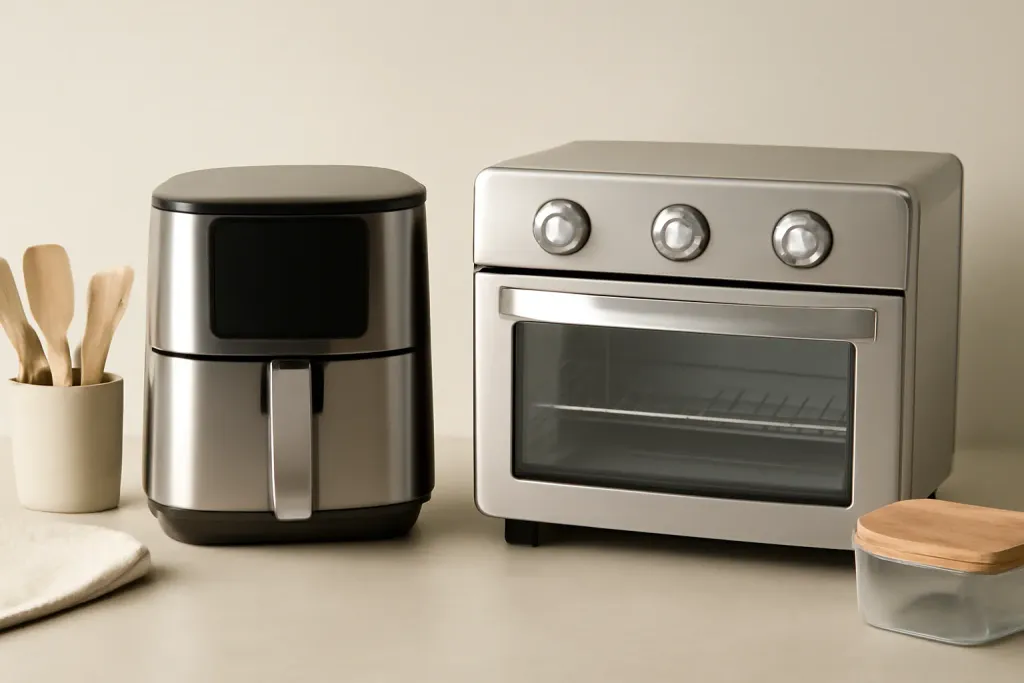
Air Fryer vs Convection Oven: The Core Difference
When shoppers compare air fryer vs convection oven, the first thing to know is that these appliances are closely related. Both use a fan and circulating hot air to cook food more evenly than a basic still-heat oven. In practical terms, an air fryer is usually a compact appliance designed to move hot air quickly around a smaller cooking chamber, while a convection oven is typically a full-size oven or countertop oven with a convection fan inside a larger cavity.
That difference in size matters. A smaller chamber can heat up quickly and concentrate airflow around the food, which is part of why many people associate air fryers with crisp textures. A convection oven, by contrast, offers more room, more rack positions, and more flexibility for cooking larger batches or full meals. Neither appliance is automatically “better”; the right choice depends on how you cook, how much space you need, and whether you want an everyday toaster-oven style machine or a higher-capacity oven setup.
It also helps to separate marketing language from the underlying technology. “Air frying” is not a completely different cooking method so much as a branded way of describing intense convection cooking in a compact appliance. If you already understand how convection works, you are most of the way to understanding an air fryer. The main difference is usually the form factor, basket or tray design, and how aggressively the air is directed around the food.
How Each Appliance Cooks Food
Both appliances cook with hot air, but the way that air moves can affect browning, texture, and timing. An air fryer usually uses a powerful fan in a smaller interior, often with a basket or perforated tray that exposes more surface area to circulating air. This design can help moisture evaporate from the outside of foods more quickly, which is why it is often used for fries, wings, vegetables, nuggets, and other small items.
A convection oven also uses a fan, but it may distribute air differently across a larger cooking space. Many convection ovens include multiple rack positions, so you can bake, roast, toast, or reheat several items at once. Some models let you switch convection on or off, which can be useful when you want gentler baking for cakes, custards, or delicate items that do not need extra airflow.
In both cases, the food’s shape, surface moisture, pan style, and rack placement can change the result. A tray with more exposed surface generally browns more readily than a deep dish or tightly packed pan. Crowding also reduces airflow, which matters in both appliances. If you are comparing air fryer vs convection oven for a specific recipe, the best approach is usually to think about batch size, pan compatibility, and whether the goal is quick browning, even baking, or simple reheating.
Temperature and time may need adjustment compared with a standard still-heat oven, but the exact changes vary by appliance design and recipe. It is safer to start with the manufacturer’s guidance or a trusted recipe source rather than assuming all appliances behave the same way.
Capacity, Batch Size, and Household Fit
Capacity is one of the most important differences in the air fryer vs convection oven comparison. Air fryers are usually better suited to smaller portions, side dishes, or meals for one to three people, though larger models can serve more. Because the cooking chamber is compact, they often feel efficient for quick weeknight cooking when you do not want to heat a large oven.
Convection ovens, especially full-size ranges, are better for family meals, multi-rack cooking, casseroles, sheet-pan dinners, and larger baked goods. Even countertop convection ovens generally offer more usable space than a typical basket-style air fryer. That makes them easier to use when you want to cook several servings at once or keep multiple components of a meal going together.
For many households, the choice is less about which appliance is more capable and more about how often batch size becomes a problem. If you frequently cook one serving at a time, an air fryer may feel convenient. If you often prepare dinner for a group, bake on trays, or need room for pans and dishes, a convection oven is usually the more adaptable option. Some households use both: an air fryer for fast small-batch tasks and a convection oven for larger meals.
Texture, Browning, and Everyday Cooking Results
Many shoppers are drawn to air fryers because they are associated with crisp textures. That reputation comes from the combination of small chamber size, rapid air movement, and the use of a basket or perforated insert. Foods that benefit from exposed surfaces can brown nicely, especially when arranged in a single layer and not overloaded. For frozen snacks, small roasted vegetables, and similar items, that style of cooking can be very convenient.
A convection oven can also brown and crisp food, but the result often depends more on tray choice, rack position, and how much space the food has around it. Because the cavity is larger, the airflow can be less concentrated than in a basket-style appliance. Still, a good convection oven can be excellent for roasting vegetables, baking cookies, reheating leftovers, and cooking sheet-pan dinners with more even color than a non-convection oven might provide.
For baking, the difference may be more subtle. Delicate baked goods can sometimes prefer a gentler oven environment, while other recipes benefit from the added airflow. With either appliance, it is wise to watch for faster browning than you might expect from a standard oven. In a direct air fryer vs convection oven comparison, the air fryer is often the more focused tool for surface browning, while the convection oven is the more versatile general-purpose cooker.
Browse our recommended products
Our featured picks refresh periodically. While we update them, our editorial guides can help you find the right pick.
See our guidesCleanup, Noise, and Day-to-Day Convenience
Convenience is another area where the two appliances differ. Air fryers often have removable baskets or drawers that can be easier to handle than large baking pans, and their smaller size may mean less interior wiping after use. That said, baskets, crisper plates, and drawer components can have corners or coatings that require careful cleaning based on the manufacturer’s instructions.
Convection ovens vary more widely. A countertop convection oven may have crumb trays, racks, and pans that need routine washing, while a full-size oven often requires more interior space to wipe down. On the other hand, the larger cavity can make it easier to fit standard bakeware and sheet pans you may already own. If you prefer using familiar cookware rather than appliance-specific accessories, a convection oven can feel simpler.
Noise is also worth considering. Both appliances use fans, so both make some level of operational sound. The experience can differ by model, but it is reasonable to expect more fan noise than from a basic still-heat appliance. Convenience also includes learning curve: air fryers may encourage quick single-purpose cooking, while convection ovens can require more attention to rack placement and oven-style adjustments. The best choice is the one that fits your routine without creating extra friction.
Which One Makes More Sense for Your Kitchen?
If your cooking usually centers on small batches, fast side dishes, and compact storage, an air fryer may be the more practical buy. It is often appealing for renters, small kitchens, and anyone who wants a countertop appliance with a narrow footprint. It can also be useful if you want a quick way to heat up foods without running a large oven.
If you bake often, cook for several people, or want a more flexible appliance for trays, pans, and larger recipes, a convection oven is usually the stronger all-around choice. It gives you more space to work with and may replace some traditional oven tasks more naturally. For many home cooks, a convection oven is the better long-term centerpiece, especially if they already value a toaster-oven format with multiple functions.
There is also a middle ground. Some countertop ovens include convection mode and can handle many air-fryer-style tasks with the right basket or tray. These hybrid appliances can be appealing if you want one device to do more than a dedicated air fryer. Still, you should compare dimensions, included accessories, and available cooking modes carefully, because not every model performs or fits the same way in real kitchens. For the most balanced air fryer vs convection oven decision, think first about your usual meal size and then about how often you need broader oven-like flexibility.
Safety and Best Practices for Everyday Use
With either appliance, safe use starts with reading the manufacturer’s manual and following the recommended temperature, rack, and accessory guidance. Hot surfaces, steam, and moving parts can all create burn risks, so it is important to use oven mitts, allow for ventilation, and place the appliance on a stable, heat-tolerant surface as directed by the maker.
Air fryers and convection ovens should also be used with the right cookware and accessories. Not every pan, liner, or insert is suitable for high heat or for the way air needs to move through the chamber. Overfilling baskets or blocking airflow can affect cooking results and may increase the chance of uneven heating. Keeping the interior clean and free of excess crumbs or grease buildup is another basic maintenance step that can support normal operation.
It is also sensible to avoid improvising with materials not intended for oven use. If a recipe or accessory seems unclear, check the product documentation rather than guessing. For appliance shoppers, a conservative approach is best: choose a model that matches your typical cooking habits, verify that it fits your counter or cabinet space, and use it as intended. That mindset is more useful than assuming every air fryer or convection oven can do everything equally well.
Bottom Line: Air Fryer vs Convection Oven
The short version of air fryer vs convection oven is this: an air fryer is usually the better small-batch specialist, while a convection oven is usually the better all-purpose multitasker. Both can deliver strong results because both rely on circulating hot air, but they excel in different kitchen settings.
If you want quick cooking for smaller portions, a compact appliance with a basket, and a focused path to browned surfaces, the air fryer is hard to beat. If you want more capacity, more cookware flexibility, and broader usefulness for baking and roasting, a convection oven is often the smarter investment. Many households ultimately decide based on kitchen space and how often they cook for more than one or two people.
For independent shoppers, the most practical question is not which appliance is trendier, but which one fits your actual routine. Measure your space, consider your favorite recipes, and think about whether you need speed, capacity, or versatility most often. That approach will usually point you toward the appliance that earns its place on the counter or in the oven.