How to Read Air Fryer Capacity
When shoppers compare models, the first number they usually see is capacity. In an air fryer size guide, capacity is the starting point, but it does not tell the whole story. Manufacturers may describe size in quarts, liters, or by the amount of food the appliance can hold. Those labels can be helpful, yet they can also be easy to misread if you assume a larger number always means more usable space.
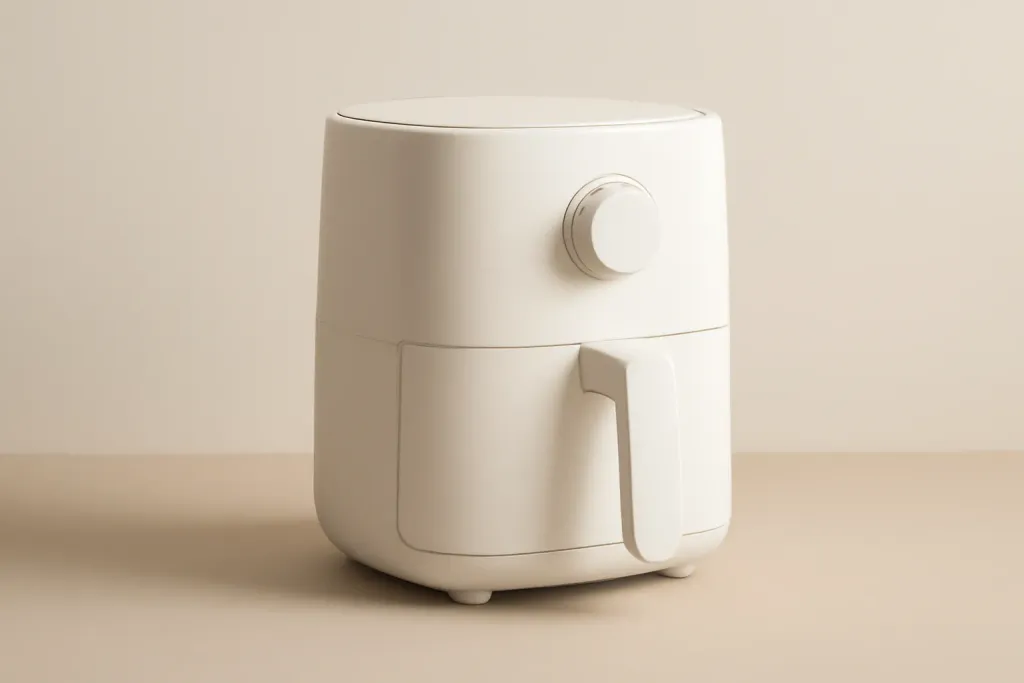
Basket shape matters as much as the listed capacity. A deep but narrow basket can hold different foods than a wider, flatter basket of the same quart rating. That affects how evenly food can be arranged and how much room is left for air circulation. Since air fryers work best when food is not packed too tightly, the practical capacity can be lower than the marketing number suggests.
It also helps to distinguish between a single basket and a dual-basket design. A dual-basket model may suit households that want to cook two foods separately, but each compartment is still limited in size. A large single basket may be better for one bigger batch, while a smaller basket can be enough for side dishes or reheating. The goal is to choose the format that matches your usual meals, not only the biggest number you can find.
Choose by Household Size and Eating Habits
A useful air fryer size guide starts with the number of people you regularly cook for, then considers how you actually use the appliance. A person cooking solo may not need the same capacity as a family of four, but batch size and meal style matter too. If you often prepare one serving at a time, a compact unit may be enough. If you prefer cooking dinner in one round rather than multiple rounds, you will likely want more room.
For a single person or couple, a small to mid-size air fryer often makes sense for everyday use, especially if the appliance will handle snacks, vegetables, or reheating. For three to four people, a medium-sized basket is usually a more comfortable starting point because it gives food space to spread out. For larger households, or for anyone who frequently cooks a full main dish plus sides, a bigger basket or a dual-zone model may be more practical.
Meal habits can change the recommendation. Someone who mainly cooks frozen items or reheats leftovers may be satisfied with less space than someone who wants to prepare chicken pieces, potatoes, and vegetables together. If you regularly cook breaded items, wings, or other foods that benefit from a single layer, extra room can make a noticeable difference in everyday convenience. Think about your most common meal, not your occasional one.
Common Capacity Ranges and What They Suit
Air fryer capacity ranges are not perfectly standardized, but several rough categories help narrow the search. Small models are often aimed at one to two people and are suited to side dishes, snacks, and modest portions. These can be a good fit if counter space is limited or if you only want a secondary appliance. They are also easier to store in many kitchens.
Mid-size models are often the most versatile choice for everyday cooking. They usually give enough space for a meal for two to four people without requiring a very large footprint. This range tends to appeal to shoppers who want one appliance for a mix of tasks, such as cooking vegetables, reheating leftovers, or preparing small proteins. If you are uncertain, this middle category is often the most forgiving compromise between size and convenience.
Large models are better suited to bigger households, frequent batch cooking, or people who want fewer cooking rounds. They can be useful when you want to keep ingredients separated without crowding. Very large units, including some oven-style designs, may offer more flexibility for sheet-pan style cooking or multiple racks, but they also take more counter space and may require more attention to fit within your kitchen setup. The best size is the one that fits your routine without becoming awkward to use.
Basket vs. Oven-Style Air Fryers
Not all air fryers use the same design, and that affects how you should think about size. Basket models are usually compact and focused on straightforward batch cooking. They often suit shoppers who want a simple appliance for one to two main uses. Because the cooking chamber is enclosed, the usable space is defined by the basket’s width and depth, which can make organization important.
Oven-style air fryers are typically broader and may include racks, trays, or multiple cooking levels. Their size can be attractive if you like to prepare several items at once or need more flexibility with shapes and heights. At the same time, these models can occupy more counter space and may be less convenient to move. Their design can be helpful for multi-item meals, but they are not always the best choice if your kitchen is small.
When comparing styles, think about the food you make most often. If you want a compact appliance for quick side dishes or reheating, a basket model may be the easier match. If you want the option to cook in layers or handle larger, flatter foods, an oven-style design may better support that use. In either case, the exterior footprint matters as much as the internal volume because the appliance must fit where you plan to keep it.
Browse our recommended products
Our featured picks refresh periodically. While we update them, our editorial guides can help you find the right pick.
See our guidesMeasure Your Kitchen Before You Buy
Capacity is only one part of sizing. An air fryer can seem like the right choice on paper and still be inconvenient if it does not fit your counter, cabinet, or storage space. Before buying, measure the area where the appliance will sit, including room for ventilation and easy access to the basket or door. A model that is too large for the available space can become frustrating even if it has the perfect cooking capacity.
Also consider clearance above the appliance. Some air fryers vent from the back or top, and the design may require extra open space around it while operating. If the appliance sits under cabinets, check whether the lid, basket, or door can open without bumping into anything. These practical details are easy to overlook when focusing only on basket size.
Storage matters too. If you do not plan to keep the air fryer on the counter, make sure you have a cabinet or pantry shelf that can hold the full unit without forcing you to tilt it awkwardly. Handles, cords, and bulky lids can make a model feel larger than its stated dimensions. Taking a few measurements before purchase can save you from choosing a capacity that seems convenient but is difficult to live with.
Match Size to the Foods You Cook Most
The best air fryer size depends on the foods you prepare most often. Foods that need airflow around them, such as vegetables or breaded items, generally cook better when there is enough open surface area. If your usual meals include foods that should be arranged in a single layer, a larger basket can be more useful than a deeper one. You may still be able to cook in batches with a smaller unit, but that adds time and attention.
For mixed meals, consider whether you want to cook components separately or together. A larger air fryer can make it easier to handle a main item and a side in the same session, while a smaller one may encourage simpler, smaller portions. If you often cook items with different timing needs, a dual-basket or oven-style model may provide more flexibility than a standard basket appliance.
Think about shape as well as volume. Long or wide foods may not fit as well in a compact round basket, even if the capacity number seems adequate. If you regularly cook foods that benefit from being spread out, choose a model that gives you a wider cooking surface. If your usual foods are smaller and more stackable, a smaller footprint may be perfectly adequate. The right fit comes from matching the appliance to your actual ingredients.
Avoid Common Sizing Mistakes
One common mistake is buying for the biggest possible occasion instead of the meals you make most days. A very large air fryer can be tempting, but if it is oversized for your routine, it may take up unnecessary space and feel inconvenient to use. On the other hand, buying too small can lead to repeated batches, which can reduce the convenience that draws many people to air frying in the first place.
Another mistake is assuming that a higher quart number always means better cooking results. Bigger is not automatically better if the appliance is too large for your typical portions. Food still needs room for airflow, and an overly large chamber can be inefficient for small meals. It is usually better to choose a size that aligns with your most frequent use case rather than trying to cover every possible situation.
It is also easy to overlook cleanup and handling. Larger baskets and trays may be more cumbersome to wash or store, especially in smaller kitchens. If you have limited sink space or prefer simpler cleanup, a more compact model may be easier to manage. Sizing is not just about cooking volume; it is also about whether the appliance will feel easy to live with after purchase.
A Practical Buying Checklist
Before choosing a model, use a simple checklist to compare options in a realistic way. First, identify how many people you usually cook for and whether you prefer one batch or multiple batches. Next, note the foods you cook most often and whether they need to sit in a single layer. Then measure your counter or storage area so the appliance will fit comfortably in your kitchen.
After that, compare the appliance style. A basket air fryer may be more compact and straightforward, while an oven-style unit may offer more flexibility with racks and larger foods. If you cook multiple items at once, a dual-basket model may be worth considering, but only if each side is still large enough for your usual portions. The most useful size is the one that fits your actual cooking pattern.
Finally, leave room for convenience. A model that is slightly larger than your minimum need may be easier to use than one that is just barely adequate. At the same time, avoid going so large that the appliance dominates the kitchen. This air fryer size guide is meant to help you make a balanced choice: enough capacity for your meals, enough clearance for your space, and enough simplicity for everyday use.