How the two appliances actually differ
A toaster oven and a basket-style air fryer overlap in one specific way: both use a heating element and moving air to crisp food without a deep-fry setup. Beyond that, they are built around different shapes and different jobs, which is why so many kitchens end up with a version of each rather than picking one and calling it settled.
A toaster oven is essentially a small version of a full-size oven. It has a wide, shallow cavity with a front door, one or more wire racks, and a flat tray underneath to catch drips. That shape matters because it lets you use flat bakeware: a sheet pan of vegetables, a small casserole dish, a personal pizza, or a tray of cookies. Toaster ovens typically offer several functions in one unit, such as toast, bake, broil, and sometimes a convection or air-fry setting, so the appliance can flex between breakfast toast and a weeknight tray of roasted vegetables.
A basket-style air fryer is built around a single job: circulating hot air tightly around food in a perforated basket to mimic the texture of frying. The compact, enclosed chamber and closer proximity of the heating element to the food are what give air fryers their reputation for fast, even crisping on things like fries, wings, and breaded items. The tradeoff is that the basket shape limits what you can cook in it. Round or irregularly shaped baskets are less compatible with flat bakeware, casserole dishes, or anything that needs to lie fully flat, like a whole sheet of cookies.
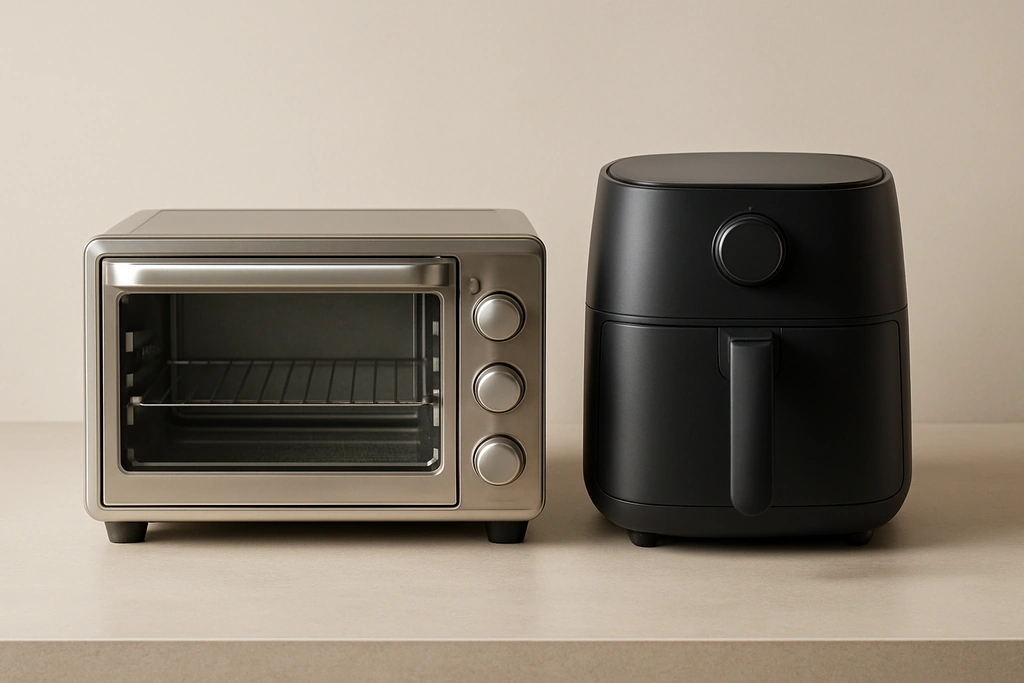
Preheat behavior also differs in practice. Because a toaster oven has more interior air volume and often a heavier metal body, it tends to take a bit longer to come up to temperature, though this varies by model and by how the wattage and interior size are matched. A basket air fryer's smaller, more enclosed chamber generally reaches cooking temperature faster and can circulate hot air more aggressively around smaller pieces of food, which is part of why it produces a crisp exterior quickly on foods like frozen appetizers.
Capacity is another point of real difference. Toaster ovens are usually described by interior dimensions or the size of bakeware they fit, such as a certain number of slices of bread or a specific pan size. Air fryer baskets are usually described by volume, measured in quarts or liters. Neither measurement translates cleanly to the other, so if you are comparing two specific products, it helps to think in terms of what you actually want to cook rather than the raw capacity number alone.
Decision criteria: which one fits your kitchen
Instead of asking which appliance is better in the abstract, it helps to run through a short list of practical questions. Because both appliances do a version of "hot air crisping," the deciding factors usually come down to what you cook, how much counter space you have, and what your existing kitchen gear looks like.
Start with the shape of the food you cook most. If your weekly routine leans toward fries, wings, roasted chickpeas, breaded proteins, or reheating takeout so it stays crisp instead of going soggy, a basket-style air fryer is built specifically for that kind of quick, small-batch crisping. If your routine leans toward toast, bagels, a tray of vegetables, small baked goods, reheating pizza slices, or occasional broiling, a toaster oven's flat rack and tray setup will generally be more compatible with the pans and dishes you already own.
Batch size matters just as much as food shape. A basket air fryer works in a single layer for best results, which means larger households or people who like to cook in bigger batches may find themselves running multiple rounds through the basket. A toaster oven's flat tray can often spread food out more widely in one load, though it is still smaller than a full-size oven and has its own real limits.
Counter space and footprint are worth measuring before you buy either one. Toaster ovens tend to have a wider, shallower footprint because of the front-opening door design, and they typically need clearance above and behind for heat venting. Basket air fryers tend to be more compact side-to-side but can be taller, and they also need airflow clearance around the vents. If your counter space is tight, measure the actual footprint of a specific model against your available counter run, including the clearance the manufacturer's manual recommends, rather than relying on general assumptions about which appliance is "smaller."
Also consider how many separate small appliances you are willing to store and manage. Some toaster ovens fold in enough functions (toasting, baking, broiling, and sometimes air-frying) that they can replace two or three single-purpose gadgets, which appeals to people who want to consolidate counter clutter. Someone who already owns a toaster and a conventional oven and mainly wants faster, crispier snacks and sides may get more day-to-day value from a dedicated air fryer basket instead.
Finally, think about how you actually use temperature and timing settings. If you like being able to see food through a window and manually check on it mid-cook, a toaster oven's glass door supports that habit. If you prefer pulling out a basket to shake or flip food partway through, a basket air fryer is designed around that motion.
Browse our recommended products
Our featured picks refresh periodically. While we update them, our editorial guides can help you find the right pick.
See our guidesLimitations of each appliance
Neither appliance is a complete replacement for a full-size oven or stovetop, and each comes with genuine tradeoffs worth weighing before you commit counter space to one or both.
Toaster ovens are constrained by their interior height and width. Tall items, a large casserole, or a full sheet pan sized for a standard oven may not fit, so you may need to buy smaller bakeware specifically sized for the unit. Because the cavity is open and heats from multiple sides at once, some models can cook unevenly near the edges compared to the center, which is a common reason people rotate trays partway through cooking. Toaster ovens also tend to take up more counter depth than a compact air fryer because of the front-opening door and the need for rear clearance.
Basket-style air fryers have their own constraints. The basket shape limits batch size: foods need room for air to circulate around them, so overcrowding the basket usually means uneven crisping rather than faster cooking. This makes air fryers less practical for cooking large quantities in a single pass, which matters for bigger households or batch cooking. The enclosed basket design also isn't compatible with a lot of standard bakeware, so recipes written for a sheet pan or casserole dish often need to be adapted or portioned differently to work in a basket. Some foods that need to lie fully flat, like a large flatbread or a full tray of cookies, simply don't fit the basket's shape.
Both appliance types have a learning curve around timing. Because they cook faster and hotter in a smaller space than a conventional oven, recipes written for a full-size oven often need shorter cook times and occasional checking, especially the first few times you use a new appliance. Both also generate real, sometimes considerable heat near the vents during use, so give either appliance the clearance described in its manual and keep it away from cabinets, walls, or anything flammable.
If you are hoping one appliance will fully replace the other, it's worth being honest that they solve different problems. A toaster oven does not replicate the tight, fast crisping of a basket air fryer as closely as a convection oven setting might, and a basket air fryer cannot bake a tray of cookies or a casserole the way a toaster oven's flat rack can. Many kitchens that use both end up treating the toaster oven as a small everyday oven and the air fryer as a dedicated crisping tool.
Cleaning and everyday care
Routine cleaning is one of the more overlooked differences between these two appliances, and it can affect how often you actually reach for one versus the other on a busy weeknight.
A toaster oven typically has a removable crumb tray at the bottom that should be emptied regularly, since accumulated crumbs and drips near a heating element are a fire risk over time. Wire racks and any drip trays are usually removable for washing, and the interior walls can generally be wiped down once cooled. Because the door is glass and hinged, grease and splatter can build up on the inside surface, so a regular wipe-down keeps visibility and heat distribution more consistent. Always check the manufacturer's manual for which parts are dishwasher-safe versus hand-wash only, since this varies by model and by the finish on the racks.
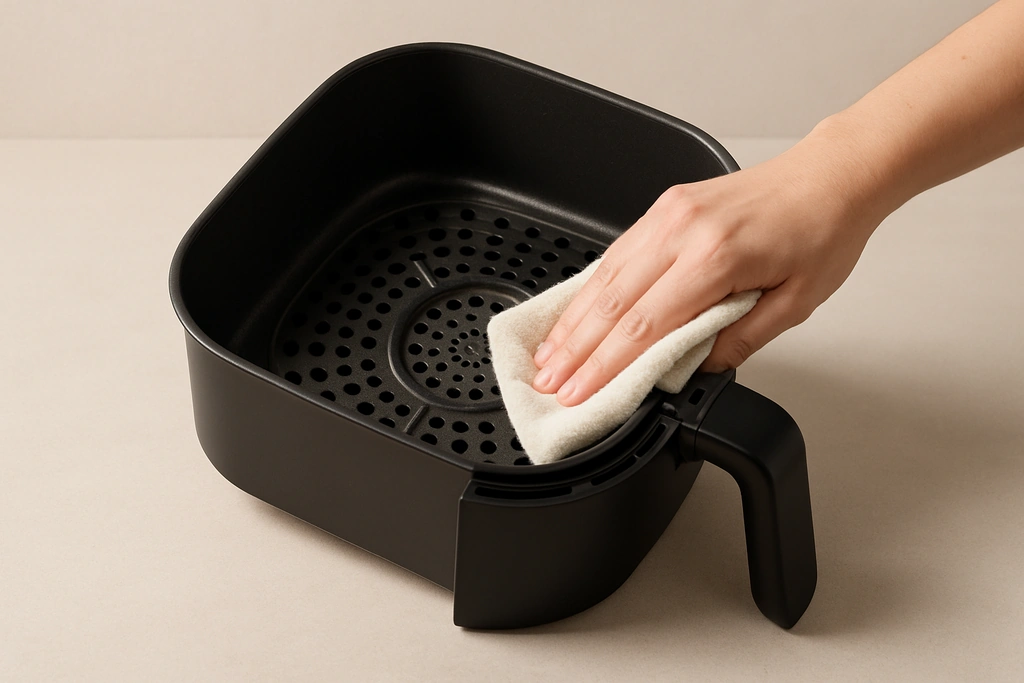
A basket-style air fryer's main cleaning point is the basket and its inner tray, which usually pull out for washing after every use since food residue and oil collect in the perforated surface. Many baskets have a non-stick or coated surface, so manufacturers typically recommend gentle sponges rather than abrasive scrubbers to protect the coating over time; check the manual for the specific care instructions for your model. The main heating chamber above the basket can also collect grease splatter and should be wiped down once fully cooled, following the manufacturer's guidance on how to safely access that area.
For both appliances, unplug the unit and let it cool completely before cleaning, and never submerge the main body or heating element in water. Stick to the exterior wipe-downs and removable-part washing the manual describes, and avoid attempting any deeper disassembly of the heating element, fan, or internal wiring yourself. If a heating element, thermostat, or fan seems to be malfunctioning, that is a manufacturer service or warranty question rather than a DIY repair, so consult the included manual or the manufacturer's support resources.
Keeping either appliance clean also tends to preserve even cooking results over time, since built-up grease or crumbs can smoke, affect airflow, or create hot spots. A quick wipe-down after each use and a deeper clean on a regular schedule, as the manual recommends, is generally enough to keep either appliance performing consistently for daily use.