What actually differs between the two
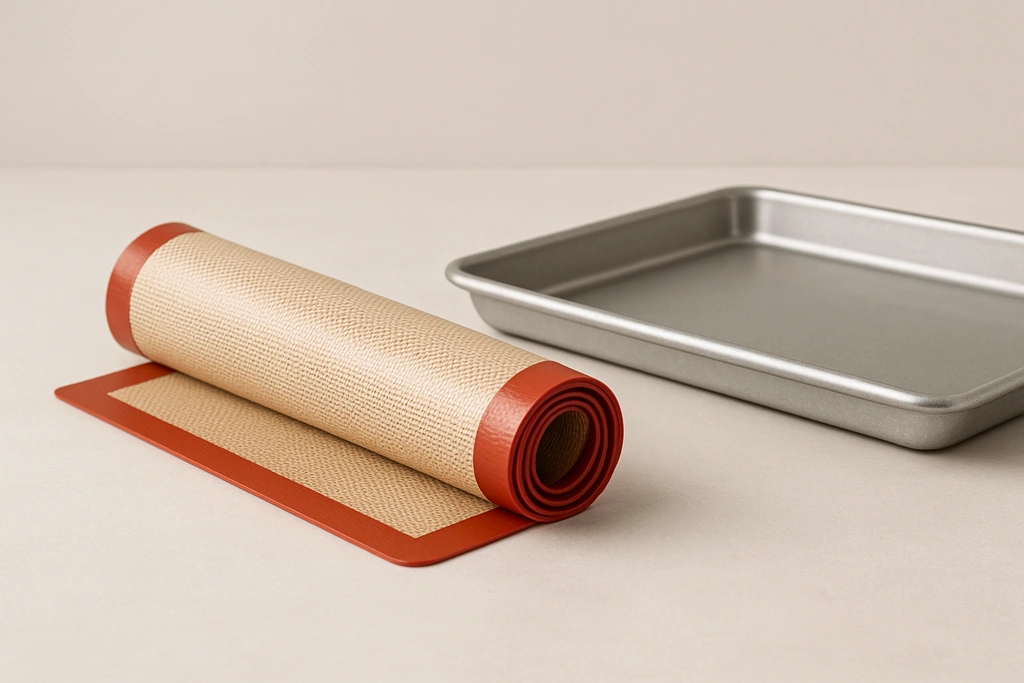
Silicone baking mats and parchment paper both exist to solve the same basic problem: keeping food from sticking directly to a metal baking sheet while making cleanup easier. Beyond that shared purpose, the two products are built very differently, and those differences show up in cost, waste, and even how food browns.
A silicone baking mat is a reusable sheet, typically reinforced with a fiberglass mesh core, designed to sit inside a baking sheet and be used repeatedly over time. Because it's a single upfront purchase rather than a consumable, the ongoing cost per use tends to drop the more often you bake. Parchment paper, by contrast, is a disposable, single-use sheet that you tear off a roll or pull from a pack, use once, and then discard. It has no reuse built into the design, so the cost accumulates continuously with every batch you bake rather than being paid once up front.
Baking results differ in subtle but real ways. Parchment paper tends to produce a slightly different surface texture on cookies and other baked goods because it's thinner and can allow marginally more direct heat transfer in some ovens. Silicone mats, being a bit thicker and more insulating, can produce slightly more even browning across a batch, though results vary by oven, recipe, and how full the tray is. Neither material is inherently "better" for browning across every recipe; the difference is more about consistency and the specific bake you're doing.
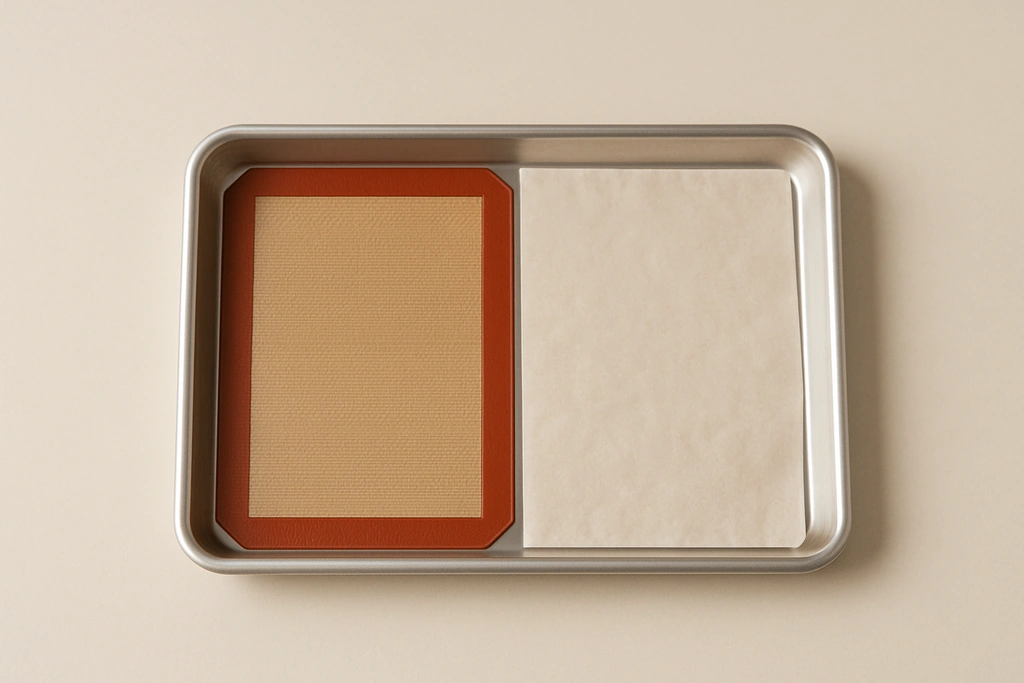
Fit and sizing also work differently. Parchment paper is trimmed to size with scissors or torn to roughly fit whatever pan you're using, which makes it flexible across odd pan shapes and sizes. Silicone mats are manufactured in fixed dimensions meant to match standard baking sheet sizes, so a mat that doesn't match your specific pan can leave exposed metal at the edges or hang over the sides. If you own baking sheets in mixed or nonstandard sizes, that's worth checking against the mat's listed dimensions before buying.
Temperature tolerance is another point worth checking directly rather than assuming. Both products are generally rated for standard home oven baking temperatures, but the exact maximum temperature rating varies by manufacturer and product line for silicone mats, and parchment paper brands also list their own maximum temperature guidance on the packaging. Always check the specific max-temperature rating and any food-grade labeling on the product listing or packaging itself rather than assuming one material universally outperforms the other at high heat.
Decision criteria for your baking habits
Rather than asking which product is universally better, it helps to think through how often you bake, what you bake, and how you want to manage cost and waste over time. Both products do the same core job, so the deciding factors come down to habits more than performance gaps.
Start with frequency. If you bake often, several times a week or more, the cost-over-time math tends to favor a reusable silicone mat, since the upfront cost gets spread across many uses instead of buying a fresh sheet of parchment every time. If you bake only occasionally, a roll of parchment paper may be simpler since you're not committing counter or drawer space to a mat you'll use infrequently, and you won't need to think about washing and drying it between uses.
Consider what you actually bake. Recipes that call for pan spray or a very hot surface for a specific crisping effect, like certain flatbreads or high-heat roasted vegetables, may behave differently on parchment versus a mat, so it's worth testing a recipe on both if the browning result matters to you. For everyday cookies, sheet-pan dinners, and roasting, either option generally works, and the choice comes down more to convenience and cost preference than to a meaningful difference in outcome.
Waste reduction is a real factor for some households. A silicone mat eliminates the ongoing waste stream of a fresh sheet of paper per batch, which matters if you're trying to reduce single-use kitchen products generally. Parchment paper, on the other hand, doesn't require any washing or drying between uses and can simply be thrown away, which some people prefer for convenience or for recipes that get particularly messy, sticky, or saucy.
Storage space matters too. A silicone mat needs a flat or rolled storage spot, often in a drawer or hung on a hook, and it needs to dry fully before being stored to avoid trapping moisture. A roll or box of parchment paper stores flat or upright in a drawer or pantry and doesn't require any drying step, which can be simpler if kitchen storage space is tight.
Finally, think about how many baking sheets you regularly use at once. Since silicone mats are sized to specific pans, someone who bakes multiple trays at a time may need to buy a matching mat for each sheet pan they own, which adds to the upfront cost. Parchment paper scales more easily in that scenario since you simply tear off another sheet, regardless of how many trays you're running through the oven in one session.
Browse our recommended products
Our featured picks refresh periodically. While we update them, our editorial guides can help you find the right pick.
See our guidesLimitations of each option
Neither product is a perfect solution, and each comes with tradeoffs that are easy to overlook until you've been using one for a while.
Silicone mats require an upfront purchase before you save any money, which means the cost-over-time advantage only plays out if you actually bake regularly enough to use the mat many times. A mat that mostly sits in a drawer doesn't deliver the value proposition it's built around. Mats are also sized to fit specific baking sheet dimensions, so a mismatch between your pan size and the mat's dimensions can leave gaps at the edges or an overhanging mat that doesn't lie flat, which can affect even heat distribution. Over repeated use, a mat's surface can also show wear, such as a duller finish or minor surface marks, and its non-stick performance may gradually change with age and with how it's cleaned. Checking a specific product's care instructions and expected surface behavior over time, rather than assuming indefinite performance, is a reasonable step before relying on it for delicate bakes like macarons.
Parchment paper's biggest limitation is that it's a recurring purchase with no reuse built in, so the cost keeps accumulating for as long as you keep baking, unlike a one-time mat purchase. It also generates ongoing packaging and paper waste with every batch, which matters to households trying to reduce single-use kitchen products. At high oven temperatures, parchment can sometimes curl or shift on the pan, particularly near the edges, which can be an inconvenience when arranging food on it. Parchment is also disposable by nature, so it isn't an option for anyone specifically trying to cut down on recurring consumable purchases in the kitchen.
Both products have a genuine tradeoff around convenience versus cost. A mat asks you to wash and dry it between uses in exchange for long-term savings and less waste. Parchment asks you to keep buying it in exchange for zero cleanup and no storage commitment. Neither tradeoff is wrong; it depends on which resource, time or ongoing cost, you'd rather manage.
It's also worth being clear-eyed about claims you might see on packaging or listings. Rather than assuming any particular safety or performance claim, check the manufacturer's specific max-temperature rating and any food-grade labeling directly on the product listing or packaging before you buy, since these details vary by brand and by product line and aren't safe to assume are identical across the category.
Cleaning and storage
Day-to-day care is one of the clearest practical differences between these two products, and it's worth thinking through before you settle on one for regular use.
A silicone mat needs to be washed after each use, typically with warm water and dish soap and a non-abrasive sponge, to remove any residue or baked-on spots before it's stored again. Some mats may be labeled as dishwasher-safe, but it's worth checking the specific product's care instructions rather than assuming, since surface coatings and construction can vary between products. After washing, the mat should be fully dried before it's rolled, stacked, or hung for storage, since trapped moisture can affect the mat over time. Avoid cutting directly on the mat's surface or using metal utensils that could scratch or gouge it, since surface damage can affect both its non-stick behavior and its appearance going forward.
Parchment paper requires no cleaning at all since it's discarded after use, which is part of its appeal for quick or messy bakes. Storage is simple: a roll or stack of pre-cut sheets fits flat or upright in a drawer, and there's no washing, drying, or wear to think about between uses. The tradeoff is that this convenience comes with the recurring cost and packaging waste discussed earlier, so the "no cleanup" benefit is really a shift of effort from washing a mat to buying and disposing of paper on an ongoing basis.
For either product, a few general habits help keep results consistent. Let a silicone mat cool and dry completely before stacking it with other bakeware to avoid moisture buildup, and store parchment paper somewhere it won't get crushed or torn before use. If you switch between the two depending on what you're baking, it can help to keep both on hand: a mat for everyday, frequent use and a roll of parchment paper for occasional messy bakes, high-heat roasting, or recipes where you want the option to simply discard the liner afterward rather than wash it.
Ultimately, the cleaning and storage routine you're more willing to commit to on a regular basis is often the deciding factor between these two options, more so than any dramatic difference in how your food actually bakes.