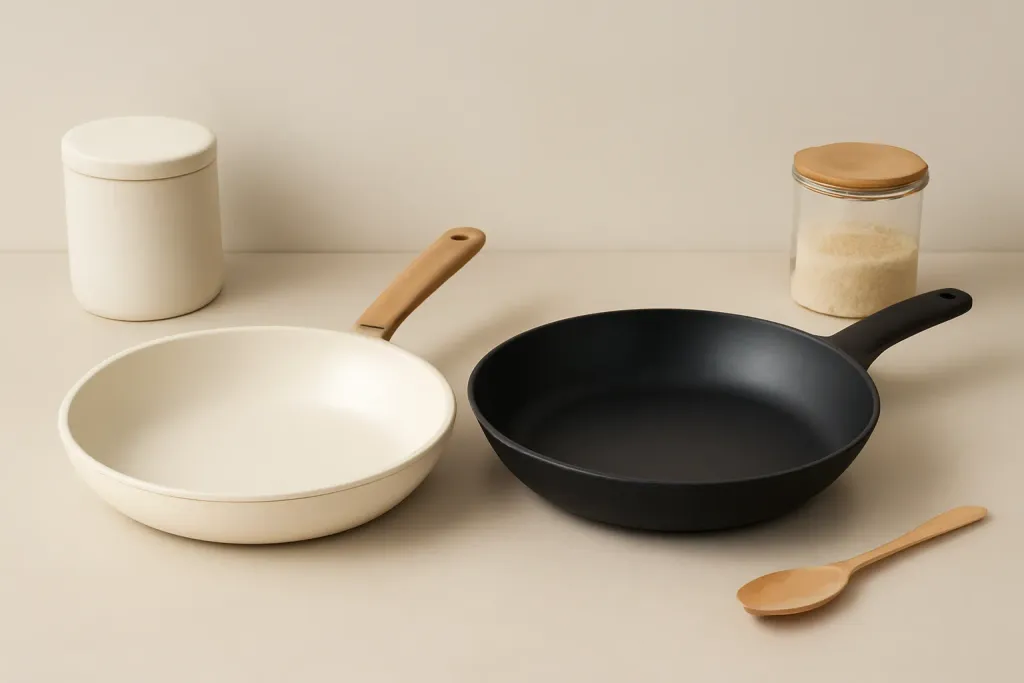
Ceramic vs PTFE Nonstick Cookware: The Core Difference
When shoppers compare ceramic vs PTFE nonstick cookware, the first thing to understand is that the label usually describes the cooking surface, not the whole pan. PTFE is the familiar fluoropolymer coating found on many classic nonstick skillets. Ceramic nonstick usually refers to a sol-gel style coating that is marketed as ceramic-like, even though the pan body is typically metal underneath.
That distinction matters because the cooking experience comes from the full build, not from the coating name alone. Base metal, pan thickness, handle design, and the way the coating is applied all influence how a pan feels and performs. Two skillets can both be labeled nonstick yet behave differently in weight, heat response, and cleanup.
For most home cooks, the real question is less about branding and more about use. Nonstick cookware is designed to reduce sticking and make routine cooking easier. It is most useful for low- to moderate-heat jobs such as eggs, quick sautés, delicate fish, and simple reheating. It is generally not meant to replace every other type of cookware in the kitchen.
Because marketing language can be broad, it helps to read product details carefully. Look for the base material, stovetop compatibility, recommended heat range, and care instructions. Those details often tell you more than the coating label by itself.
What PTFE Nonstick Means in Practice
PTFE is the traditional nonstick surface many shoppers already know. In everyday cooking, it is often associated with a very slick feel and easy food release, especially for eggs, pancakes, fish, and other delicate foods. For buyers who want a familiar nonstick skillet with a straightforward learning curve, PTFE is often the reference point.
PTFE cookware is generally intended for moderate stovetop use. It is not the best match for recipes that rely on very high heat, long preheating, or hard searing. Like any coated pan, it can be affected by overheating, abrasive utensils, and harsh scrubbing. Staying within the maker’s guidance matters more than pushing the pan beyond its intended role.
Some product listings use broad marketing language that makes one PTFE pan sound dramatically different from another, but the practical differences often come from construction details. A more reliable approach is to examine the thickness of the base, the quality of the handle attachment, whether the pan is oven-safe within a stated limit, and whether the brand gives clear care instructions.
For many households, PTFE remains appealing because it is familiar and predictable. If you want a standard nonstick pan for breakfast cooking and easy cleanup, it is often the benchmark used in the ceramic vs PTFE nonstick cookware comparison.
What Ceramic Nonstick Means in Practice
Ceramic nonstick cookware is usually a metal pan with a ceramic-based coating on the cooking surface. The word “ceramic” can make it sound like a solid ceramic vessel, but that is not usually what shoppers are buying. In most cases, the metal base still does most of the work in terms of weight, balance, and heat distribution.
Many shoppers consider ceramic because it is presented as an alternative to PTFE. In practice, ceramic nonstick is also meant to help food release and make cleanup easier. It can be a good fit for cooks who want a coated pan for simple tasks and who are willing to treat the surface with care.
One practical point is that ceramic coatings can feel especially slick when new, but the surface may change over time with normal use and repeated heating. That does not automatically mean the pan is defective. It simply means expectations should stay realistic. Ceramic nonstick is best understood as a convenience coating for certain cooking jobs, not as a replacement for all-purpose cookware.
If you are comparing ceramic options, pay attention to more than the finish color or the marketing name. The thickness of the pan, the quality of the base metal, the comfort of the handle, and the clarity of the care instructions often matter more in daily use than the coating label itself.
Cooking Performance: Release, Browning, and Everyday Use
In the ceramic vs PTFE nonstick cookware comparison, food release is usually the first thing people notice. PTFE is widely known for a very slick nonstick surface, which can be especially helpful for fragile foods like soft eggs and crepes. Ceramic nonstick also aims for easy release, but results can vary more from one product to another because coating formulas and construction details differ widely across brands.
Browning is another useful comparison point. Nonstick cookware of either type is not usually the first choice when strong browning is the goal, since these pans are built more for release and convenience than for developing a deep crust. If your main aim is searing, stainless steel or cast iron is generally a better fit. For everyday cooking such as scrambling eggs, warming tortillas, sautéing tender vegetables, or reheating leftovers, either coating can be practical at moderate heat.
Heat control matters with both surfaces. A very hot burner can reduce convenience, make cooking less consistent, and put stress on the coating. In many kitchens, a medium setting works better than a high one. That is especially true if the pan is lightweight, if you are using only a small amount of oil, or if the recipe needs gentle handling.
The best choice often comes down to cooking style. If you want a familiar nonstick skillet that behaves like classic coated cookware, PTFE may feel more straightforward. If you prefer ceramic-style marketing or a specific pan design, ceramic may be the better fit. In either case, the pan’s construction and care instructions are part of the performance story.
Browse our recommended products
Our featured picks refresh periodically. While we update them, our editorial guides can help you find the right pick.
See our guidesHeat, Care, and Kitchen Routine
Nonstick cookware tends to work best when the kitchen routine matches the coating’s design. That means preheating cautiously, avoiding empty-pan overheating, and keeping burner settings modest. This is true for both ceramic and PTFE cookware. If you cook regularly at very high heat, neither surface is an ideal all-purpose choice.
Cleaning is usually simple, but it should still be gentle. A soft sponge, mild dish soap, and washing after the pan has cooled are common best practices. Harsh scrub pads, metal tools, and aggressive cleaners can wear down the coating over time. Even if a product is labeled dishwasher-safe, hand washing is often the more careful option for preserving the finish.
Storage also matters more than many shoppers expect. Stacking pans without protection can scuff the cooking surface or chip the rim. Pan protectors, folded towels, or careful nesting can help reduce wear in crowded cabinets. If you have limited storage space, that detail can be just as important as the coating type.
It is also worth checking the full care section before buying. Some pans can go in the oven only to a limited temperature, while others are meant mainly for stovetop use. Handle material, lid construction, and base thickness can change how convenient the pan feels in everyday cooking. The more clearly a listing explains those details, the easier it is to judge whether the pan fits your routine.
Safety and Practical Considerations for Home Cooks
Because cookware is used with heat, shoppers naturally want a conservative way to think about safety. A practical approach is to use both ceramic and PTFE cookware according to the manufacturer’s instructions, especially the stated heat limits and care rules. Misuse is more likely to create problems than the coating name by itself.
That is why product information matters so much. Clear maximum temperatures, sensible handle materials, and plain care guidance are helpful signs. If a listing relies on vague claims but gives little practical detail, it is harder to judge whether the pan fits your cooking style. A dependable nonstick pan should be easy to understand: what it is made of, how hot it is meant to get, and how it should be cleaned.
It also helps to think about how often you use nonstick cookware at all. If most of your cooking is eggs, delicate fish, or simple sautés, a coated pan can be a useful daily tool. If you often cook at high heat, finish dishes in the oven, or rely on heavy browning, a nonstick pan may only serve a limited role. Many kitchens work best with one nonstick skillet for delicate tasks and sturdier cookware for everything else.
Marketing can make coated pans sound more versatile than they are. A more realistic view is that nonstick is convenient, not universal. Gentle use and reasonable expectations matter more than the coating name on the box.
How to Choose Between Ceramic and PTFE
If you are narrowing down ceramic vs PTFE nonstick cookware, start with the way you cook. PTFE is often the more familiar choice for shoppers who want a classic nonstick skillet for eggs, pancakes, and low-heat tasks. Ceramic may appeal if you want a different coating style or if a particular pan’s shape, handle, or overall design fits your kitchen better.
Next, compare the build quality. A thicker base can help a pan heat more evenly than a very thin one. Comfortable handles, secure lids, and a stable feel on the burner can make daily cooking easier. The coating matters, but it is only one part of the whole product. Two pans with similar labels can still feel quite different in use.
Then check the maintenance requirements. Some shoppers want a pan that is easy to hand wash and store. Others prefer one that can handle occasional oven use within a stated limit. A pan that fits your routine without extra effort is often a better long-term choice than one that looks impressive but asks more attention than you want to give it.
Finally, keep expectations grounded. Nonstick cookware is convenient, but it is not usually the pan most people will use for every cooking task. If you think of it as a specialized tool for easy-release cooking, you are more likely to choose well and keep it in good condition.
Bottom Line: Which One Makes More Sense?
There is no universal winner in the ceramic vs PTFE nonstick cookware comparison. Both are designed to make certain cooking tasks easier, both tend to work best at moderate heat, and both benefit from gentle care. PTFE is the classic choice many shoppers already know. Ceramic is a common alternative that may appeal to people who want a different coating system or simply a pan whose design better matches their preferences.
The most sensible approach is to shop by use case rather than by buzzwords. If you want an everyday pan for eggs, quick breakfasts, or delicate foods, either coating can be practical. If you cook mostly at high heat or want strong browning, it may be better to look at another cookware category entirely. If you want less guesswork, prioritize clear product specifications, a sturdy base, and straightforward care instructions.
For Amazon shoppers, the strongest choice usually comes from reading the listing closely and matching the pan to your routine. The coating label matters, but the construction, heat limits, and maintenance needs matter just as much.