How induction cooking differs
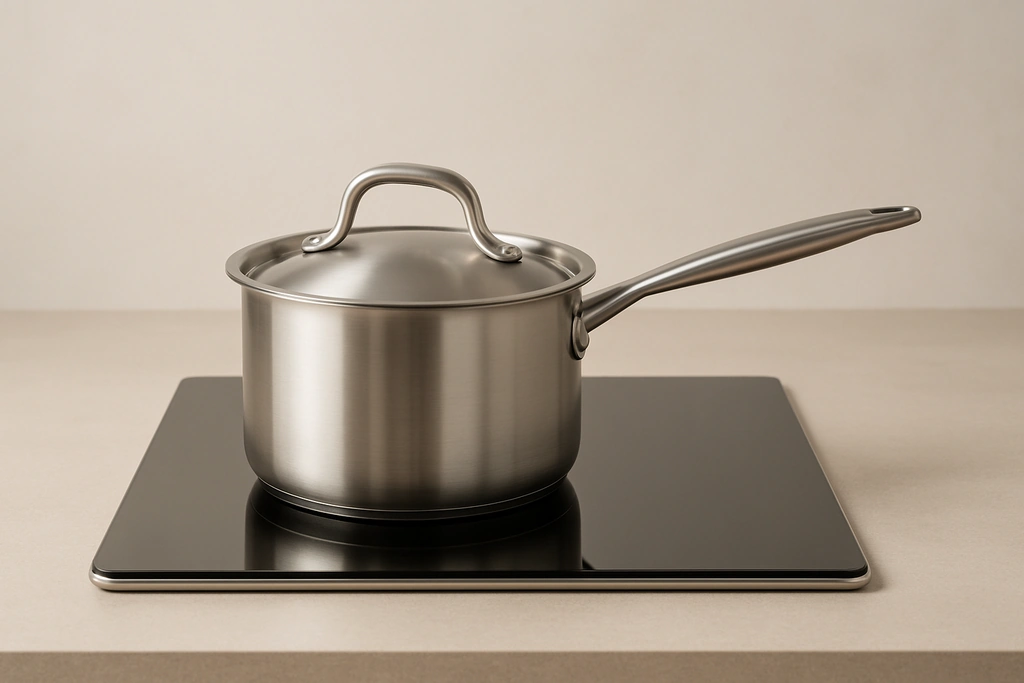
Induction cooktops heat cookware differently than gas burners or standard electric coil or radiant glass tops. Instead of transferring heat from a flame or a heated element to the pan, an induction cooktop uses an electromagnetic field generated beneath the glass surface. That field induces an electrical current directly in the base of the cookware, and the resistance to that current is what generates heat. This means the cooktop itself stays relatively cool to the touch away from the pan, and heat appears almost immediately once contact is made, because the pan itself is the heat source rather than a passive recipient of heat from below.
The practical consequence of this design is that induction cooktops only work with cookware that has a magnetic base. Materials like aluminum, copper, and some grades of stainless steel are not inherently magnetic on their own, so a pan made purely from these materials will not heat at all on an induction surface, no matter how well it performs on gas or electric coil. This is a fundamentally different requirement than choosing cookware for other cooktop types, where heat conduction and even distribution across the base are the primary concerns rather than whether the cooktop can even detect the pan.
Because of this, cookware marketed for general use is not automatically induction-ready. Many multi-clad or tri-ply pans include a layer of magnetic stainless steel specifically to bridge this gap, sandwiching it around a core of aluminum or copper for conductivity. Fully aluminum or copper pans, unless they have been manufactured with an added magnetic base plate, typically will not work at all. This is worth understanding before shopping, since the visual difference between compatible and incompatible cookware is not always obvious just by looking at the exterior finish or handle style.
Another distinction worth noting is how quickly induction cooktops respond to adjustments. Because the field can be modulated almost instantly, temperature changes tend to register faster on the pan's surface than with a traditional electric coil that has residual heat to dissipate. Cooks moving from gas or electric coil to induction sometimes need a short adjustment period to get used to this responsiveness, independent of which cookware they choose. Understanding this difference helps set realistic expectations before evaluating specific cookware for compatibility and performance on an induction surface.
How to confirm cookware is induction-compatible
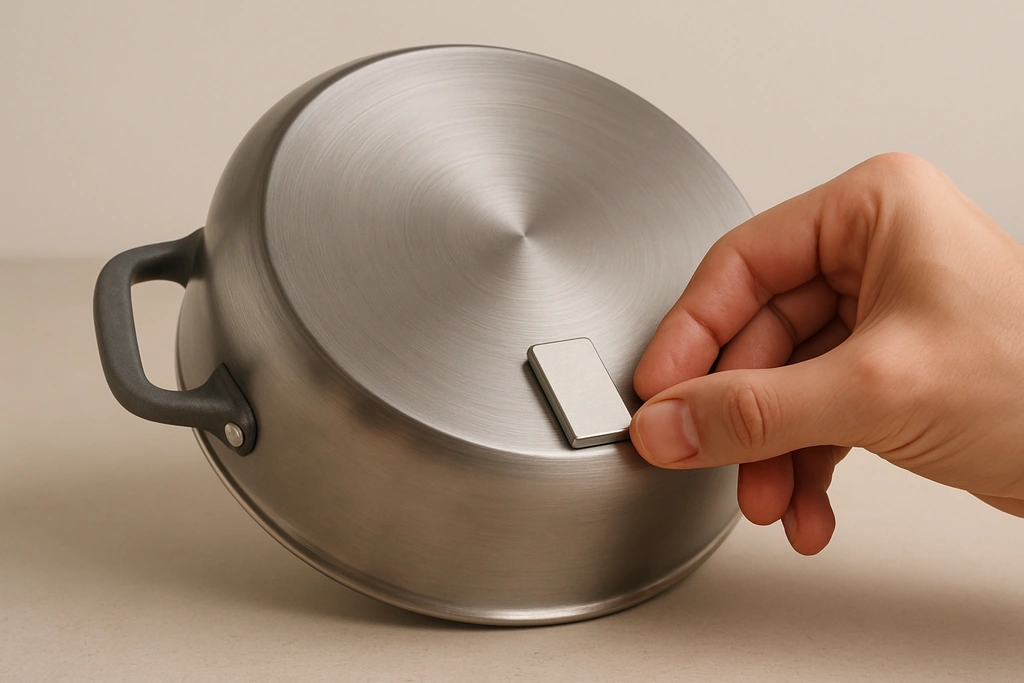
The most reliable and widely recommended way to check whether a piece of cookware will work on an induction cooktop is a simple magnet test. Take an ordinary refrigerator magnet or any small magnet and hold it against the underside of the pan. If the magnet grips firmly to the base, the cookware has enough magnetic material to generate the current an induction cooktop needs. If the magnet does not stick at all, or only holds weakly, the pan is unlikely to heat properly, if at all, once placed on an induction burner. This is a simple, non-technical check that any shopper can do in a store or at home before relying on a piece of cookware for induction cooking.
Beyond the magnet test, packaging and product listings often include an induction symbol, typically a small coil or spiral icon, indicating the manufacturer has designed the piece for induction use. When this labeling is present, it can serve as a useful cross-check alongside the magnet test, though shoppers without the packaging in hand can rely on the magnet method alone. It is worth checking every piece in a set individually, since some cookware lines mix induction-ready pieces with others that are not, particularly in larger sets that include specialty pans.
Base flatness is another factor to weigh, separate from magnetism. Induction cooktops rely on close, even contact between the pan's base and the glass surface to transfer energy efficiently and to register the pan's presence correctly. A base that is warped, excessively thin, or noticeably concave or convex may make inconsistent contact with the cooktop, which can lead to uneven heating or the cooktop failing to recognize the pan at all. Cookware described as having a flat, heavy-gauge base is generally a better match for induction use than thin, lightweight pans, independent of the magnetic requirement.
Pan diameter also matters on induction cooktops more than it does on gas or coil burners. Most induction cooking zones have a minimum base diameter they can detect, and using a pan that is too small for the zone can result in the cooktop not activating or cycling on and off unpredictably. When shopping, it helps to compare the base diameter of prospective cookware to the induction zone sizes on the specific cooktop model in question, since this detail varies by manufacturer and is usually listed in the cooktop's own documentation.
Browse our recommended products
Our featured picks refresh periodically. While we update them, our editorial guides can help you find the right pick.
See our guidesLimitations of induction-compatible cookware
Choosing induction-compatible cookware comes with genuine tradeoffs worth understanding before making a purchase. Cookware built specifically for induction use, particularly pieces with a magnetic stainless layer bonded to an aluminum or copper core, often involves more complex manufacturing than single-material cookware, and this can be reflected in the price of induction-ready lines compared to cookware intended only for gas or electric use. Shoppers should weigh this against how often they expect to use the cookware and whether the added construction meaningfully benefits their cooking habits.
Aluminum-core and copper-core pans, prized by many cooks for how evenly and responsively they conduct heat, need a magnetic stainless steel layer added to their base specifically to work on induction. Without it, these materials are simply invisible to an induction field. This means some cookware that performs very well on gas cannot be used on induction at all unless the manufacturer has built in that magnetic layer, and shoppers who already own aluminum or copper cookware without this feature should not assume it will transfer to a new induction setup.
Even among cookware that passes the magnet test, performance can vary. A thin or unevenly applied magnetic layer may generate less consistent heating than a thicker, well-bonded base, and some lower-cost induction-compatible cookware can produce noticeably uneven results, such as hot spots near the center or edges of the pan. Warping over time, particularly with thinner-gauge cookware exposed to high heat or rapid temperature changes, can also affect how flush the base sits against the cooktop, which in turn affects how well the induction field is able to couple with the pan.
It is also worth noting that specialty cookware, such as certain woks, griddles, or pans with rounded or non-flat bases, may be difficult to use effectively on induction regardless of the materials involved, simply because of the shape's poor contact with a flat glass surface. Shoppers with these preferences may need to look for pieces specifically designed with a flattened section or an included adapter disk, and should treat these as a separate consideration from ordinary flat-bottomed pots and pans.
Care considerations for induction-safe pieces
Caring for induction-compatible cookware generally follows the same principles as caring for other cookware of similar materials, but a few considerations are specific to how these pieces interact with a glass cooktop surface. Because induction cooktops rely on flush contact between the pan base and the glass, keeping the underside of the cookware clean and free of buildup helps maintain even heating over time. Residue or scorched spots on the base can create small gaps in contact, and over repeated use this may contribute to less consistent heat transfer.
Manufacturers typically provide specific guidance on cleaning methods appropriate to the cookware's construction, and checking the included manual or manufacturer instructions is the best way to confirm what cleaning products and tools are safe for a given piece. Some induction-compatible cookware pairs a magnetic stainless exterior with an interior coating or finish that has its own separate care requirements, so the base material and the cooking surface may need to be treated differently when cleaning.
Placing induction cookware on the cooktop gently, rather than sliding it across the glass, helps avoid scratching the cooktop's surface, particularly with cookware that has a rough or textured base finish. Many cooktop manufacturers note this in their own product manuals, and following that guidance protects the appliance as well as the cookware. Similarly, allowing pans to cool before stacking them, especially in sets where nesting is common, can help prevent the base from being scuffed by rims or handles of other pieces.
Over the life of a set, it is worth periodically re-checking older cookware with the same magnet test described earlier, particularly for pieces that have seen heavy use or been exposed to high heat repeatedly. While the magnetic properties of the base do not typically change from normal cooking, physical warping from thermal stress can affect how well a pan sits on the cooktop even if it remains magnetically compatible. For any questions about whether continued use of a specific pan is appropriate for an induction cooktop, consulting the cookware manufacturer's care instructions or the cooktop manufacturer's manual is the most reliable source of guidance.