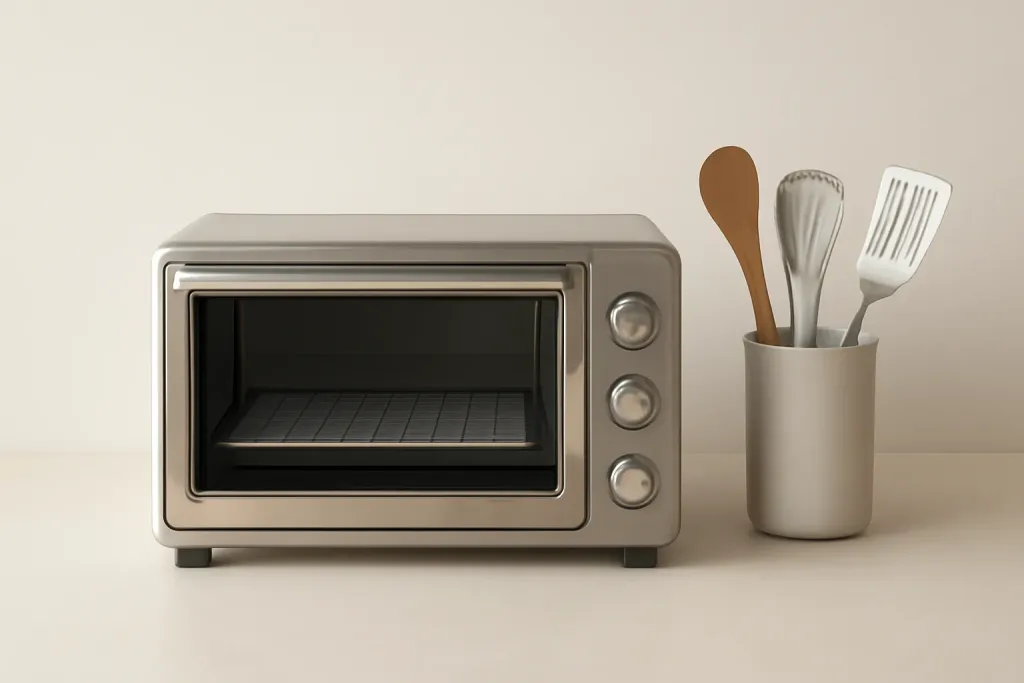
Toaster Oven Functions: The Basics
When shoppers look for toaster oven functions explained, they usually want a plain-English guide to what each setting does and how to use it. A toaster oven is more than a small version of a standard oven. Its controls change where heat comes from, how quickly food cooks, and how much browning you get on the surface.
Most toaster ovens include a core group of functions: toast, bake, broil, warm, and sometimes reheat. Many also add convection, air fry, pizza, bagel, and defrost. The names may sound familiar, but the exact behavior can vary by brand and model. One appliance may use a fan during bake, while another may reserve the fan for a separate convection setting.
For an independent kitchen-products buyer, the useful question is not how many modes a toaster oven offers. It is whether the controls are clear and suited to the foods you actually make. A simpler unit can be enough if you mostly toast bread or heat leftovers. A more feature-rich model can make sense if you want extra control over browning, circulation, or surface crisping.
Because settings are not standardized, the user manual matters. It should explain how the function selector, temperature dial, timer, and rack positions are meant to work together. In many cases, the setting name alone does not tell the full story.
Toast Function: Built for Bread and Bagels
The toast function is the signature setting on most toaster ovens. It is designed to brown bread evenly on the outside while warming it through. In many models, the appliance runs on a timed cycle rather than a fixed cooking temperature, because toast is mainly about controlled browning.
For bread slices, the rack position affects the result. A higher position usually brings food closer to the top element and can increase browning, while a lower position may produce a gentler finish. Bagels are often handled differently from regular slices, with some toaster ovens concentrating more heat on the cut side than on the outer side.
Toast settings are not universal, so a number on one toaster oven may not match the same number on another. Bread thickness, moisture, and starting temperature all affect timing. For that reason, the first few uses often involve some adjustment before the setting feels familiar.
It is also important not to overload the toaster oven. Oversized slices can touch the heating elements or sit too close to them, which can lead to uneven browning. Stay nearby while toasting so you can check progress before the bread goes darker than intended.
Bake Function: Steady Heat for Everyday Cooking
The bake function is the setting most similar to a conventional oven. It is meant for foods that need steady, moderate heat over time. Common uses include small casseroles, baked potatoes, cookies in a compact pan, and vegetables, depending on how much room the toaster oven has.
In bake mode, heat usually comes from both the top and bottom elements. That balanced approach helps cook food through without concentrating all the heat on the surface. For many households, bake is the most versatile function because it handles a wide range of everyday recipes.
Since toaster ovens are compact, spacing matters. Food should generally have room around it so heat can circulate. A pan that is too large may block airflow and create uneven results. A dish placed too close to the top element may brown too quickly before the center is ready.
If the appliance includes convection during bake, a fan may move hot air through the cavity. That can change how quickly food browns and may make the cooking environment feel more active than standard bake mode. When using toaster-oven recipes, it is better to follow guidance written for that appliance than to assume full-size oven timing will transfer exactly.
Broil Function: High Heat from Above
Broil is the setting used when strong top heat is needed. Unlike bake, which aims for overall cooking, broil is meant to brown, crisp, or finish the surface of food. It is often used for melting cheese, toasting breadcrumbs, or adding color to a dish that is already cooked.
Because broiling focuses heat near the top element, it usually needs close attention. Food can brown quickly, and the difference between lightly colored and too-dark can happen in a short time. That makes broil useful, but it also means you should stay nearby instead of setting a long unattended timer.
Placement is important in broil mode. Many toaster ovens need the rack in an upper position to bring food closer to the heat source. But being too close can burn the surface before the interior is ready. The manual should guide you on rack placement and any cookware limits for that function.
Broil is not the best choice for delicate foods or long cooking tasks. It works best as a finishing tool or for foods that need only brief exposure to intense heat. If a recipe calls for broiling, preparation and timing matter more than on many other settings.
Browse our recommended products
Our featured picks refresh periodically. While we update them, our editorial guides can help you find the right pick.
See our guidesWarm, Reheat, and Other Low-Heat Settings
Warm and reheat functions use lower-intensity heating than bake or broil. These modes are useful when food is already cooked and only needs to be held at serving temperature or gently brought back to heat. They can be convenient for leftovers, side dishes, and foods that would dry out under stronger settings.
Warm is usually meant to maintain temperature rather than continue active cooking. Reheat may run a bit more actively than warm, though the exact behavior depends on the appliance. Some toaster ovens also include keep-warm or low-temperature cycles that serve a similar purpose.
These lower-heat settings are helpful when you want less browning and a softer heat profile. They are not a substitute for cooking food from raw. As with other functions, the result depends on the pan, rack position, and thickness of the food.
If food seems to dry out easily, a more suitable container or a looser cover may help, as long as the cookware is approved for toaster-oven use. Checking food early is a good habit, since compact appliances can respond faster than many people expect.
Convection, Air Fry, Pizza, Bagel, and Defrost
Many toaster ovens add specialty modes that build on the basics. Convection is one of the most useful additions. It uses a fan to move hot air through the cavity, which can support more even heat distribution and may help reduce hot spots in some cooking situations. It is often paired with bake, roast, or toast-style settings.
Air fry is another common label, although it does not mean exactly the same thing from one appliance to another. In many toaster ovens, air fry is a fan-assisted high-heat mode intended to promote a crisp exterior. The label should be read as a description of the cooking approach, not as a promise of a specific result.
Pizza settings may combine bottom heat, top heat, or convection to help brown the crust while melting the topping. Bagel settings, if present, may emphasize the cut side more than the outer side. Defrost or thaw settings may use mild heat or cycling patterns to prepare frozen food for cooking, but the exact design varies.
Because specialty modes are not standardized, the manual is the best guide. A clear control panel should explain which foods each mode is intended for and whether the fan, elements, or temperature behavior change when you select it.
How to Choose the Right Function
The easiest way to use toaster oven functions well is to match the setting to the cooking goal. If you want browning on bread, use toast. If you want steady all-around cooking, use bake. If you want quick top heat, use broil. If the food is already cooked, use warm or reheat. If your model offers convection or another specialty mode, use it when the manual says it fits the food.
Thinking in terms of heat behavior can be more helpful than memorizing every label. Ask whether you need direct heat, circulating heat, or gentle holding heat. That approach makes the functions easier to compare when you are shopping, and it can also reduce guesswork during everyday use.
Preheating may help on some functions, especially bake and broil, but it is not always necessary. The need for preheating depends on the recipe and the appliance design. For consistent results, use toaster-oven recipes when possible and adjust slowly if a setting seems too aggressive or too mild.
Expect some variation from one model to another. A toaster oven’s smaller cavity changes how quickly food browns and how close the food sits to the elements. That does not make the appliance inferior; it just means the cooking environment is different from a full-size oven.
Safe and Practical Use
Safety and everyday practicality go hand in hand with toaster oven functions. Use cookware that is approved for toaster ovens and make sure it fits without touching the heating elements or blocking airflow. If a pan is too large, it can affect circulation and lead to uneven cooking.
Keep crumbs cleaned out according to the manufacturer’s instructions so residue does not build up. Use oven mitts when removing hot trays or pans, and open the door carefully because hot air can escape quickly. These are simple habits, but they matter whenever the appliance is running at higher heat.
Do not rely on a function name alone if the control panel is unclear. A model with straightforward labels, visible rack positions, and a readable manual is often easier to use than one with a long list of specialty modes. Clarity matters more than novelty when you are comparing appliances for real kitchen use.
If you are unsure about a setting, start with a lower level of heat or a shorter time and check progress early. That cautious approach helps you learn how the specific toaster oven behaves without assuming it performs exactly like another model.