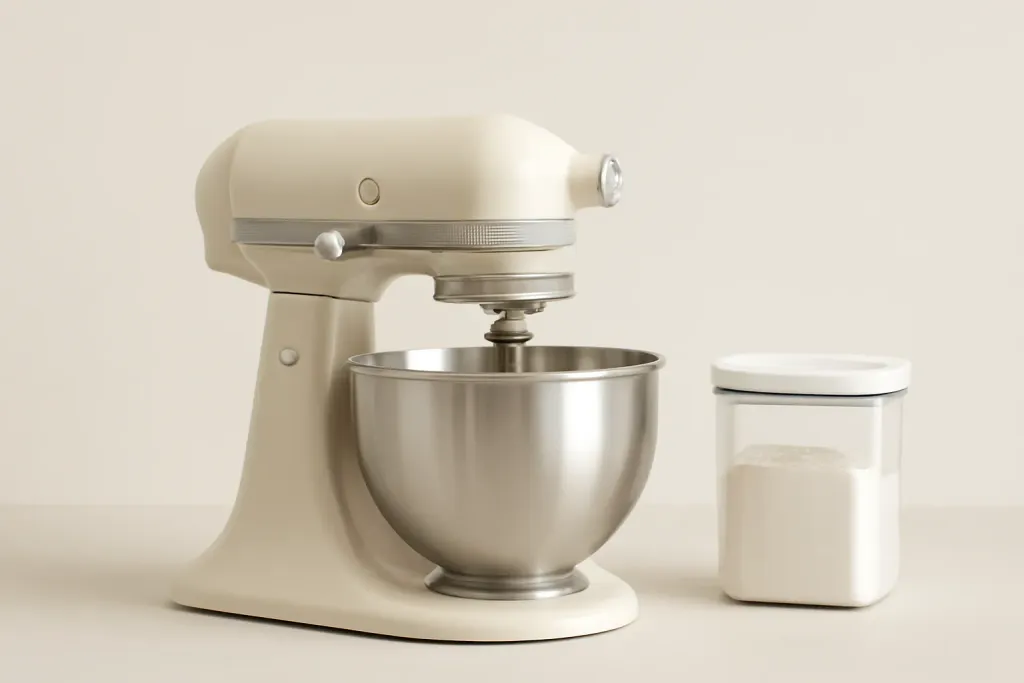
Tilt-Head vs Bowl-Lift: The Main Design Difference
When comparing tilt-head vs bowl-lift stand mixers, the central difference is simple: the mixer opens in a different way. A tilt-head mixer uses a hinged top that tilts back so you can attach the bowl and reach the beater area. A bowl-lift mixer keeps the head fixed while side arms raise the bowl into mixing position. That one design choice changes how each machine looks, how it opens, and how it feels during everyday baking.
For shoppers, the style question is usually less about which mixer is inherently better and more about which workflow fits the kitchen. A tilt-head model often appeals to people who want quick access, a familiar setup, and easy ingredient additions. A bowl-lift model often appeals to people who want a more anchored feel and a format that seems better suited to frequent mixing. The best choice depends on how you bake most often, not on the name of the style.
It also helps to look beyond brand reputation and focus on the practical details. Counter space, cabinet clearance, bowl size, attachment access, and how often the mixer will be used all matter. Those are the factors that usually determine whether a stand mixer becomes a useful daily tool or an appliance that feels awkward in the kitchen.
How Tilt-Head Stand Mixers Work
Tilt-head stand mixers are often the more familiar format for home bakers. The bowl locks into the base, the head tilts backward, and you install the beater, whisk, or dough hook before lowering the head into place. That process is straightforward, and many people like the clear access it gives to the bowl area.
The open design can be especially convenient for recipes that call for repeated additions or frequent scraping. If you like to add ingredients in stages, check texture often, or stop to scrape down the sides of the bowl, the tilt-head layout usually feels easy to manage. Swapping attachments is also typically simple because the connection point is easy to see and reach.
The tradeoff is clearance. Because the head has to tilt back, you need enough vertical space above the mixer for it to open fully. That matters a lot if the mixer will live under cabinets. A tilt-head mixer is often a strong fit for smaller households, casual baking, and kitchens where quick access matters more than maximum bowl room.
How Bowl-Lift Stand Mixers Work
Bowl-lift stand mixers use a fixed head and a bowl that rises on side supports. You place the bowl on the arms, then raise it into position before mixing begins. The machine stays closed during use, which gives the whole setup a more stationary feel.
That format is one reason bowl-lift mixers are often associated with larger or more frequent baking jobs. Many shoppers are drawn to the design when they want a bigger bowl, a firmer-feeling setup, or a mixer that seems ready to stay on the counter. The bowl-lift motion can also feel reassuring because the bowl is held in place by the lift mechanism instead of sitting in a lower cradle.
There is a learning curve, though. The bowl has to seat correctly on the supports, and the lift mechanism needs to engage smoothly before mixing starts. Once you get used to it, the routine becomes normal, but it is less immediate than a tilt-head design. For some buyers, that extra step is acceptable in exchange for the fixed, work-station style setup.
Capacity and Batch Size: What You Bake Most
Batch size is one of the biggest factors in the tilt-head vs bowl-lift stand mixers decision. In general, bowl-lift models are often chosen by people who want more bowl room or who regularly mix larger quantities. Tilt-head models are often a comfortable match for smaller to medium home-baking batches. That pattern is common, but it is not a rule.
A tilt-head mixer may be perfectly adequate for cakes, cookies, frostings, and quick breads. A bowl-lift mixer may be unnecessary for someone who bakes only occasionally. On the other hand, someone who doubles recipes, mixes thicker doughs, or wants more space to add ingredients may prefer the bowl-lift format. The right fit depends on the recipes you make most often, not on the category name alone.
When comparing specific models, check the listed bowl capacity, recommended batch guidance, and included attachments. Those details matter more than the general style label. A mixer that looks generous in photos may still have practical limits, and a more compact-looking model may be surprisingly capable for routine home use.
Counter Space, Clearance, and Kitchen Layout
Kitchen layout can matter as much as mixing style. Tilt-head mixers need vertical space because the head tilts backward. If you plan to keep one under cabinets, measure carefully before buying. A mixer that works well on paper can become frustrating if the head cannot open without being moved out from the cabinet each time.
Bowl-lift mixers do not need the same backward clearance, since the top stays fixed, but they often feel larger or more substantial overall. That can be useful on an open counter where the mixer has a permanent place. In a smaller kitchen, however, the larger footprint or heavier feel may matter more than the lack of tilt clearance.
Storage also matters if you expect to lift the mixer in and out of a cabinet. The most practical option is not always the physically smallest one. Sometimes the better choice is the model that fits your actual counter layout and routine without creating extra steps every time you bake.
Browse our recommended products
Our featured picks refresh periodically. While we update them, our editorial guides can help you find the right pick.
See our guidesStability, Mixing Feel, and Noise Expectations
Many people associate bowl-lift mixers with a more planted feel, and that expectation is understandable. Because the bowl rises into a fixed position, the setup can seem firmly anchored during use. That may appeal to shoppers who want a mixer that feels ready for thicker batters or heavier doughs. Still, it is better to treat stability as a design tendency rather than a guarantee, since the actual feel depends on the specific model and recipe.
Tilt-head mixers can also feel controlled and comfortable when used within their intended range. For lighter mixtures and common home-baking tasks, the simpler workflow can be a real advantage. When the bowl is not overloaded and the attachment matches the recipe, a tilt-head model can be perfectly practical.
Noise is not something you can judge by style alone. Both designs vary widely by model, and ingredients, batch size, and speed settings all affect what you hear. A more useful question is whether the mixer seems well matched to the recipes you plan to make. That keeps expectations realistic and avoids assumptions based only on the format.
Attachments, Cleaning, and Daily Convenience
Both mixer styles can support useful accessories, but compatibility is usually model-specific rather than style-specific. Before buying, check what comes in the box and what attachments are designed for that exact mixer line. Most buyers focus on the standard beater, whisk, and dough hook, while others want optional accessories for specialty tasks. It is better to compare a particular model’s accessory ecosystem than to assume one style has a built-in advantage.
Cleaning is another everyday factor. Removable bowls, beaters, and hooks are typically manageable to wash by hand or in a dishwasher if the manufacturer allows it. The machine body should be wiped down according to the care instructions. Tilt-head mixers may offer easier access around the bowl when adding ingredients, which can make scraping and checking texture feel more direct. Bowl-lift mixers may feel more enclosed, which some people prefer for a tidier setup.
If you bake mostly cookies, cakes, and quick breads, a tilt-head mixer may offer the simplest routine. If you make larger recipes or prefer a more fixed station, a bowl-lift model may feel more comfortable. In either case, the best purchase is the one that makes baking easier to manage in your kitchen.
A Practical Buying Guide for Shoppers
To choose between tilt-head vs bowl-lift stand mixers, start with your most common recipes and the place where the mixer will live. If you mostly make small to medium batches and want easy bowl access, a tilt-head mixer is often the more convenient option. If you regularly handle larger batches or want a fixed setup, a bowl-lift mixer is worth a closer look.
It also helps to compare real specifications instead of relying on style labels. Bowl capacity, overall dimensions, included attachments, and the shape of the bowl area can vary a lot from one model to another. Two mixers in the same category can feel meaningfully different once they are on the counter.
For many households, the right mixer is the one that fits existing habits without adding friction. A stand mixer should simplify baking, not complicate it. If you keep that in mind, the choice becomes less about which style sounds more impressive and more about which one is the better practical fit for your kitchen.
Quick Takeaway
Tilt-head mixers tend to emphasize convenience, easy access, and a familiar everyday workflow. Bowl-lift mixers tend to emphasize a fixed position, a more anchored feel, and a layout that often suits larger or more frequent mixing tasks. Both can be good choices when matched to the right kitchen and recipe profile.
If your counter is tight, your baking is casual, and you value quick ingredient additions, a tilt-head design may feel more natural. If you want a mixer that stays firmly in place and you expect to use it often, a bowl-lift design may be the better long-term fit. The most useful comparison is not which style is better in the abstract, but which one is better for your own routine.