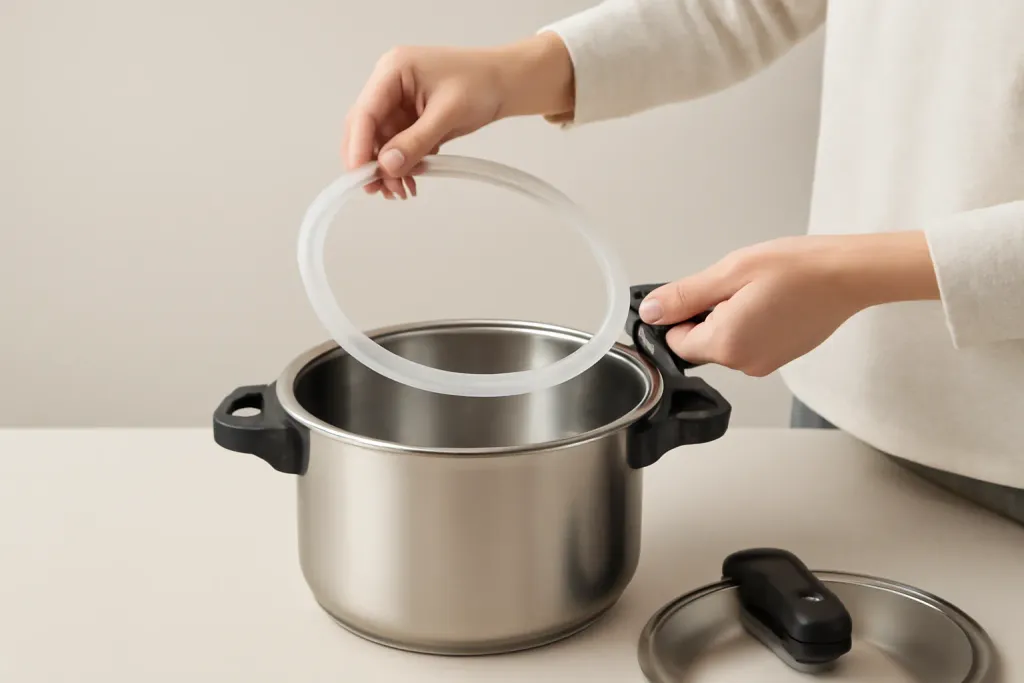
What a Pressure Cooker Sealing Ring Does
A pressure cooker sealing ring, sometimes called a gasket, is the flexible part that helps form the airtight seal between the lid and the cooking pot. In a stovetop or electric pressure cooker, that seal is what allows steam pressure to build during cooking. If the ring is missing, damaged, or not seated correctly, the cooker may not come up to pressure as expected.
For anyone reading a pressure cooker sealing rings guide, the main idea is straightforward: this small component matters a great deal. It is one of the most important wear items in the appliance because it is repeatedly exposed to heat, moisture, and compression. Over time, it can loosen, stiffen, absorb odors, or show visible wear. Those changes do not always mean immediate failure, but they do mean the ring should be inspected carefully.
It also helps to remember that sealing rings are not universal in a practical sense. Even when two rings look similar, small differences in diameter, thickness, groove profile, and lid design can affect fit. That is why model matching matters more than guesswork or appearance alone.
For safety and everyday reliability, the ring should be treated as a replaceable part, not a permanent accessory. Regular checks and careful storage are more useful than waiting for a problem during cooking.
How to Match the Right Ring to Your Cooker
The most reliable way to choose a replacement is to start with the exact cooker brand and model number. The user manual, lid underside, base label, or product documentation usually provides the information needed to narrow the search. If the original ring is still available, compare its size and shape to the replacement listing rather than relying only on the name of the appliance.
When evaluating options in a pressure cooker sealing rings guide, look for these basics:
Diameter or model fit: The ring should correspond to the exact pot size or model family.
Lid style: Some cookers use rings designed for specific lid geometries or locking systems.
Material type: Most consumer rings are silicone or rubber-like materials, but the product description should indicate compatibility.
Color and scent: Color is not the main issue, but some brands use it to distinguish between versions or to help separate savory and sweet cooking uses.
Do not assume that a ring for one pressure cooker will fit another just because the pot size looks similar. Also avoid trimming, stretching, or forcing a ring into place to make it work. A replacement should fit naturally into the groove and sit evenly all the way around.
If the original ring is no longer available, contact the manufacturer or review the cooker’s manual for compatible part numbers. That is usually more dependable than choosing based on visual similarity alone.
Common Materials and Design Differences
Most modern pressure cooker sealing rings are made from silicone, though some older models may use other elastomer-style materials. Silicone is popular because it is flexible, easy to clean, and generally suited to repeated heating. Still, the important factor is compatibility with your specific appliance, not a material label by itself.
Design details can also affect everyday use. Some rings are thicker and sit more firmly in the lid channel, while others are thinner and easier to remove. Some are color-coded, and a few brands offer separate rings for different recipe types. These variations can be helpful, but they are secondary to correct fit.
It is also worth noting that a ring can change shape slightly over time. Heat exposure and repeated compression may make it less springy or cause it to sit unevenly if the groove is dirty. That is one reason why cleaning the lid channel matters as much as cleaning the ring itself.
A practical buying approach is to prioritize the exact part number first, then review material and design details second. That keeps the decision grounded in compatibility rather than marketing language. In a pressure cooker sealing rings guide, this is one of the simplest ways to reduce selection errors.
Signs It May Be Time to Replace the Ring
Sealing rings do not usually fail all at once. More often, they show gradual changes that can affect how consistently the cooker seals. A careful inspection can help you decide when replacement is wise.
Visible cracks, splits, or tears: Any physical damage is a strong reason to replace the ring.
Flattening or loss of elasticity: If the ring no longer springs back into shape, it may not seal as well.
Persistent odor retention: Some rings absorb smells from strong spices or long cooking sessions and may be difficult to freshen fully.
Staining or tackiness: Surface changes can indicate aging or residue buildup, even when the ring still looks intact.
Steam leaks around the lid: If the cooker is assembled correctly and the lid still releases steam at the seal, the ring deserves a close look.
Not every symptom means the ring has reached the end of its useful life, but visible damage and repeated sealing problems should not be ignored. If the ring is old enough that you cannot recall when it was installed, or if it has been used heavily for a long time, replacement is often the cautious choice.
It is better to replace a questionable ring before a cooking session than to troubleshoot a poor seal mid-process. That is especially important for cookers that depend on a consistent lid seal to function properly.
Browse our recommended products
Our featured picks refresh periodically. While we update them, our editorial guides can help you find the right pick.
See our guidesCleaning and Care Tips
Good care can help a sealing ring stay usable longer, though it will still need replacement eventually. After cooking, let the appliance cool fully before removing the ring. Then wash the ring according to the manufacturer’s instructions, using mild soap and warm water if the manual allows it. Avoid harsh scrubbing tools that could scratch or deform the material.
The lid channel or groove should also be cleaned. Small bits of food, starch, or residue can prevent the ring from sitting evenly. A soft cloth or non-abrasive brush is usually enough for routine cleaning. Make sure the groove is completely dry before reinstalling the ring, since trapped moisture can make inspection harder and may allow residue to cling more easily.
If the ring has picked up strong odors, some manufacturers suggest soaking or airing it out, but follow the product guidance rather than using aggressive household methods. Not every cleaning method is suitable for every ring. What matters most is avoiding damage to the material and ensuring the ring is fully clean before the next use.
A practical habit is to inspect the ring each time you wash the lid. That takes very little time and makes it easier to catch early changes before they become cooking issues.
Storage, Odor Separation, and Kitchen Habits
Pressure cooker sealing rings can absorb lingering aromas from strongly seasoned foods. Because of that, some home cooks keep an extra ring on hand for recipes with very different flavor profiles. This is less about performance and more about convenience and avoiding flavor transfer.
If you store multiple rings, keep them clean, dry, and not compressed for long periods. A ring left twisted, stretched, or folded may be harder to seat correctly later. Hanging or laying the ring flat in a dry cabinet can help preserve its shape. Avoid placing it near sharp utensils or in cramped containers where it could become deformed.
It is also wise to keep ring rotation simple. If you use more than one ring, label them if needed so you know which one belongs to which cooker or cooking style. That can reduce confusion and prevent accidental mismatches.
For households that use the appliance often, a second ring can be a practical backup. The key is to confirm that each ring matches the correct model and to inspect both regularly. Good storage habits are a small step, but they can make day-to-day use easier.
How to Check Fit Before Cooking
Before any cooking session, verify that the ring is seated evenly in the lid channel. It should not look twisted, pinched, or lifted in one area. A poor seat can lead to leaks or lid issues, so a visual check is worth doing every time.
After placing the ring, run your fingers gently around the groove if the manufacturer’s instructions allow it. You are looking for a continuous, even fit with no obvious gaps. The lid should close normally without needing extra force. If the ring seems oversized, loose, or difficult to position, stop and confirm that it is the correct part.
Do not start a cooking cycle if the ring appears damaged or misaligned. Reinstall it carefully, clean the groove again if needed, or replace the ring if the problem persists. This is especially important because sealing issues are often easier to fix before the cooker is heated.
It is also smart to pay attention during the first moments of pressurizing. If you notice unexpected steam escaping around the lid, turn the appliance off and follow the manufacturer’s instructions. A sealing ring should support the appliance’s normal operation, not require constant workarounds.
Practical Buying Checklist
If you are comparing options and want a simple pressure cooker sealing rings guide to keep nearby, use a checklist approach. It can help you avoid the most common purchasing mistakes without overcomplicating the decision.
Confirm the exact cooker brand and model number.
Check the manual for the correct replacement part or size.
Match the ring to the lid style and groove shape, not just the pot size.
Review the material description and make sure it is appropriate for the cooker.
Look for a clear note about compatibility rather than vague universal claims.
Inspect the existing ring for visible wear before deciding whether one or two replacements make sense.
This checklist does not replace the manufacturer’s instructions, but it can simplify the process. For most buyers, the more dependable path is to choose a part that is explicitly listed for the appliance model rather than assuming a near-match will work.
In general, a thoughtful replacement is less about chasing features and more about getting the fit right. Once the ring is compatible, properly installed, clean, and checked before use, it can do the job the appliance depends on.