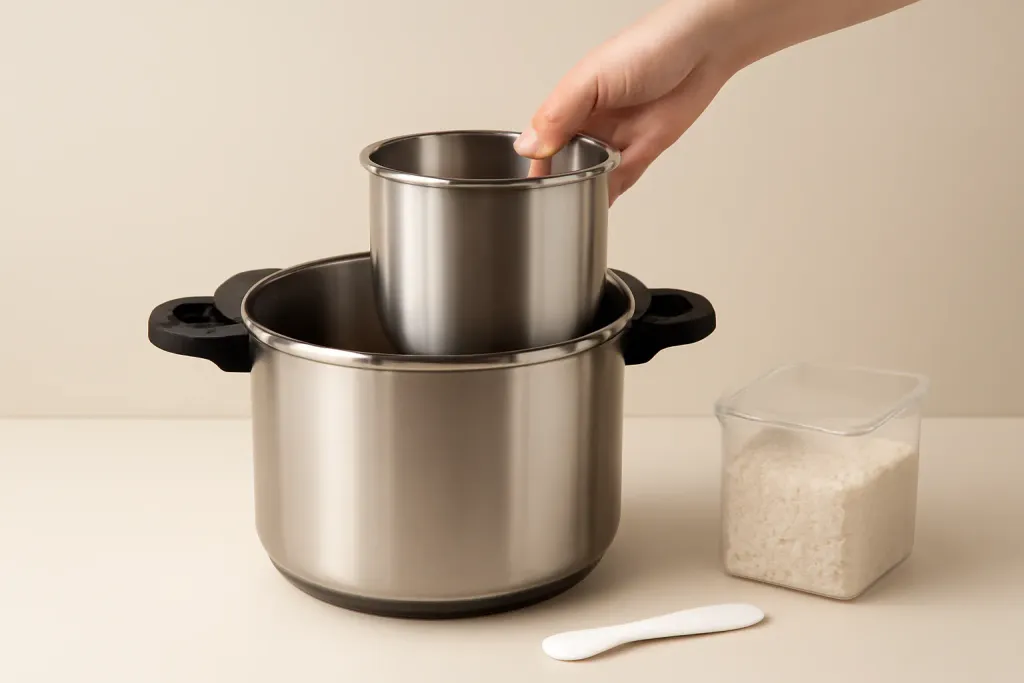
What Pot-in-Pot Pressure Cooking Equipment Is
Pot-in-pot pressure cooking equipment refers to the cookware and accessories used to cook one vessel inside another in a pressure cooker. The outer pot is the pressure cooker itself, while the inner vessel holds the food. This approach is often shortened to PIP, and it is commonly used for smaller portions, delicate dishes, or foods that benefit from being kept off the bottom of the cooker.
In everyday use, the setup usually includes an inner bowl or pan, a trivet, rack, or sling to hold it above the liquid, and sometimes a loose cover for the inner dish. The exact combination depends on the cooker style and the recipe. Pot-in-pot is not a separate appliance; it is a way of arranging ordinary cookware inside a stovetop pressure cooker or an electric multi-cooker with pressure functions.
For shoppers, the key question is not whether pot-in-pot cooking requires a special machine, but whether the cookware you already own fits your cooker and the food you want to make. The right setup should leave room for steam circulation, allow the lid to close properly, and be manageable to remove after cooking.
Core Pieces to Look For
Most pot-in-pot pressure cooking setups rely on three basic parts. The first is the inner vessel. This may be a stainless steel bowl, a heat-safe baking dish, or another container that the manufacturer says is suitable for pressure-cooker use. Stainless steel is a common choice because it is versatile, easy to handle, and widely available in sizes that fit many cookers.
The second part is the support piece. A trivet, steam rack, or cooking stand keeps the inner vessel above the liquid in the outer pot. This prevents the dish from sitting directly in the water and helps the cooker function as intended. Some setups use a sling, which can make the vessel easier to lower in and lift out.
The third part is the pressure cooker itself, including the lid and sealing system. These are not specialized PIP items, but the cooker must be large enough to accommodate the inner vessel without crowding the seal. If the insert is too wide or too tall, the lid may not close correctly or the setup may become awkward to handle.
Helpful extras may include silicone handle covers, heat-resistant mitts, or a loose cover for the inner dish. These are optional, but they can make the setup easier to manage. The main goal is a simple arrangement that fits securely and is easy to use within the limits set by the cooker maker.
Materials and Shapes That Fit Well
Material and shape matter as much as size when choosing pot-in-pot pressure cooking equipment. A round inner bowl is often the simplest option because it usually fits well inside round pressure cooker inserts and leaves room around the sides for steam flow. Rectangular or oval dishes can work in some cookers, but they may be harder to position and can reduce clearance.
Stainless steel is one of the most common materials for inner pots, bowls, and ramekins used this way. It is generally easy to clean and can stand up well to repeated kitchen use. Some cooks also use silicone or oven-safe glass, but those options should be checked carefully against the manufacturer’s instructions. Not every dish that is oven-safe is automatically appropriate for pressure-cooker use.
Rim shape is worth attention too. A smooth rim is often easier to lift with a sling or rack, while a wide rim can improve grip. If a container has handles, those handles still need enough clearance for the lid to close without contact. A shape that seems convenient on the counter may be awkward inside the cooker, so interior fit matters more than appearance.
Depth is another practical consideration. A deep vessel can hold more food, but it may interfere with layering and steam movement. A shallower dish is often easier for rice, custards, vegetables, and side dishes. The best shape is usually the one that fits your cooker comfortably and matches the foods you make most often.
How to Match Equipment to Your Pressure Cooker
Matching pot-in-pot pressure cooking equipment to your cooker starts with measuring the usable interior space. The inner vessel should fit with enough clearance on all sides for steam to move. It also needs to stay below the maximum fill line and below any lid parts that must seal properly. Manufacturer size labels can be helpful, but the actual interior dimensions are more important.
Next, look at the combined height of the inner vessel and the support piece. A trivet or rack adds height, and that extra space must still allow the lid to close without contact. A taller setup may work in a larger cooker, while a smaller unit may require a lower-profile insert. This is one reason many shoppers look for pieces made specifically for common pressure-cooker sizes.
The amount of liquid in the outer pot also matters because pressure cookers rely on sufficient liquid to create steam. The inner dish should not block the steam path or take up so much room that the cooker cannot operate as designed. Follow the pressure cooker manufacturer’s instructions for minimum liquid requirements and maximum fill limits.
For electric multi-cookers, check that the inner vessel and support do not interfere with the lid or sealing area. For stovetop pressure cookers, verify that the setup does not crowd the gasket, weight, or valve area. In both cases, cookware that the maker clearly describes as suitable for pressure cooking or high-heat steam use is the more dependable choice.
Browse our recommended products
Our featured picks refresh periodically. While we update them, our editorial guides can help you find the right pick.
See our guidesAccessories That Improve Ease of Use
Beyond the basic vessel and trivet, a few accessories can make pot-in-pot pressure cooking easier to manage. A sling is one of the most useful. It usually has loops or handles that extend above the inner bowl, making it easier to lower and lift the dish without tipping. That can be especially helpful for casseroles, desserts, or small portions that are easy to spill.
Stackable pans and divider inserts may also be useful in some pressure cookers, especially when you want to cook more than one component at once. These are not universal solutions, so fit remains important. Any stacked arrangement still needs enough room for steam circulation and proper sealing.
Loose silicone lids or foil covers are often used over the inner pot to limit splashing and reduce condensation from dripping into the food. These covers are not meant to seal the way a pressure cooker lid does, and they should not block steam movement. In many cases, a loose cover is more appropriate than a tight one.
Heat-resistant mitts, tongs with a secure grip, and handle covers can also help when removing hot cookware. Because the inner vessel and surrounding steam can remain hot after cooking, tools that reduce direct contact are worth considering. The most useful accessories are the ones that improve handling without adding clutter.
What to Check Before Buying
Before buying pot-in-pot pressure cooking equipment, start with compatibility. The most important question is whether the insert fits your specific cooker model. Product listings may mention general sizes such as 6-quart or 8-quart, but those labels do not guarantee a perfect fit in every machine. Actual dimensions are more reliable whenever they are available.
Next, review the material and care instructions. Some pieces are dishwasher-safe, while others are better washed by hand. If you want a low-maintenance option, choose simple surfaces with few seams or corners. If you plan to use the same piece for steaming, baking, and pressure cooking, make sure the manufacturer allows that range of use.
Stability matters as well. A good inner vessel should sit securely on the trivet or rack and should not wobble excessively when loaded. If the setup is unstable, it can be harder to place food inside and remove it later. Wide bases and well-matched supports usually help, but the exact combination depends on the cooker’s interior shape.
It also helps to think about how the equipment will be used in real life. If you mostly cook side dishes, a shallow bowl may be enough. If you often prepare layered meals or desserts, a deeper insert and a sling may be more practical. Buying for your actual cooking habits is usually better than choosing the most elaborate bundle.
Safe Use Basics for Consumers
Pot-in-pot cooking is straightforward, but careful use still matters. First, confirm that the outer cooker has enough liquid for pressure generation. Second, make sure the inner vessel is stable and not touching lid parts that need to move freely. Third, avoid overfilling the inner dish, since foods can expand, bubble, or foam during cooking.
When removing the inner vessel, use tools designed to keep your hands away from hot surfaces and steam. A sling, long-handled rack, or silicone grips can make handling easier. If the dish is full or delicate, keep it level to reduce the chance of spills. Let the pressure cooker release according to the manufacturer’s instructions before opening the lid.
It is also wise to keep the cooking area uncluttered. Have a heat-safe surface ready for the inner pot, and avoid reaching over the cooker while steam is venting. Even simple recipes involve hot cookware, so careful handling is part of the method rather than an optional extra.
Finally, treat pot-in-pot setups as ordinary cookware used inside a pressure cooker, not as a shortcut around instructions. Follow both the pressure cooker manual and the cookware manufacturer’s guidance. If a container is not clearly described as suitable for the conditions you plan to use, choose another option.
When Pot-in-Pot Equipment Is Most Useful
Pot-in-pot pressure cooking equipment is especially useful when you want to cook foods that should not sit directly on the pressure cooker base. It can help with rice, grains, custards, puddings, steamed vegetables, small casseroles, and side dishes that benefit from gentle steam exposure. It is also useful when you want to keep one food separate from another while cooking more than one component at the same time.
For consumers comparing products on Amazon or elsewhere, the best approach is usually to focus on fit, material, and handling. A simple stainless steel bowl plus a stable trivet may be all many households need. Others may prefer a sling, a lidded insert, or a coordinated set made to nest inside a specific pressure cooker size.
If you are building a starter kit, begin with the essentials and add accessories only if they solve a real problem in your kitchen. That keeps the setup practical without adding unnecessary pieces. The most reliable pot-in-pot equipment is the one that fits your cooker, matches your recipes, and is easy to handle with confidence.