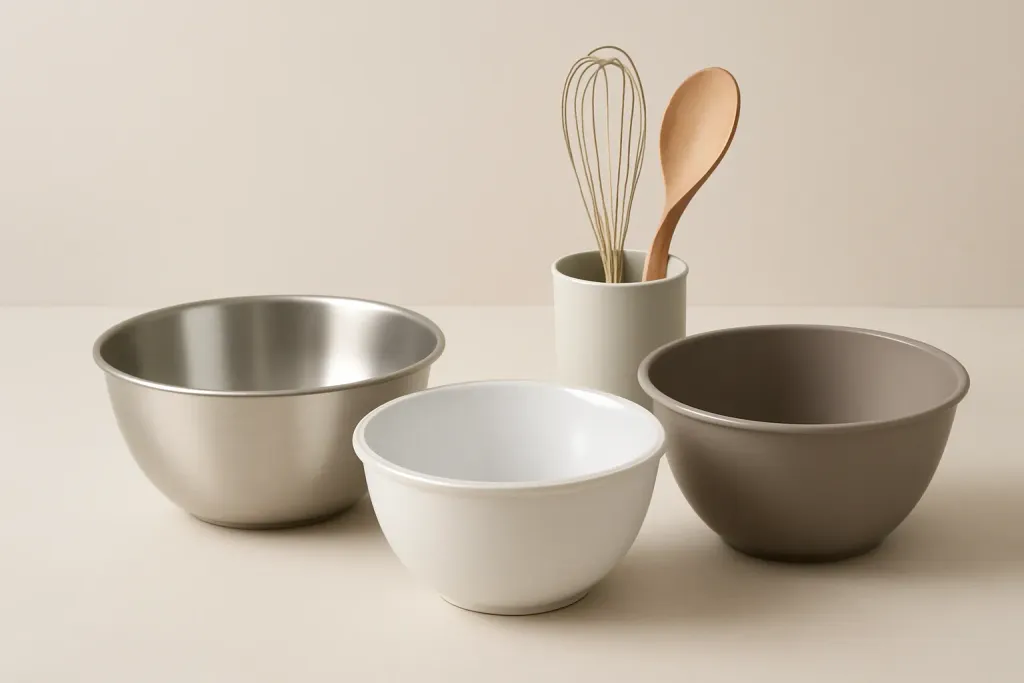
Mixing Bowl Materials Compared: What Really Changes in Daily Use
When shoppers compare mixing bowl materials, the differences are usually practical rather than dramatic. A bowl affects how heavy a prep task feels, how easy it is to see ingredients, how carefully it must be handled, and whether it feels at home in mixing, serving, or storage. Those everyday details matter more than broad marketing language.
The main materials are stainless steel, glass, ceramic, plastic, and silicone. Stainless steel is commonly chosen for its light weight and broad usefulness. Glass offers visibility and a familiar look. Ceramic tends to feel substantial and presentation-friendly. Plastic is usually light and convenient. Silicone stands out for flexibility and storage-friendly designs.
There is no single material that suits every kitchen. The right choice depends on what you cook most often, how much cabinet space you have, and whether you value sturdiness, visibility, or easy handling. A bowl that is comfortable for whisking may not be ideal for serving, and a bowl that stores neatly may not be the one you reach for during a long prep session.
A useful way to narrow the options is to ask a few consistent questions: How much does the bowl weigh? Can it handle warm ingredients? Is it easy to clean and inspect? Does it stack well with the rest of your cookware? Those questions usually tell you more than a claim that one material is better in every setting.
Stainless Steel: The Most Versatile Everyday Option
Stainless steel is one of the most common mixing bowl materials because it balances light weight, durability, and flexibility in daily use. Many home cooks like that it is easy to lift, especially when a bowl is large or when ingredients need steady whisking. That can make a noticeable difference during regular meal prep and baking.
Another reason stainless steel is so popular is that it fits many jobs without feeling overly specialized. It is often a practical choice for mixing batter, tossing salads, combining dry ingredients, or holding prepped components. For people who want one set that can cover most kitchen tasks, it is often the simplest starting point.
Stainless steel also has storage advantages. It often nests well, and the bowls are usually thinner than glass or ceramic without feeling flimsy in normal use. That combination makes it appealing in kitchens where cabinet space is limited or where several bowls are stored together.
The tradeoffs are straightforward. Stainless steel does not let you see the contents through the sides, so it is less useful when visual monitoring matters. It can also feel more utilitarian than decorative if you want a bowl that moves from prep to table. And because a lightweight bowl can shift during vigorous mixing, some cooks prefer a stable base or an extra hand when working with thicker mixtures.
For many households, stainless steel is the most balanced all-purpose choice. It is not the only smart option, but it is often the easiest material to rely on across a wide range of recipes and prep styles.
Glass: Good Visibility and a Familiar Kitchen Look
Glass mixing bowls appeal to cooks who want to see what is happening as they work. That visibility helps when you are checking whether ingredients are evenly combined, watching liquid levels, or making sure dry ingredients are fully incorporated. For many people, that simple visual control is the main reason to choose glass.
Glass also has a familiar, neutral look that can suit both prep and serving. Some buyers appreciate that it does not introduce color or opacity into the process, which can make the bowl feel straightforward and easy to use. It is often a comfortable option for salads, batters, and other mixtures that benefit from being visible throughout mixing.
The main limitation is fragility. Compared with stainless steel, glass generally requires more careful handling in daily use and storage. It is also often heavier, especially in larger sizes, which can matter if you lift a full bowl frequently or work one-handed. Those factors make it less convenient for some cooks, even when the look is appealing.
Glass is a strong choice for shoppers who value visibility and a polished, familiar style. It is less suited to people who want a lighter, more rugged bowl for frequent handling. If you choose glass, think about cabinet space, how often the bowl will be moved, and whether the weight will be comfortable in your routine.
Ceramic: Stable on the Counter and Useful for Serving
Ceramic mixing bowls are often chosen for their appearance and their steady feel on the counter. They can look attractive enough to move from prep to table, which makes them appealing to cooks who want a bowl that can do double duty. Many ceramic bowls also feel substantial in hand, which some users prefer for smaller batches or relaxed kitchen tasks.
That stable feel can be helpful when stirring, folding, or combining ingredients at the counter. A heavier bowl may stay in place more easily than a very light one, so ceramic can feel reassuring in certain situations. For serving, baking, or presentation-focused cooking, that extra presence is part of the appeal.
The tradeoffs are weight and fragility. Ceramic is usually heavier than stainless steel or plastic, and it generally requires more care than metal during storage and movement around the kitchen. It is also not the easiest material for people who want a compact, ultra-light set they will use constantly.
Ceramic bowls vary a lot in shape, glaze, and thickness, so the experience can differ from one product to another. For that reason, it is worth paying attention to the specific bowl rather than assuming all ceramic behaves the same. In general, ceramic is a good fit for cooks who want a more decorative, steady bowl and are comfortable with the extra care that comes with it.
Browse our recommended products
Our featured picks refresh periodically. While we update them, our editorial guides can help you find the right pick.
See our guidesPlastic: Light Weight and Convenient, with Design Tradeoffs
Plastic mixing bowls remain popular because they are light, easy to carry, and convenient for everyday prep. Many cooks use them for quick tasks such as holding chopped ingredients, tossing salad, or mixing simple batters. When bowls move often between counter, sink, and cabinet, that light weight can be genuinely helpful.
Plastic also tends to work well in stackable sets, which can simplify storage in smaller kitchens. That makes it appealing to buyers who want practicality and easy handling more than a premium feel. It is often chosen because it is simple to live with, not because it is the most polished option.
Still, plastic deserves a careful look. It does not have the same rigid feel as steel, glass, or ceramic, so some bowls flex more when mixing thicker ingredients. It can also show wear more quickly than harder materials, especially with frequent utensil contact. Because plastic products vary so much in thickness and design, it is wise to judge the individual bowl rather than assume one plastic bowl will behave like another.
For many shoppers, plastic is best viewed as a convenience-first material. It can be a smart choice when lightness and easy handling matter most, but it is not always the first pick for people who want a more substantial bowl for repeated, everyday use.
Silicone: Flexible, Compact, and Not for Every Task
Silicone mixing bowls stand out because of their flexibility and soft feel. Some designs are collapsible, which can make them especially appealing in kitchens where cabinet space is tight or where portability matters. Even standard silicone bowls can feel easy to handle because they are lightweight and less rigid than traditional options.
That flexibility is useful, but it also changes the way the bowl behaves during use. A softer bowl may not feel as steady when you are stirring vigorously or working with dense mixtures. Some cooks prefer a firmer bowl that gives more structure on the counter and feels more predictable during mixing.
Silicone is often best understood as a specialty or convenience-oriented material rather than a default replacement for every other bowl. It may suit light prep, compact storage, or travel-friendly use. It may be less appealing if you want a bowl with a more solid feel for frequent cooking or baking.
As with plastic, product design matters a lot. Wall thickness, base stability, and overall shape can change the experience significantly. If you are considering silicone, look closely at how the specific bowl is built and whether the design fits your storage space and cooking habits.
How to Choose the Right Material for Your Kitchen
The easiest way to choose among mixing bowl materials is to match the bowl to your routine. If you want the broadest all-purpose option, stainless steel is often the most balanced place to start. If you want to see ingredients clearly while mixing, glass has a real advantage. If you care about presentation and countertop presence, ceramic may suit you better. If low weight matters most, plastic or silicone can be practical.
Think about the recipes you make most often. For whisking, folding batter, or tossing salad, a light bowl can feel effortless. For thicker mixtures or frequent prep, a firmer material may feel steadier. If you use several bowls at once, nesting and cabinet space become more important. In a smaller kitchen, a stackable material may be more useful than a decorative one.
Cleaning and handling also deserve attention. Some shoppers want a bowl that is easy to inspect after washing. Others want one that is simple to lift, carry, and store. Those small conveniences can matter every day, especially if the bowl is part of a regular routine rather than an occasional special-occasion item.
Many kitchens work best with more than one material. A stainless steel set can handle most tasks, while a glass or ceramic bowl can be kept for visible mixing or serving. That mixed approach often works better than trying to force one material to do everything.
Bottom Line on Mixing Bowl Materials Compared
When mixing bowl materials are compared side by side, each one solves a different problem. Stainless steel is usually the most versatile. Glass is useful when visibility matters. Ceramic offers a stable, presentation-friendly feel. Plastic keeps things light and simple. Silicone brings flexibility and compact storage advantages.
The best bowl is rarely the one with the most polished description. It is the one that fits your kitchen habits, your storage space, and the kinds of recipes you make regularly. If you want a dependable starting point, stainless steel is often the easiest general recommendation. From there, you can add another material only if you have a clear use for it.
For online shoppers, material is one of the most useful ways to narrow a crowded category. Shape, size, and set composition matter too, but material shapes the everyday experience. Once you understand the tradeoffs, it becomes easier to choose a bowl that feels natural to use instead of one that only looks good in the product photo.