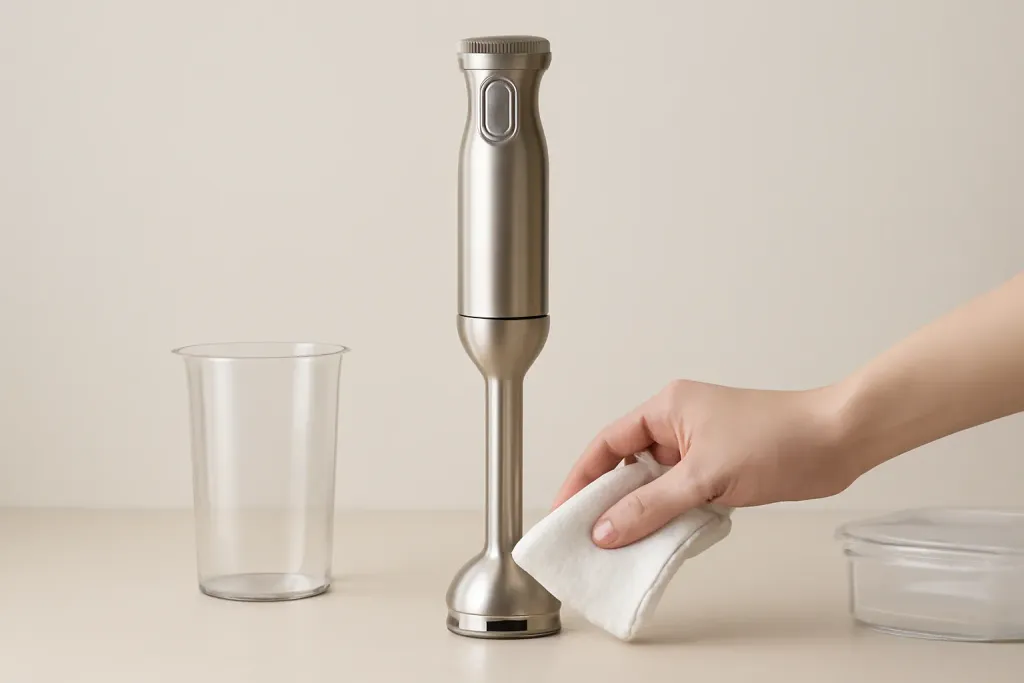
How to Choose an Immersion Blender
An immersion blender buying guide should begin with your cooking habits. Also called a stick blender or hand blender, this tool blends directly in a pot, bowl, or pitcher, which can simplify soups, sauces, smoothies, and purees. That direct-use design is the main reason many home cooks consider one.
The right model depends less on a single spec and more on how you cook. If you mainly make thin soups or quick sauces, simple controls and easy cleanup may matter most. If you want to handle thicker mixtures, larger batches, or frequent use, look for a more comfortable grip, a longer shaft, and controls that give you finer pace. It also helps to think about the containers you already own, since the blender should fit into them without forcing you to tilt awkwardly or overfill the vessel.
Comfort matters because this is a hand-held appliance used close to the food. A model that feels balanced and easy to guide is usually more practical than one that looks impressive on paper. In everyday use, the best choice is the one that matches your routine, not the one with the longest feature list.
Motor Power and Blending Performance
Motor power is one of the first details shoppers compare, but wattage alone does not tell the full story. Blending results also depend on blade design, speed control, motor efficiency, and how the blender moves ingredients around the blade. A moderate motor may be sufficient for many soups and sauces, while a more powerful unit may be helpful for thicker mixtures or more frequent use.
Look for enough control to handle both easy and demanding tasks. Variable speeds can help you start slowly to limit splashing, then increase speed once ingredients begin to break down. Turbo or pulse-style settings can be useful, but they should not replace a low speed that is easy to manage. Starting gently is especially helpful when blending hot liquids or working in narrower containers.
The blade guard also influences performance. A well-shaped guard can help draw ingredients toward the blades and reduce sticking at the bottom of a pot. Even so, no immersion blender is ideal for every job. If you routinely process very dense mixtures, a countertop blender or food processor may still be the better main appliance, with the immersion blender serving as a quick secondary tool.
Size, Shaft Length, and Container Fit
Shaft length is easy to overlook, but it can make a big difference in daily use. A shorter shaft may feel nimble for small bowls, dressings, and single-serving tasks, while a longer shaft can be more useful for stock pots and deeper containers. If you cook soups in tall pots, enough reach can help keep the motor housing away from heat and reduce the need to tilt the vessel.
Container fit should be part of the decision. Some immersion blenders work best in narrower containers because the blade head can move ingredients efficiently. Others have larger guards that suit bigger batches but may feel less precise in small cups or jars. If you expect to blend in mugs, measuring cups, or small containers, check the product dimensions before buying.
Weight also affects comfort. A lighter blender may be easier to maneuver with one hand, but it should still feel stable and controllable. A balanced design can make it easier to keep the blade submerged and can help reduce splashing. In practice, the right mix of reach, shape, and weight often matters more than extra accessories.
Controls, Speed, and Everyday Usability
Simple controls can make an immersion blender more approachable, especially if you plan to use it often. Many models use a trigger, button, or dial for speed selection. The best layout is one that feels natural in the hand and can be adjusted without awkward finger placement. If you stop and start often, check whether the controls are easy to reach while you hold the blender steady.
Speed options matter because they affect both results and control. A lower starting speed helps reduce splatter, while higher speeds can finish smoother purees. Some models offer stepped speeds, while others use a continuous dial or pressure-sensitive trigger. There is no single best system, but the controls should match how precise you want to be in the kitchen.
Usability also includes how the parts connect and separate. Many shoppers prefer a detachable blending shaft because it simplifies cleanup and storage. Corded and cordless designs each have tradeoffs. Corded models avoid charging concerns, while cordless models improve mobility but require attention to battery life and runtime. The right format is the one that fits your kitchen layout and cooking style.
Browse our recommended products
Our featured picks refresh periodically. While we update them, our editorial guides can help you find the right pick.
See our guidesAttachments and Accessories to Consider
Some immersion blender kits include extras such as a whisk attachment, mini chopper bowl, frothing piece, or beaker. These can be helpful, but only if you will actually use them. A whisk is useful for light mixing, a chopping cup can help with small amounts of herbs or aromatics, and a blending beaker can be convenient for smoothies or dressings.
It helps to treat accessories as a bonus rather than the main reason to buy a model. A larger bundle may look appealing, but extra parts also mean more storage needs and more cleanup. If your kitchen is already crowded, a simpler tool with fewer pieces may be the better everyday choice.
Pay attention to how attachments lock in place and how they release. Connections should feel secure without unusual force. If you expect to switch tasks often, that ease of use matters more. For many home cooks, one solid blending shaft is enough; for others, a useful set of accessories can replace several small gadgets. The best approach is to buy only the functions you expect to use regularly.
Materials, Safety, and Comfort
Safety and comfort should be central in any immersion blender buying guide. Because the tool is held directly over food, it should feel stable, predictable, and easy to control. A comfortable grip helps reduce hand fatigue and can improve confidence when blending hot ingredients. Soft-touch or textured handles may feel easier to hold, but the main goal is secure handling rather than a specific finish.
Materials matter for both construction and food-contact surfaces. Stainless steel blending shafts are common and may appeal to shoppers who want a sturdier feel, while plastic components can reduce weight. What matters most is thoughtful construction and clear instructions for use. Check that removable parts are designed to come apart easily for washing, and make sure the blender is intended for the tasks you have in mind.
General precautions are straightforward: keep the blade submerged before switching on, hold the container steady, and avoid using the tool near loose clothing or dangling cords. For hot liquids, blend in short bursts and leave room in the container to help prevent splashing. Do not use the appliance if the cord, housing, or blade assembly appears damaged. These common-sense steps matter because hand-held blending involves heat and motion in a confined space.
Cleanup and Maintenance
Cleanup can be a deciding factor because immersion blenders are often chosen for convenience. A design that is easy to rinse and reassemble is more likely to get used regularly. Detachable shafts, smooth surfaces, and fewer seams can all help simplify washing. If a model includes multiple attachments, check whether each piece is straightforward to clean without special tools or complicated steps.
Before buying, review the care instructions for every removable part. Some components may be dishwasher-safe, while others may require hand washing. Even when dishwasher-safe parts are included, hand rinsing immediately after use can help prevent food from drying onto the blade guard or inside small crevices. It is also wise to clean the unit promptly after blending oily or strongly colored ingredients so residue does not linger.
Maintenance should stay within normal user care: washing, drying, storing the appliance properly, and checking for wear that affects safe operation. You should not attempt appliance disassembly or electrical repair. If the blender no longer runs as expected, review the manufacturer’s guidance or replace the unit as needed. For everyday ownership, simple care is usually enough to keep the tool ready for the next use.
Final Buying Checklist
The most useful immersion blender buying guide connects features to real kitchen habits. If you mainly make soups, choose a model with comfortable handling, a shaft that fits your pots, and speeds that start gently. If you prepare sauces and dressings often, focus on control and easy cleanup. If you want more versatility, look for attachments that support the tasks you truly do, not the ones you may never try.
Batch size is another useful filter. Smaller households may prefer a compact, lightweight unit that stores easily. Larger households or frequent cooks may want a design with a longer reach and a motor that feels less strained during longer blending sessions. Cord length or battery runtime can also affect how convenient the blender feels in your kitchen.
Before buying, compare these points with your routine: shaft length, grip comfort, speed controls, attachment usefulness, cleanup requirements, and storage fit. If possible, read the product manual or specifications carefully to confirm that the blender suits the containers and recipes you use most often. A few minutes of review can prevent frustration later, and a practical, well-matched model is usually the better purchase than a larger bundle with features you will not use.