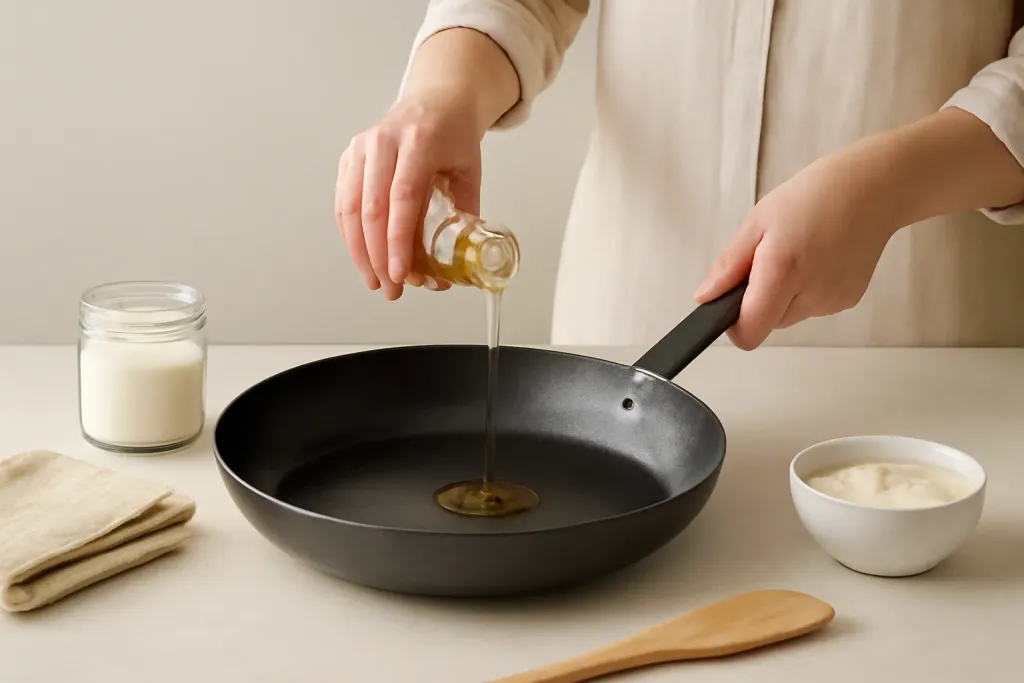
What Seasoning on Carbon Steel Actually Is
If you are learning how to season a carbon steel pan, the first step is understanding what seasoning does and what it does not do. Seasoning is a thin layer formed when oil is heated until it bonds to the metal surface. Over time, that layer can help the pan release food more easily and make routine cleanup simpler.
Carbon steel starts as bare metal, so a new pan does not yet have that built-up surface. The seasoning process creates it gradually. It is not about making the pan look dark right away, and it is not about applying a thick coating. The best result usually comes from several thin layers that are heated carefully and built up over time.
Seasoning also works together with everyday use. Cooking, wiping out the pan, drying it well, and storing it properly all influence how the surface develops. In other words, seasoning is both a first-step task and an ongoing part of caring for the pan.
Because carbon steel responds quickly to heat, the process does not need to be elaborate. A clean pan, a small amount of oil, and controlled heat are usually enough to begin. If the first layer looks uneven, that is normal and usually improves with more use.
What You Need Before You Start
When considering how to season a carbon steel pan, it helps to keep the setup simple. You do not need specialty products or a long list of tools. In most cases, a mild dish soap, warm water, a soft sponge or cloth, paper towels, oven mitts, and a neutral cooking oil are enough.
Neutral oils such as canola, grapeseed, sunflower, or similar refined oils are common choices because they are easy to spread in a thin layer. The specific oil matters less than using only a very small amount and wiping off the excess. A heavy application is one of the most common reasons seasoning turns sticky or patchy.
It can also help to have a baking sheet or foil nearby if you plan to use the oven method, since it gives you a place to catch drips. If you are using the stovetop, make sure you have good ventilation and room to handle a warm pan safely. If the manufacturer included care instructions, those should come first because handle materials and finishes can vary.
Before you begin, clear a little counter space. Seasoning goes more smoothly when the pan can be wiped, heated, and cooled without being rushed. That small amount of preparation makes the process easier to manage and less messy.
Clean and Dry the Pan First
A clean surface is essential before seasoning. New carbon steel pans sometimes arrive with shipping residue, dust, or a light protective coating used during storage. Before adding oil, wash the pan with warm water and a small amount of mild dish soap. This is one of the few times soap is appropriate, because the goal is to start with a fully clean metal surface.
Rinse the pan thoroughly and dry it right away. Do not leave it wet on the counter or in the sink, because carbon steel can discolor when moisture sits on the surface. If needed, place the pan over low heat for a minute or two to drive off the last traces of water.
If the pan feels greasy, looks dull in spots, or still seems to have packaging residue, wash and dry it again before moving on. It is much easier to create a good initial seasoning on a clean pan than to correct a contaminated one later.
Also inspect the pan for stickers, adhesive, or any packaging material that should not be heated. Remove those items before the pan goes near the stove or oven. Starting with a clean, dry surface gives the oil the best chance to bond evenly.
How to Season a Carbon Steel Pan on the Stovetop
For many home cooks, the stovetop method is the most direct answer to how to season a carbon steel pan. Start with a clean, dry pan and place it over medium heat until it is warm. Then add a very small amount of oil, just enough to lightly coat the surface.
Use a paper towel or soft cloth to spread the oil over the cooking surface. If you want, you can also wipe a thin film around the sides. Next, wipe again so the pan looks almost dry. That near-dry appearance is important. If you can see a wet layer, there is likely too much oil on the pan.
Keep heating the pan until the oil begins to smoke lightly. At that point, lower the heat if needed and continue heating for several minutes so the oil can polymerize. When the smoking stops and the surface looks dry, turn off the heat and let the pan cool naturally.
This process can be repeated in thin layers. One thin layer is better than one heavy one, and several thin rounds generally build a more even surface than a single thick coat. If a layer looks blotchy, that does not necessarily mean it failed; early seasoning often looks uneven.
Browse our recommended products
Our featured picks refresh periodically. While we update them, our editorial guides can help you find the right pick.
See our guidesAn Oven Method for More Even Coverage
The oven method is another practical way to season a carbon steel pan, especially if you want more even coverage without monitoring the pan constantly. It is often useful for pans with larger cooking surfaces or for anyone who prefers a more hands-off approach.
After cleaning and drying the pan, rub on a very thin layer of oil and wipe away nearly all of it. The pan should look lightly sheened, not wet. Place it upside down on the middle oven rack, and put a lined tray or sheet of foil on the lower rack to catch any drips. This helps keep cleanup easier and prevents oil from landing on the oven floor.
Heat the oven to a moderate temperature that fits the pan maker’s instructions and the oil you are using. Let the pan heat for the recommended period, then turn off the oven and allow the pan to cool inside if that is convenient. Cooling gradually also makes handling easier because the pan will stay hot for a while.
When the pan has cooled enough to touch, inspect the surface. A first layer may look uneven or slightly dull, and that is normal. If you want a more developed base, repeat the process with another thin coat. Like the stovetop method, the oven method depends on patience and restraint more than on heavy oil application.
Your First Cooks and Routine Care
Once you have finished seasoning, the first few cooking sessions help the surface continue to develop. Many people start with foods that are less likely to stick, or with recipes that do not rely on highly acidic ingredients. That approach is not a rule, but it can make the early stage of seasoning feel more manageable.
Use moderate heat at first. Carbon steel heats quickly, so aggressive burner settings are not usually necessary. A small amount of oil or fat in the pan before cooking can also help protect the surface while it is still building up.
After cooking, let the pan cool until it is comfortable to handle. Then wipe it clean with a soft sponge or cloth. If food residue remains, warm water and a small amount of soap are generally fine. Avoid long soaking, because standing water can interfere with the surface and may contribute to rust.
Dry the pan thoroughly right away. Many cooks also wipe on a whisper-thin layer of oil before storing the pan. That step is optional, but it can help maintain the surface between uses. Over time, these small habits become part of the seasoning process itself.
Common Mistakes to Avoid
When people ask how to season a carbon steel pan, the most useful guidance is often about what not to do. The first common mistake is using too much oil. A heavy coating can become sticky, gummy, or uneven instead of hard and smooth. If the pan looks wet after oiling, wipe more of it away.
Another mistake is rushing the heat. Seasoning needs enough heat for the oil to bond, but too much heat too quickly can cause harsh smoking or burnt residue. Controlled heat is usually more reliable than turning the burner up as high as it will go.
Skipping the drying step is another problem. Even a small amount of leftover moisture can interfere with the finish and may create rust spots. The same idea applies to storage: do not put the pan away damp.
It is also better not to scrub aggressively right after seasoning. The layer is still developing, and harsh pads can remove more than intended. If the pan does not look perfect after the first round, that is not a sign you need to start over. Seasoning often improves gradually with normal use.
When to Reseason and How to Maintain It
Even a well-cared-for carbon steel pan may need touch-ups from time to time. Signs that reseasoning could help include dull patches, light rust, more sticking than usual, or spots where the surface looks stripped after cleaning. In those cases, you usually do not need to strip the entire pan. A clean, dry surface and one or more thin seasoning layers are often enough.
Maintenance is usually simpler than full restoration. After each use, focus on a routine of clean, dry, and lightly oil if needed. A pan that is regularly wiped out and dried tends to be easier to keep in good condition. If the finish looks a little uneven, normal cooking may help even it out.
If rust appears, remove it gently according to the pan maker’s guidance, then re-season the affected area. It is better to address it promptly than to leave it in place. Carbon steel is responsive to care, and small corrections are usually easier than large ones.
In practical terms, seasoning is less like a one-time project and more like an ongoing cycle. Clean the pan, dry it fully, apply a thin coat when needed, heat it carefully, and keep using it. That steady routine is often the most reliable way to maintain the surface over time.