What electric pressure cookers actually do
An electric pressure cooker is a countertop appliance that seals a pot with a locking lid so steam builds up inside, raising the internal temperature above what a simple stovetop pot or saucepan can reach. That higher temperature is what shortens cook times for foods like dried beans, tougher cuts of meat, whole grains, and stock. Compared to a traditional stovetop pressure cooker, the electric version replaces manual heat adjustment and a jiggling weight with a control panel, a heating element built into the base, and preset programs that manage pressure and time automatically.
Most electric pressure cookers on the market today are multi-function appliances. Beyond pressure cooking, many also offer a slow-cook setting, a sauté or browning function for searing meat before sealing the lid, a steam setting, a warm-holding mode, and sometimes a rice or porridge program. It helps to think of the appliance less as a single-purpose gadget and more as a countertop hub that can replace a few other tools if you use those extra modes regularly. If you already own a dedicated slow cooker or rice cooker you use often, the overlap may matter less to you than the pressure function itself.
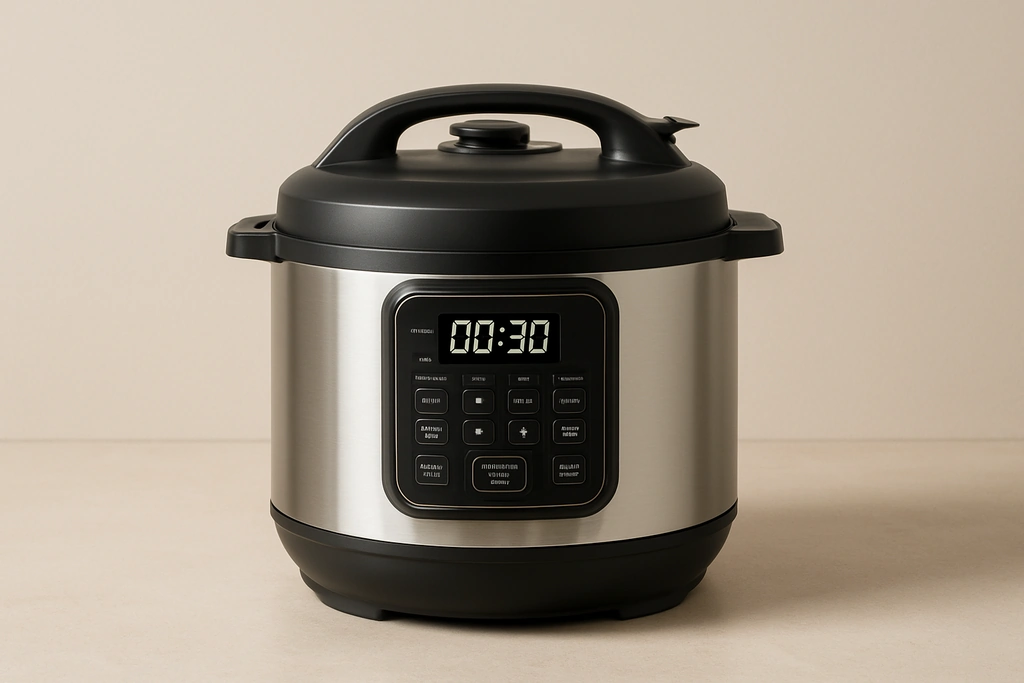
The core parts worth understanding before you shop are the inner pot (usually a removable metal insert you can pull out to wash), the sealing ring that sits inside the lid and creates the pressure-tight seal, the steam release valve on top of the lid, and the control panel that sets time, pressure level, and program. Some models offer two pressure settings, low and high, which gives you more flexibility for delicate foods like eggs or fish versus dense items like beans or roasts. Others run a single fixed pressure level, which simplifies operation but limits control.
Release methods also vary. A natural release lets pressure drop on its own over a period of time after cooking ends, which is gentler on foods like grains and stews that can turn mushy or spatter if released too fast. A quick or manual release vents steam through the valve right away, which is faster but should always be done according to the manufacturer's instructions since hot steam is released directly from the vent. Understanding these basics before comparing models makes it much easier to match features to how you actually plan to cook.
Decision criteria: sizing and features
Capacity is usually the first decision point, and it is measured in quarts. Smaller cookers in roughly the 3-quart range suit a single person or a couple who mostly cook small batches of grains, eggs, or side dishes, and they take up less cupboard and counter space. Mid-size units in the 6-quart range are the most common choice for a typical household, since they can handle a whole chicken, a pot of chili for several servings, or a batch of stock without crowding the pot past its fill line. Larger cookers in the 8-quart-and-up range are aimed at bigger families, batch cooking for the freezer, or anyone who regularly entertains. Keep in mind that pressure cookers should never be filled to the brim; most manufacturers specify a maximum fill line that sits well below the rim, and for foods that foam or expand, like beans or grains, that usable line is even lower. Buying a size based only on the labeled capacity without accounting for the fill line is a common sizing mistake.
Program count is a useful but sometimes overstated feature to compare. A long list of preset programs, such as separate buttons for rice, yogurt, soup, or poultry, can be convenient for beginners who prefer preset timing over dialing in minutes manually. But experienced cooks often use just two or three settings in practice, such as a manual pressure mode and a sauté function, and rely on a recipe's stated time rather than the model. When comparing models, weigh how many programs you will realistically use rather than the total number listed on the box.
Control layout matters more than it might seem. Look at how easy the display is to read, whether time and pressure level adjustments require several button presses to reach, and whether the sauté function has adjustable heat levels or just one setting. A sauté function with only one heat level makes it harder to sear meat properly without scorching, which can affect flavor in browning-then-pressure-cook recipes.
Lid and valve design differ across brands and models. Some lids detach fully, while others stay hinged to the base, which affects storage and cleaning. Some steam release valves are a simple manual switch, while others include an automatic or programmable release feature. A visible pressure indicator, often a small pin or float valve that rises when the pot is pressurized, is a helpful visual cue that the lid should not be opened yet, and it's worth confirming a model has one. Finally, consider footprint and storage: a countertop appliance with a locking lid and a sauté function tends to be taller and heavier than a simple stovetop pot, so measure your available counter and cabinet space before choosing a size.
Browse our recommended products
Our featured picks refresh periodically. While we update them, our editorial guides can help you find the right pick.
See our guidesLimitations to weigh
Electric pressure cookers solve real problems, but they come with tradeoffs worth naming plainly. The first is countertop and storage space. Unlike a stovetop pressure cooker that can nest with other pots, an electric model is a standalone appliance with its own base, lid, and cord. If your kitchen counter or cabinets are already tight, a mid-size or large unit can be a genuine storage challenge, and it's worth measuring the footprint against your available space rather than assuming it will fit.
There is also a learning curve. Multi-program models with a dozen or more preset buttons can be confusing at first, especially figuring out which program corresponds to which pressure level and default time, and how to override presets when a recipe calls for a different setting. Cooks who are used to a stovetop pot with a single pressure weight sometimes find the added menu of options slower to learn, even though it can offer more flexibility once mastered.
Texture outcomes can differ from stovetop pressure cooking or other methods for certain dishes. Because electric models typically build and release pressure more gradually than a stovetop pot on high heat, some cooks notice a softer texture in foods like vegetables or delicate proteins when using default program times. Recipes written specifically for stovetop pressure cooking do not always translate directly, and times may need adjusting the other direction as well when adapting a recipe written for an electric model to the stovetop.
Preheating time is another practical limitation. Before pressure actually begins building, the appliance needs time to heat up and seal, and that comes on top of the stated cook time. Recipes and program displays often show only the pressurized cooking time, not this warm-up period, so total time from start to plate can run noticeably longer than the number on the display suggests. Budgeting realistic time for a meal means accounting for both preheating and, if using natural release, the release period afterward.
Finally, cleaning and part replacement are ongoing costs of ownership. The sealing ring, discussed in more detail below, is a wear item that will eventually need replacing, and finding an exact replacement part depends on keeping track of the model. None of these tradeoffs make electric pressure cookers a poor choice, but going in with realistic expectations about space, learning curve, texture, and upkeep leads to a better match between appliance and household.
Care, cleaning, and sealing rings
Routine cleaning after each use keeps an electric pressure cooker working well and helps it last. The inner cooking pot is typically removable and can be washed like any other pot, by hand or in a dishwasher if the manufacturer's instructions allow it. The exterior base housing the heating element and electronics should never be submerged in water; wipe it down with a damp cloth instead. The lid deserves particular attention because it holds several parts that trap food residue and moisture: the sealing ring, the steam release valve area, and any small anti-block shield or float valve mechanism benefit from a rinse and dry after each use.
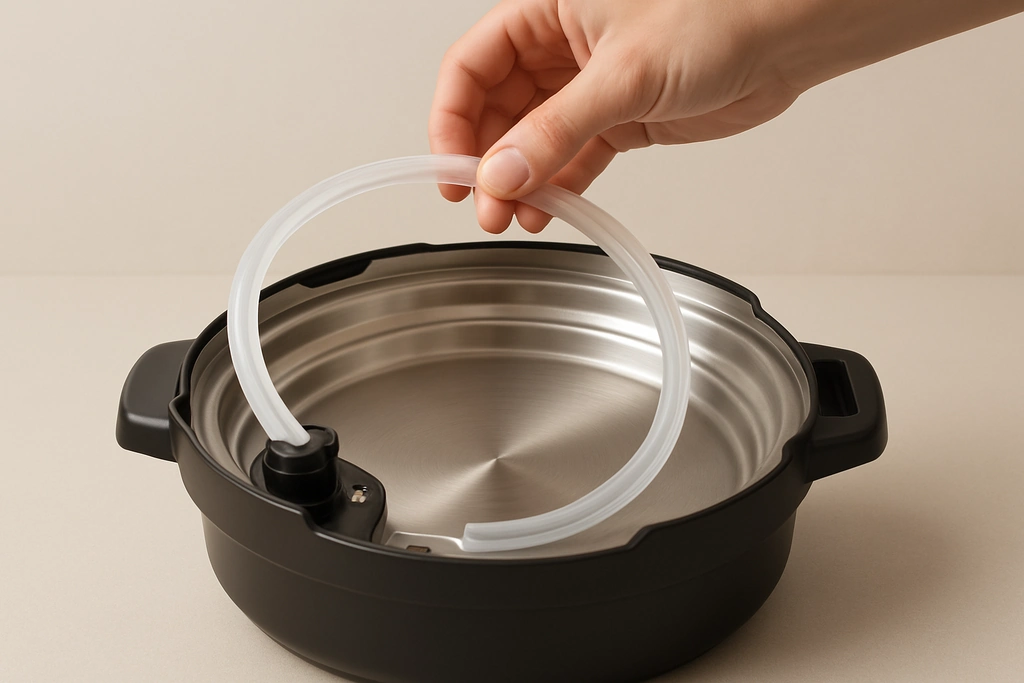
The sealing ring is a normal wear item, not a defect when it eventually needs replacing. Because it's made of a flexible material designed to compress and form a seal, it can absorb odors from strongly flavored foods over time, and a musty or lingering smell in the ring is a common issue home cooks encounter with regular use. Many people keep a second ring on hand, one dedicated to savory cooking and another to sweeter or more neutral dishes, to reduce cross-flavoring. Washing the ring after each use and letting it air dry fully before storing it back in the lid helps slow this buildup, and replacing the ring periodically as part of normal upkeep is expected rather than a sign something has gone wrong.
For anything related to how the pressure release valve, the lid-locking mechanism, or any internal safety feature actually functions, or if you run into a problem with the appliance building or releasing pressure unexpectedly, consult the manufacturer's instruction manual for your specific model, or contact the manufacturer or a qualified repair professional directly. These mechanisms are engineered by the manufacturer for a specific design, and instructions found generically online may not match your exact model's parts or tolerances.
Beyond the lid components, a few general habits extend the life of any electric pressure cooker. Avoid using metal utensils or abrasive scouring pads directly on a nonstick inner pot coating, since scratches can shorten how well it releases food over time. Store the lid loosely rather than locked shut when the appliance isn't in use, which gives the sealing ring a chance to fully dry and reduces the odor buildup mentioned above. Keep the exterior vents and the underside of the lid free of food debris, and check the power cord and base periodically for any visible damage. Following the specific care instructions in your model's manual remains the most reliable way to keep the appliance performing well over years of regular use.