What to look for in a chef's knife
A chef's knife is the single most used tool in most home kitchens, which is why choosing one deserves more thought than grabbing whatever is on sale. Instead of chasing a single "best" option, it helps to think in terms of how a knife will actually perform across the tasks you do most: chopping vegetables, breaking down proteins, mincing herbs, and slicing bread or fruit. The right choice depends on your hand size, your cutting board habits, and how much time you're willing to spend on upkeep.
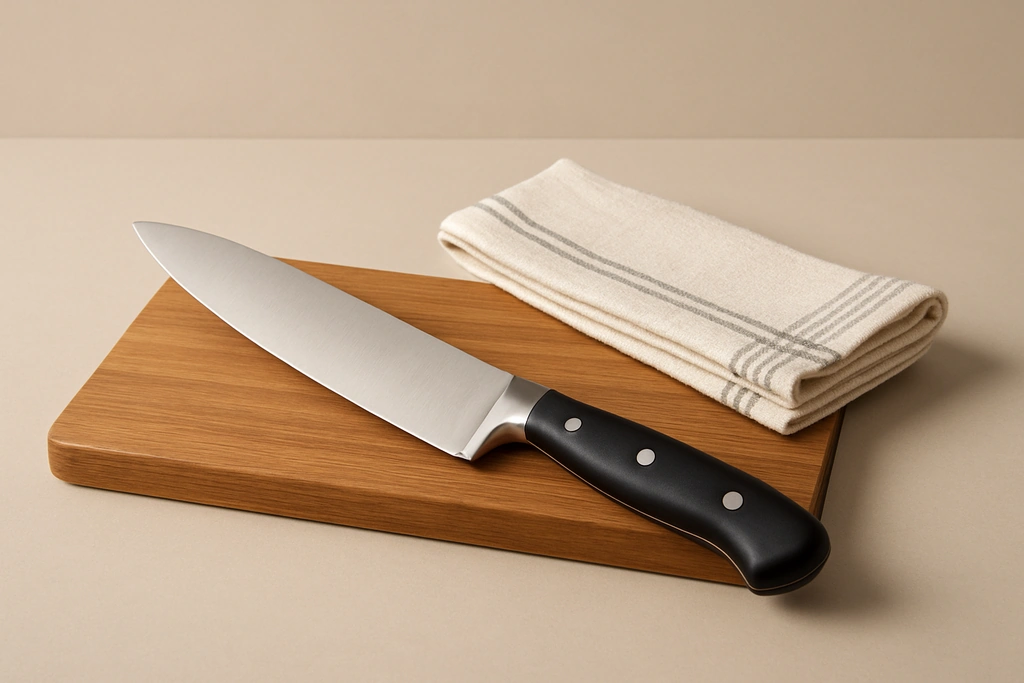
Blade length is one of the first things to compare. Most general-purpose chef's knives run somewhere between 6 and 10 inches, with 8 inches being a common middle ground. A shorter blade can feel more maneuverable and less intimidating for smaller hands or tighter kitchen spaces, while a longer blade covers more surface area in a single stroke, which can speed up repetitive tasks like dicing a large onion or breaking down a whole cabbage. Neither length is inherently superior; the better question is which one you can control comfortably for extended periods.
Weight and balance matter just as much as length. Some cooks prefer a blade-heavy knife that does more of the cutting work through its own momentum, while others prefer a lighter, more agile knife that responds quickly to small wrist movements. If you can handle a knife in person before buying, notice where the balance point falls relative to where your hand naturally grips the handle. A knife that feels front-heavy or back-heavy in the showroom will likely feel that way after twenty minutes of prep too.
Finally, consider the overall shape of the blade profile. German-style blades tend to have a more pronounced curve along the cutting edge, which supports a rocking motion where the tip stays in contact with the board while the heel lifts and falls. Japanese-style blades are often flatter along the edge, which suits a push-cut or pull-cut motion and can offer a thinner, more precise edge geometry. Trying both motions, even in the air without a board, can help you figure out which cutting style feels more natural to your hand.
Decision criteria: blade, steel, and handle
Once you have a sense of size and shape preferences, the next layer of comparison involves the materials themselves. Steel type is often described in marketing terms, but at a practical level it comes down to a tradeoff between edge retention, ease of sharpening, and resistance to corrosion. Harder steels can generally hold a sharp edge longer between sharpenings, while softer steels tend to be quicker and easier to bring back to a keen edge with basic home tools. Neither extreme is automatically the right answer for every cook; it depends on how often you're willing to maintain the blade versus how long you want an edge to last between maintenance sessions.
Full tang versus partial tang construction is another meaningful distinction. A full tang means the metal of the blade extends the entire length of the handle, which generally contributes to better balance and a sturdier feel, particularly for knives that will see heavy daily use. A partial tang can still be perfectly functional on a well-made knife, especially for lighter-duty blades, but it is worth checking construction details if durability under regular use is a priority for you.
Handle material and shape deserve just as much attention as the blade itself, since your hand will be in contact with the handle for every single cut. Common handle materials include various woods, synthetic polymers, and composite materials, each with different grip textures, weight, and moisture resistance. A handle that feels secure when your hands are dry may feel different once they're damp from rinsing produce, so it's worth considering how the material performs in both conditions. Ergonomic contouring, finger guards, and handle diameter all affect comfort during long prep sessions, and these details are highly personal — what feels great to one cook may feel awkward to another.
Bolster design, or the absence of one, also affects how a knife feels in hand. A bolster is the thicker junction between blade and handle, and it can add weight toward the front of the knife while also serving as a natural finger stop. Some cooks like the extra control this provides; others find it gets in the way of sharpening the full length of the blade or prefer a lighter, bolster-free design. Comparing a few different constructions side by side, if possible, is the most reliable way to figure out your own preference rather than relying on general rules.
Browse our recommended products
Our featured picks refresh periodically. While we update them, our editorial guides can help you find the right pick.
See our guidesLimitations to keep in mind
Every chef's knife involves tradeoffs, and it helps to go in with realistic expectations rather than assuming one option solves every problem. Harder steels that hold an edge longer are often more prone to small chips if the blade contacts something unexpectedly hard, like a bone fragment, a frozen patch of food, or the rim of a ceramic plate. A softer, more forgiving steel may dull sooner but is generally less likely to chip under the same circumstances. Matching steel hardness to your own cutting habits and the surfaces you tend to cut on is more useful than assuming harder is always better.
Weight is another area where the ideal on paper doesn't always match the ideal in practice. A heavier knife can make quick work of dense vegetables, but that same weight can contribute to hand and wrist fatigue during a long prep session, especially if you're mincing a large quantity of herbs or garlic. A lighter knife reduces that fatigue but may require more deliberate technique to cut through denser ingredients cleanly. There isn't a single weight that works for everyone, which is why handling a knife before committing, when possible, is so valuable.
Blade length has its own set of limitations too. A longer blade is efficient for large-format cutting tasks but can feel unwieldy in a small kitchen, a shallow cutting board, or a smaller hand, and it also takes up more storage space. A shorter blade is easier to maneuver in tight spaces but may require more strokes to get through larger ingredients, which can slow down bigger prep jobs. Neither limitation disqualifies a knife; it just means the length should match the kind of cooking you actually do most often.
It's also worth being cautious about claims that sound absolute, whether that's a promise of an edge that never needs attention or a handle material described as impervious to wear. All knives require some degree of ongoing care, and all materials degrade over time with regular use. A more accurate way to evaluate a knife is to ask what level of maintenance it realistically requires and whether that level fits your routine, rather than looking for a version that supposedly needs no upkeep at all.
Care, storage, and sharpening upkeep
How you care for a chef's knife has a real effect on how long it stays useful and how consistently it performs. Hand washing immediately after use and drying the blade right away is generally better for both the edge and the handle than letting a knife sit in a sink of water. Many knives are not well suited to dishwasher cycles, since the heat, moisture, and contact with other utensils can dull the edge faster and, over time, affect the handle material, so checking the manufacturer's guidance on washing method is a worthwhile step before you settle into a routine.
Storage matters more than many people expect. Tossing a chef's knife loose into a drawer with other utensils can dull the edge through repeated contact and creates a real safety hazard when reaching in. A knife block, an in-drawer knife tray, or a wall-mounted magnetic strip all protect the edge and make it easier to grab the knife safely. Whatever storage method you choose, the goal is to keep the blade from knocking against other hard objects between uses.
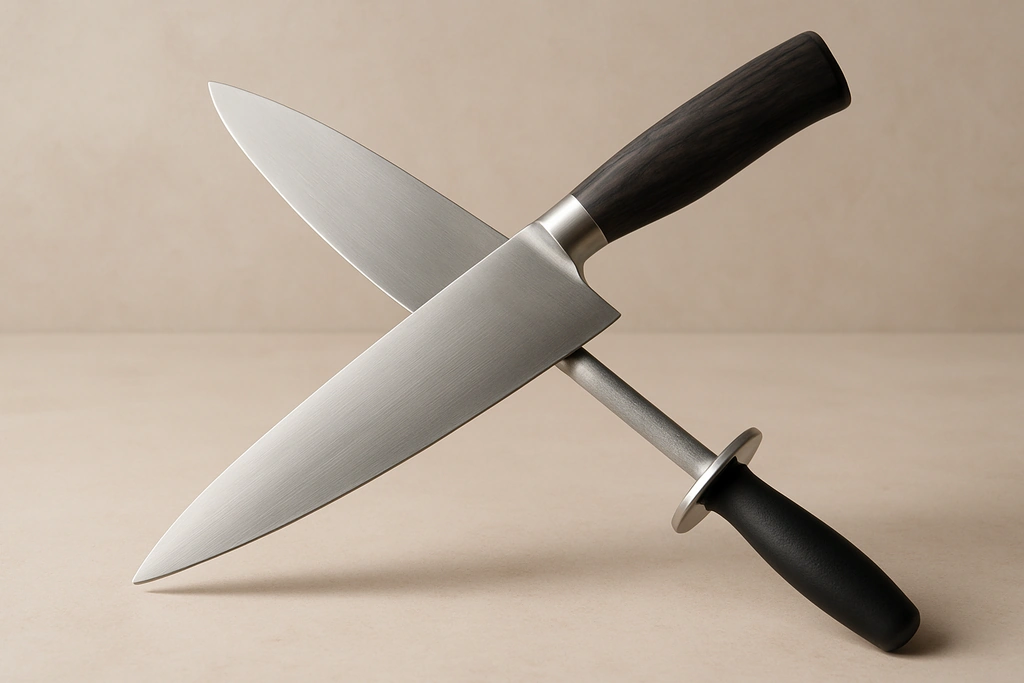
Two different maintenance concepts often get confused: honing and sharpening. A honing rod doesn't remove metal from the blade; it realigns the microscopic edge that gets bent out of true through normal use, which is why many cooks hone their knife regularly as part of routine upkeep. Sharpening, typically done with a whetstone or a sharpening tool, actually removes a small amount of metal to create a new edge once the blade has genuinely dulled rather than just gone slightly out of alignment. Understanding this distinction helps you decide how often each type of maintenance fits into your kitchen routine.
If a blade becomes chipped, develops an uneven edge, or otherwise seems damaged beyond routine dullness, that's a situation better handled by a qualified sharpening professional or according to the manufacturer's own guidance rather than attempting a fix at home. Trying to correct significant damage without the right equipment and experience can make the problem worse or create an uneven, unsafe edge. For everyday upkeep, though, a simple combination of careful washing, sensible storage, and routine honing goes a long way toward keeping a chef's knife performing the way it did when you first brought it home.