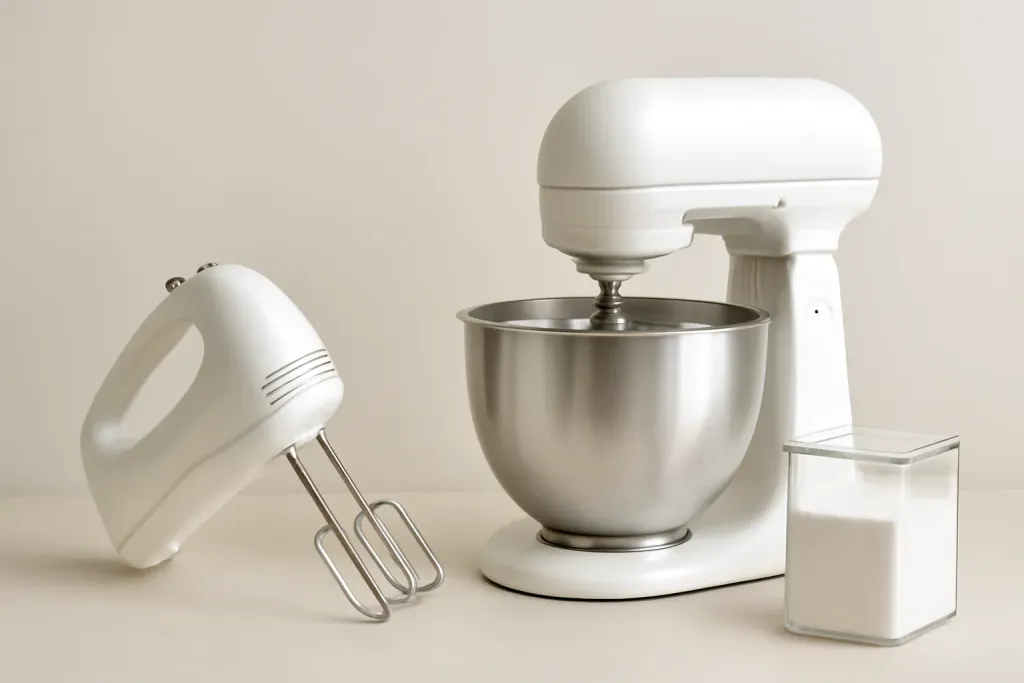
Hand Mixer vs Stand Mixer: The Core Difference
When comparing hand mixer vs stand mixer, the main difference is simple: one moves with you, and the other stays put. A hand mixer is a compact portable appliance you hold while mixing in your own bowl. A stand mixer is a heavier countertop appliance with a fixed bowl and a motorized base that does the work while you add ingredients or manage the recipe.
That difference affects almost every part of the cooking experience. A hand mixer usually takes up less space, is easier to store, and works well for lighter mixing jobs. A stand mixer generally offers more stability and convenience for recipes that need longer mixing, thicker batters, or frequent use. Neither is universally “better.” The right choice depends on how often you bake, what you make, how much counter space you have, and how much physical effort you want to put into mixing.
For an independent kitchen-products buyer, the best approach is to match the tool to the task. If you mostly whisk cream, mix boxed cake batter, or blend frosting occasionally, a hand mixer may be enough. If you bake bread doughs, large cookie batches, or layered desserts often, a stand mixer may be easier to live with. The rest of this guide breaks down the practical tradeoffs so you can decide with confidence.
Capacity and Batch Size
Capacity is one of the most important distinctions in the hand mixer vs stand mixer comparison. A hand mixer relies on the bowl you choose, so the workable batch size is shaped by the size and depth of that bowl, the recipe, and your own ability to keep the beaters submerged without splashing. That makes a hand mixer flexible, but it also places more responsibility on the user.
A stand mixer typically uses a dedicated bowl that locks into the base. This setup can make it easier to mix larger batches because the bowl is stable and the mixer is designed to handle continuous operation without being held. For cookie dough, meringues, frostings, and similar recipes, that stability can be a major benefit. It is also useful when a recipe asks you to add ingredients gradually while the mixer runs.
Still, bigger is not always better. If you usually make small batches, a stand mixer may feel unnecessarily bulky. A hand mixer can be more practical for a single cake layer, a few eggs, or a small batch of whipped topping. Think about the size of the recipes you actually make most often, not the ones you imagine making someday.
Mixing Control and Everyday Convenience
Control is another key factor. With a hand mixer, you guide the beaters through the ingredients, which gives you direct control over where mixing happens. That can be helpful when you want to scrape the sides of the bowl, combine ingredients gently, or stop as soon as a batter comes together. It also makes the appliance feel adaptable, since you can move from one bowl to another without transferring anything to a different machine.
A stand mixer offers a different kind of control: hands-free mixing. Once the bowl and attachment are set up, the machine does the repetitive work while you stay available for other steps. That can be convenient in recipes with several components, such as cookies, cakes, or whipped fillings. The tradeoff is that you may need to pause the machine and scrape the bowl more deliberately, depending on the recipe and attachment.
Convenience also includes cleanup and setup. A hand mixer generally has fewer parts and can be quicker to bring out for an everyday task. A stand mixer often takes more time to set up, but may repay that time if you use it for longer or more involved baking sessions. If you dislike extra equipment on the counter, the hand mixer may feel simpler. If you value multitasking and hands-free operation, the stand mixer may feel more efficient.
Which Recipes Suit Each Mixer Best?
In practical terms, the hand mixer vs stand mixer choice often comes down to recipe type. A hand mixer is usually well suited to lighter tasks such as whipping cream, beating eggs, mixing cake batter, preparing frosting, and combining pancake or quick-bread batters. It is also useful for recipes where you do not want to commit to a large appliance for a short job.
A stand mixer is often the more comfortable option for thicker or more demanding mixtures. Bakers commonly rely on stand mixers for cookie dough, dense batters, repeated batches, and recipes that benefit from longer, steady mixing. The fixed bowl and stronger base can make it easier to manage ingredients that would otherwise require more effort from the person mixing.
It is also worth noting that not every recipe needs the same level of power or precision. Some batters are meant to be mixed just until combined, while others benefit from more structured mixing. A hand mixer can be ideal when you want to stop quickly and avoid overmixing. A stand mixer can be better when you need consistent mixing over several minutes and want to keep both hands free for timing, adding ingredients, or preparing the next step.
Counter Space, Storage, and Weight
Storage is a major everyday concern in the hand mixer vs stand mixer decision. A hand mixer is typically compact enough to fit in a drawer or cabinet, with beaters stored alongside it. This makes it appealing for smaller kitchens, apartments, or anyone who does not want a large appliance permanently visible.
A stand mixer is usually much heavier and more prominent. Even if it stores in a cabinet, many people keep it on the counter because lifting it in and out can be inconvenient. That permanence can be fine if you use it often, but less ideal if you bake only occasionally. Before choosing a stand mixer, it helps to consider not only where it will live, but also whether you will realistically move it often.
Weight also matters during use. A hand mixer is light enough to hold comfortably for short periods, though longer mixing sessions can become tiring. A stand mixer shifts that burden away from you, but its weight is part of what makes it stable. In a small kitchen, the compactness of a hand mixer may matter more than the convenience of a stand mixer. In a larger kitchen, a stand mixer may fit naturally into the workflow.
Browse our recommended products
Our featured picks refresh periodically. While we update them, our editorial guides can help you find the right pick.
See our guidesAttachments and Versatility
Many shoppers compare the attachments as part of the hand mixer vs stand mixer choice. A hand mixer usually comes with basic beaters, and some models may include additional accessories such as dough hooks or a whisk. These extras can broaden its usefulness, but the appliance still centers on handheld mixing.
A stand mixer often offers a wider range of attachment options, depending on the model. Standard attachments may include a flat beater, dough hook, and whisk, with some models supporting additional accessories for specialty tasks. This can make a stand mixer more versatile for bakers who want one appliance to handle multiple jobs across a wide range of recipes.
Versatility should be weighed against how much you will actually use it. A mixer with many potential attachments may sound appealing, but if your needs are simple, those extras may not matter much. A hand mixer with the basic tools may be enough for everyday cooking. A stand mixer makes more sense when you expect to use it regularly and want the option to grow into more ambitious baking projects over time.
Noise, Speed Options, and User Effort
Noise and effort are subjective, but they still shape the experience of using a mixer. A hand mixer requires active holding and guiding, so the user is more engaged throughout the task. Some people appreciate that direct control, while others find it tiring, especially for longer jobs. Because you are supporting the appliance, even a lightweight hand mixer can feel less convenient once mixing takes more than a few minutes.
A stand mixer reduces physical effort because it does the mixing while sitting on the counter. That can be a real advantage for recipes that need patience and attention. You may still need to monitor the bowl, scrape down ingredients, or change speeds, but the machine handles the repetitive motion.
Speed settings matter in both categories. More speed options can offer better control, but the best setting still depends on the recipe and the ingredient texture. In general, starting slowly and moving up as needed is a sensible approach for either type. For consumers comparing models, the practical question is less about the number of settings alone and more about whether the mixer gives you enough control for the foods you make most often.
How to Choose Between a Hand Mixer and a Stand Mixer
If you are still deciding on hand mixer vs stand mixer, start with your habits, not the appliance features. Ask yourself how often you bake, whether you usually make small or large batches, and how much storage space you can spare. Those answers will quickly narrow the field.
- Choose a hand mixer if you want something compact, affordable in footprint, and easy to store.
- Choose a hand mixer if you bake occasionally and prefer a simple tool for lighter jobs.
- Choose a stand mixer if you bake often and want hands-free mixing for longer tasks.
- Choose a stand mixer if you regularly make thicker batters, cookie dough, or multi-step recipes.
- Choose a stand mixer if you have the counter space and do not mind a larger appliance staying out.
It also helps to think about who will use the mixer. If several people in your household may use it, the simpler, lighter hand mixer may be more approachable. If you are the primary baker and want a more specialized kitchen tool, a stand mixer can feel like a worthwhile upgrade. The best choice is the one that fits your actual routine without creating clutter or friction.
Bottom Line
The hand mixer vs stand mixer decision is really a decision about convenience, capacity, and how you cook. A hand mixer is best thought of as a flexible, space-saving tool for smaller jobs and occasional baking. A stand mixer is better viewed as a dedicated baking appliance for people who want stability, larger-batch convenience, and less hands-on effort.
If your kitchen is tight on space or your baking is casual, a hand mixer is often the smarter purchase. If you bake regularly and want to reduce the physical work of mixing, a stand mixer is easier to justify. Many home cooks eventually like having both, but most households do not need both right away. Start with the one that matches your most common recipes, then build from there if your needs grow.