What actually differs between glass and plastic
Choosing between glass and plastic food storage containers usually comes down to a handful of practical differences rather than one material being universally better. Both show up in nearly every kitchen storage lineup, and each has a reasonable case depending on how you cook, store, and reheat food. Instead of framing this as a contest with a single winner, it helps to look at the specific attributes that change day-to-day usability.
Weight is one of the first things people notice. Glass containers are heavier, which can make a fully loaded set feel substantial in a cabinet or drawer, but that same weight adds up when you are carrying a stacked lunch bag or packing several containers into a cooler. Plastic containers are lighter, which matters for portability, travel, and packed lunches, but the tradeoff is that they can feel less substantial and may shift more easily when nested loosely on a shelf.
Transparency and staining behavior also differ. Glass tends to stay visually clear over time, so it is easier to see at a glance what is inside and how long it has been sitting there. Plastic, especially clear plastic, can take on a cloudy tint or absorb color from tomato-based sauces and certain spices over repeated use. This does not necessarily affect function, but it does affect how a container looks after months of regular rotation.
Temperature compatibility is another area worth checking carefully rather than assuming. Many glass containers are designed to move from refrigerator to oven, and some are described as microwave compatible, but always confirm the specific product listing and manufacturer guidance before using any container in an oven, broiler, or microwave, since designs and lid materials vary. Plastic containers are commonly used in refrigerators, freezers, and microwaves, but oven use is typically not appropriate for plastic, so check the listing for explicit guidance on heat limits rather than assuming compatibility.
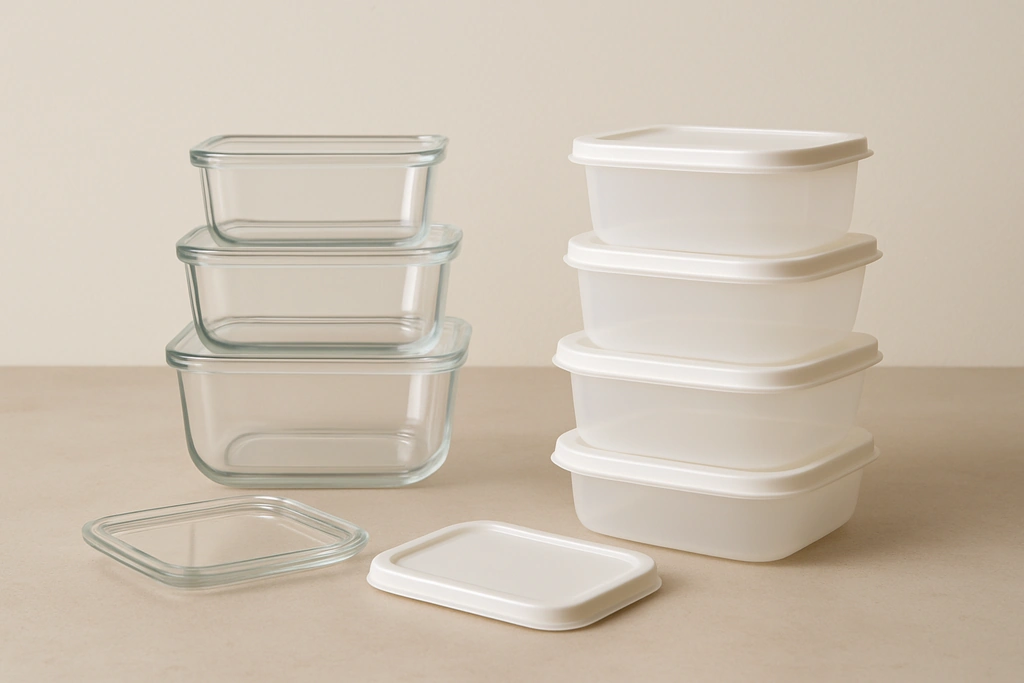
Lid design varies independently of the container body material. Some sets use snap-locking lids with silicone gaskets intended to create a tighter seal, while others use simple snap-on or press-fit lids without a gasket. This distinction matters more for how well a container resists leaks than whether the base is glass or plastic, so it is worth reading the lid description on any listing rather than assuming seal quality based on material alone. Stackability also depends on whether a line is designed as a matched set with consistent footprints, which can be true of either material.
Decision criteria for your kitchen
Rather than picking a material first, it helps to start with how you actually use storage containers day to day. A few practical questions can narrow the decision quickly and point toward the set that fits your routine instead of one that looks appealing on a shelf but creates friction in daily use.
Consider where the containers will travel. If you pack lunches, carry meals to work, or transport food to gatherings, lighter plastic containers may reduce bag weight and lower the consequences of an accidental drop. If containers mostly move between the refrigerator and the stovetop or oven at home, the added weight of glass is less of a daily inconvenience and its ability to go from fridge to oven, when the listing confirms that use, can simplify reheating without a dish change.
Think about what you store most often. Tomato-based sauces, turmeric-heavy dishes, and oily marinades are more likely to leave visible staining on plastic over repeated cycles, while glass tends to resist this kind of surface staining. If your rotation includes a lot of these ingredients, that alone may tip the decision toward glass, or toward reserving a few dedicated plastic containers for staining-prone leftovers so the rest of your set stays presentable.
Storage space and stacking habits matter as well. Glass containers are rigid and generally keep their shape indefinitely, which makes them stack predictably in a cabinet, but that rigidity means they take up their full molded footprint even when empty. Plastic containers, particularly lidless or nested styles, can sometimes tuck into smaller gaps, and some collapsible or thin-wall designs save cabinet space when not in use, which is worth checking on the listing if drawer or shelf space is tight.
Household composition is a practical factor too. In homes with young children or anyone who handles dishes near tile or hard flooring, the lower breakage risk of plastic can reduce cleanup concerns, while in a household that primarily hand-washes and stores containers carefully, glass's resistance to scratching and staining may be the more attractive tradeoff over the long run. Budget also plays a role, since glass sets with oven-compatible lids and locking mechanisms are often priced higher than comparable plastic sets, so weigh the added functionality against what you are likely to use regularly rather than what sounds most versatile in the abstract.
Finally, check the manufacturer's documentation for both dishwasher placement guidance and any material or care labeling before buying, since this information is listing-specific and should not be assumed based on material alone.
Browse our recommended products
Our featured picks refresh periodically. While we update them, our editorial guides can help you find the right pick.
See our guidesLimitations of each material
Every container material comes with tradeoffs, and being upfront about them helps set realistic expectations rather than treating either option as flawless. Glass containers are more prone to breaking or chipping if dropped on a hard surface, and a crack or chip can render a container unusable even if the rest of the piece looks intact. Because of this weight and breakage risk, glass may not be the ideal choice for households that frequently transport containers, hand them to young children, or store them in high, hard-to-reach cabinets where an accidental fall is more likely.
Glass containers also tend to be bulkier to store when empty, since the rigid body does not compress or nest as tightly as some flexible plastic designs. If cabinet space is limited, a full glass set can occupy more room than an equivalent plastic set, even though many glass lines are designed to nest lids and bodies separately to help offset this.
Plastic containers carry a different set of limitations. Over time and repeated use, clear plastic can develop surface scratches from utensils, abrasive scrubbing, or dishwasher wear, and those scratches can make containers look worn even if they still function normally. Plastic is also more prone to picking up stains and lingering odors from strongly colored or pungent foods, and once a stain sets in, it may not fully lift with routine washing.
Plastic containers are generally not appropriate for oven use, and even microwave compatibility should be confirmed on the specific listing rather than assumed, since lid materials, seals, and container grades vary between product lines. For questions about what a given plastic container is made from and how it is intended to be used, refer to the manufacturer's material documentation and labeling on the listing rather than relying on general assumptions.
Neither material eliminates leaks entirely. Lid seal quality depends more on the specific gasket or snap design than on whether the base is glass or plastic, so a poorly sealed lid on either material can allow liquid to escape during transport. Reading lid descriptions and any leak-related details on the product listing is a more reliable way to gauge real-world performance than assuming based on material alone.
Care, washing, and stain prevention
Good care habits extend the useful life of either material and reduce the two most common complaints: stubborn stains and lingering odors. Rinsing containers soon after use, rather than letting sauce or oil sit and dry, makes a noticeable difference for both glass and plastic, since dried residue is harder to remove and more likely to leave a mark or smell behind.
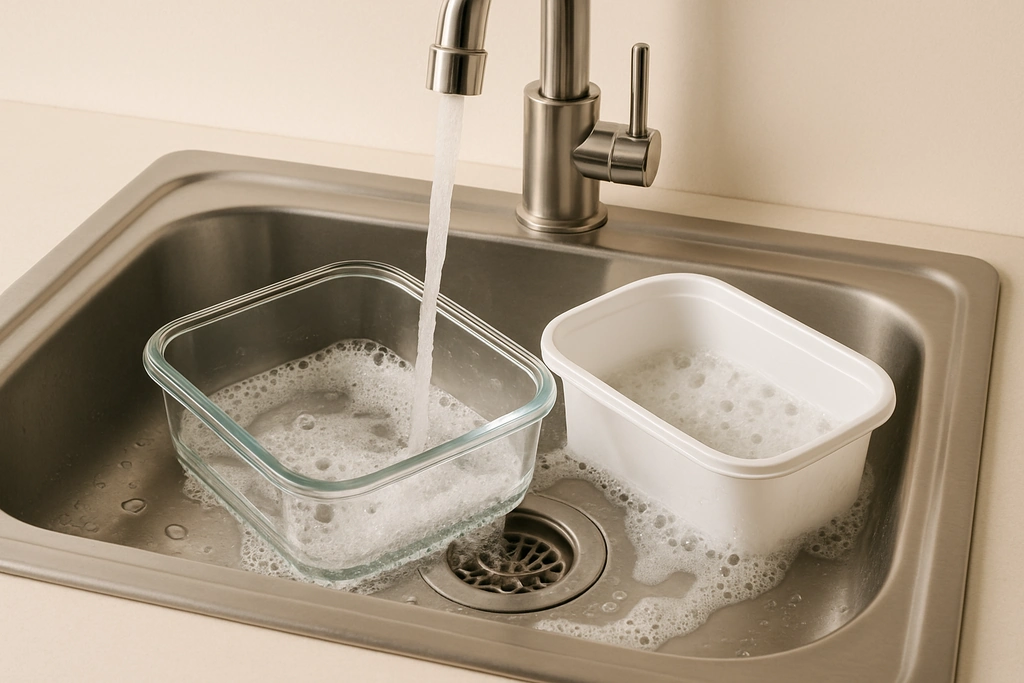
For plastic containers prone to staining, a quick soak in warm water with a small amount of dish soap before washing can loosen pigment from tomato sauce, curry, or berry residue before it sets further. Washing lids and bodies separately, rather than nesting a dirty lid inside a container in the sink, helps water and soap reach every surface, including the ridges and grooves around gaskets where food particles tend to collect.
Air-drying containers fully before stacking or sealing them for storage helps prevent trapped moisture, which can contribute to musty odors over time, especially in plastic containers with textured lid seals. Leaving lids off or propped slightly open during drying, rather than sealing a still-damp container right after washing, is a simple habit that reduces this risk for both materials.
Always check the manufacturer's guidance on dishwasher placement before relying on it as the default cleaning method. Some glass and plastic containers are described as dishwasher safe on the top rack only, since high heat near a heating element can affect certain lids or seals over repeated cycles, while others are rated for either rack. Confirming this on the specific listing avoids guessing and helps you choose a wash routine that matches what the product is actually designed for.
For glass containers, avoid sudden temperature changes, such as moving a container directly from the freezer into a hot oven, since rapid shifts in temperature can stress glass and increase the risk of cracking. Letting a frozen glass container come closer to room temperature before introducing higher heat is a reasonable precaution, and checking any manufacturer guidance on temperature transitions for your specific set is worthwhile before relying on habit alone.
Finally, periodically inspect lids and gaskets on both materials for wear, warping, or residue buildup, since a compromised seal is often the real cause of a leak that might otherwise be blamed on the container body. Replacing a worn lid, when the product line offers replacement parts, can extend the usable life of an otherwise sound container rather than requiring a full set replacement.