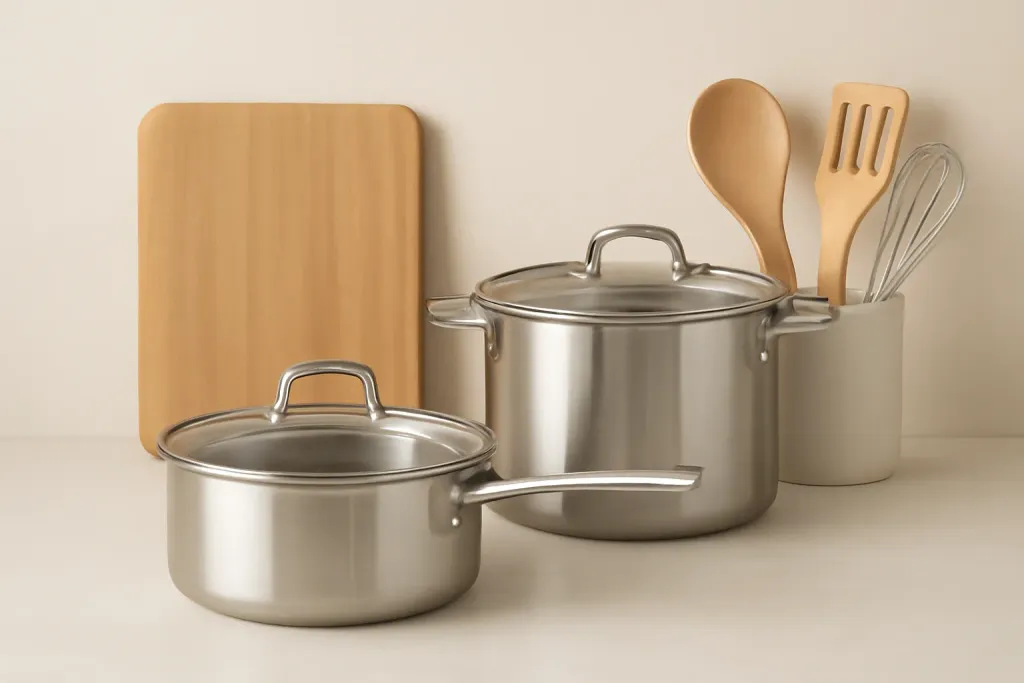
Glass Lids vs Metal Lids: The Basic Difference
When shoppers compare glass lids vs metal lids, the first difference is easy to spot: glass is transparent, while metal is opaque. That simple contrast changes how a lid feels in everyday cooking. A clear lid lets you look in without lifting it, while a metal lid keeps the contents hidden until you open the pot or pan.
For many home cooks, that visibility is the main appeal of glass. It can make stovetop cooking feel more convenient because you can check simmering, bubbling, or steam buildup at a glance. Metal lids, by contrast, are often chosen for their straightforward, traditional look and for the fact that they do the basic job of covering cookware without drawing attention to the food underneath.
Neither material is universally better. The right choice depends on how you cook, how often you want to check the food, and whether you prefer a clear lid or a closed, all-metal cover. As with most cookware decisions, the material matters, but fit, handle design, and overall construction matter too.
Visibility and Everyday Cooking Control
Visibility is the biggest reason people choose glass lids vs metal lids. A glass lid gives you a quick view of the pan without interrupting cooking, which can be useful for sauces, soups, grains, vegetables, and other dishes that benefit from close attention. Instead of guessing what is happening under the lid, you can observe steam, bubbling, and condensation as they develop.
That can make it easier to decide when to lower the heat or when a dish is approaching a stronger boil. It may also reduce how often you need to lift the lid, which is convenient when you are cooking several things at once. For people who cook by sight, that visual window can be a real advantage.
Metal lids remove that window. Some cooks do not mind, especially if they already know the recipe well or prefer to keep the lid on until a set time has passed. In that case, an opaque lid may feel just as practical. The tradeoff is simple: glass provides more real-time information, while metal keeps the view covered. The better option depends on your habits, not on a general rule about which lid is stronger or smarter.
Heat and Steam Management
In the glass lids vs metal lids comparison, both materials are doing the same basic job: covering the cookware. A lid helps contain heat and manage steam, but the material itself does not change the core purpose. What it does change is how much feedback you get while cooking.
With a glass lid, it is easier to tell whether the contents are still actively simmering, whether moisture is building up, or whether the burner may need adjustment. That can be handy when you want to make small changes without opening the pot. A metal lid performs the same covering function, but you usually have to lift it to inspect what is happening inside.
For everyday use, that difference often affects convenience more than anything else. If you tend to check dishes frequently, a clear lid can save a few interruptions. If you prefer a simple cover and do not mind opening the lid now and then, metal can be entirely practical. The key point is that a lid works best when it matches how you actually cook.
Weight, Handling, and Kitchen Feel
Another practical part of glass lids vs metal lids is how each one feels in the hand. Depending on the design, glass lids can have a different balance and a slightly more noticeable top profile. Some shoppers like that, while others think of glass as more delicate because the material is more vulnerable to breakage than metal if it is knocked or dropped.
Metal lids usually have a familiar, utilitarian feel. They are often appreciated for their simple look and their ability to blend into a cookware set without standing out. For cooks who do not need to watch the food as it cooks, that straightforward style can be appealing.
Handling matters just as much as appearance. If you remove the lid often, the knob or handle should be comfortable and easy to grip. A lid that feels awkward to lift can be annoying whether it is glass or metal. When comparing products online, it is worth paying attention to handle shape, rim design, and the overall description instead of focusing only on the material category.
Browse our recommended products
Our featured picks refresh periodically. While we update them, our editorial guides can help you find the right pick.
See our guidesFit, Lid Style, and Cookware Compatibility
Fit is one of the most important issues in glass lids vs metal lids, and it is easy to overlook when shopping online. A lid that does not sit properly on the cookware will not be satisfying in use, no matter what it is made of. Diameter matters, but so does the shape of the rim and the way the lid is designed to seat on the pot or pan.
Glass lids are commonly used on saucepans, sauté pans, and stock pots, especially when the manufacturer wants to emphasize visibility. Metal lids are also common across many cookware types and may be used to create a coordinated, uniform look in a set. Some brands use one style across multiple pieces, while others mix materials depending on the pan.
If you are replacing a lost lid, measure carefully and compare the product dimensions. Photos can be useful, but they do not always show whether the rim profile or seating style matches your cookware. For Amazon shoppers, the size chart and product description are usually more helpful than the image alone. When fit is right, the lid is easier to live with than one that simply looks appealing in a listing.
Care, Cleaning, and Maintenance
Care is another practical point in the glass lids vs metal lids discussion. Glass lids are often easy to wipe clean because residue is easy to see on the smooth surface. That visibility can make cleanup feel more direct, since you can quickly spot splatter and buildup. Even so, glass should still be handled with care to avoid chips or cracks from rough use or accidental impact.
Metal lids may not show residue as clearly, but they still need routine cleaning. Splashes can collect around the rim, handle, or any vents and fittings. The finish may affect how noticeable marks appear, but it does not remove the need for normal washing and drying.
Manufacturer instructions should guide care. Some lids are suitable for the dishwasher, while others are better washed by hand depending on the handle material, rim construction, and overall build. Because products vary, it is best not to assume that every glass lid or every metal lid should be cleaned the same way. Regular care also helps the lid look presentable and makes storage less messy.
Safety and Durability Considerations
Safety is a major reason shoppers compare glass lids vs metal lids, but it helps to stay conservative about what the material can and cannot do. Glass allows visibility, yet it can be more vulnerable to breakage if it is struck, dropped, or handled roughly. That does not make it a poor choice, but it does mean it should be treated with a little more care than a solid metal cover.
Metal lids avoid the specific concern of broken glass, but they are not immune to wear. Dents, warping, bent rims, and loose handles can affect how well the lid sits on the cookware. The exact result depends on the design, the materials used, and how the lid is stored and handled over time.
For busy kitchens where cookware is stacked or moved often, the overall construction may matter more than the lid material alone. A secure handle, a sensible shape, and a proper fit are all important. A good lid should be easy to use correctly with the cookware it was made for.
How to Choose Between Glass and Metal
Choosing between glass lids vs metal lids becomes easier when you start with your cooking habits. If you often check food while it simmers, glass may be the more convenient option because it lets you monitor progress without lifting the lid. If you rarely need to look inside and prefer a simple cover, metal may suit you better.
Next, think about the cookware itself. If you are replacing a lid for a specific pot or pan, fit should come first. Correct diameter, rim profile, and handle style matter more than a general preference for one material. A lid that matches the cookware properly will usually be more satisfying than one that only looks attractive.
Storage and handling are worth considering too. In a crowded kitchen, a lid that is easy to grip and simple to set aside may be more practical. If you keep cookware stacked, the lid shape and handle design can affect everyday convenience. For many shoppers, the decision comes down to a basic preference for visibility or opacity, clear top or traditional cover.
If you keep those priorities in mind while checking dimensions and product details, the choice becomes much simpler. The best lid is usually the one that fits the cookware well and matches the way you actually cook.