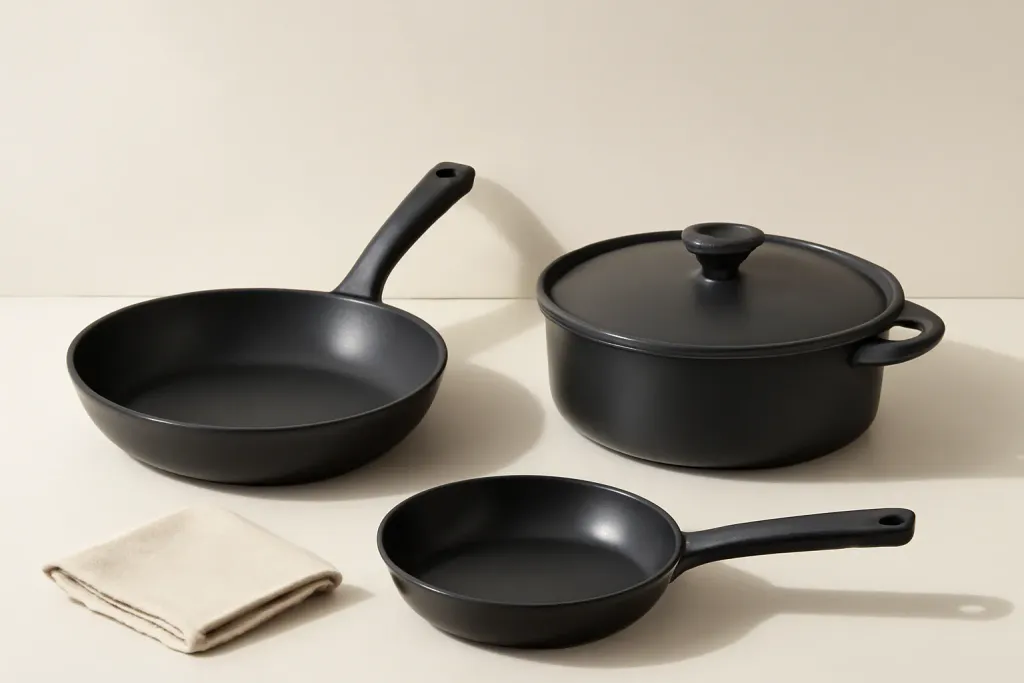
Frying Pan vs Sauté Pan: The Core Difference
The phrase
frying pan vs sauté pan
usually comes down to shape, not a completely different cooking philosophy. A frying pan, also called a skillet in many kitchens, typically has sloped sides that make it easy to slide a spatula under food and move ingredients around quickly. A sauté pan usually has straighter sides and more vertical walls, which changes how it handles liquid, heat, and volume.That design difference affects everyday cooking. A frying pan tends to feel more open and accessible, especially when you want to flip eggs, sear cutlets, brown vegetables, or reduce food in a thin layer. A sauté pan gives you more usable sidewall height, which can help when you are cooking saucier dishes, tossing ingredients, or working with a slightly larger amount of food without risking spills.
Neither style is automatically better. The better choice depends on how you cook most often. If your kitchen routine leans toward fast browning, omelets, and pan-fried foods, a frying pan is often the more natural tool. If you frequently start with aromatics, add liquid, and finish a dish in the same pan, a sauté pan may be more useful.
How Shape Changes Cooking
The shape of a pan affects more than appearance. Sloped sides expose more surface area, which can make stirring and turning easier. That is one reason frying pans are so common for dishes that need constant movement. The open shape also makes it simpler to evaporate moisture quickly, which can help when you want food to brown instead of steam.
Straighter sides, by contrast, help contain ingredients. That matters if you are cooking foods that splatter, simmer briefly, or need to be stirred with less risk of pushing pieces out of the pan. A sauté pan also tends to offer a flatter working area near the base, which can be convenient when you want more even contact between food and the cooking surface.
These differences also affect the way cookware feels on the stovetop. A frying pan usually offers easier access with a spatula or turner. A sauté pan often feels more enclosed, which can make it a better fit for dishes that start with browning and end with a bit of sauce. If you are deciding between the two, think about whether you want speed and easy flipping, or containment and versatility for mixed-ingredient dishes.
Best Uses for a Frying Pan
A frying pan excels in recipes where direct contact with the cooking surface matters. Eggs are a familiar example, especially when you want to keep them moving or lift them cleanly from the pan. The same is true for pancakes, fish fillets, browned potatoes, and many quick-seared proteins. The sloped sides make it easier to reach under delicate food without a lot of wrist strain.
The shape also supports tasks that involve tossing or stirring with a spatula. If you are sautéing mushrooms, browning ground meat, or cooking vegetables that need frequent movement, a frying pan can be very practical. Because the sides are lower, steam has more room to escape, which can support better browning when the pan is not overcrowded.
For many households, a frying pan is the everyday workhorse. It is often the first pan people reach for because it is easy to use and adaptable. That said, its lower sides can be a limitation if you are making saucier recipes or need to hold a lot of ingredients at once. In those cases, you may appreciate the extra containment of a sauté pan.
Best Uses for a Sauté Pan
A sauté pan is built for dishes that need a balance of browning and containment. The taller sides make it easier to add ingredients incrementally, stir without spilling, and simmer a small amount of liquid after searing. This can be useful for chicken dishes with pan sauce, vegetable medleys, rice-based recipes, and one-pan meals that move from stovetop browning to brief finishing in liquid.
Because the walls are higher, a sauté pan can also be more forgiving when you are cooking with oil or sauce that might otherwise splatter. That does not make it a specialized splatter-proof tool, but it does provide more room inside the pan. For cooks who like to build flavor step by step, that extra capacity can make the process feel more controlled.
Sauté pans can be especially appealing if you often cook for more than one or two people and want a pan that can handle a mix of solids and liquid. They are not as effortless for flipping food with a spatula as a frying pan, but they can be more versatile for complete stovetop dishes. If your cooking style leans toward sauces, reductions, and braises that do not require a heavy Dutch oven, a sauté pan may be a smart middle-ground choice.
Browse our recommended products
Our featured picks refresh periodically. While we update them, our editorial guides can help you find the right pick.
See our guidesSize, Weight, and Lid Considerations
When comparing frying pan vs sauté pan options, size matters as much as shape. A pan that is too small can crowd food, while one that is too large may make it harder to manage heat effectively. Frying pans are often sold in familiar sizes that suit everyday tasks, while sauté pans are commonly chosen in larger formats because the taller sides make additional volume more practical.
Weight is another important factor. Heavier pans can feel more stable and often retain heat well, but they may be less comfortable if you cook one-handed or move the pan frequently. Lighter pans are easier to handle, though they can feel less solid on the burner. The best choice depends on your cooking habits, storage space, and comfort level.
Lids are worth considering too. Sauté pans are frequently paired with tight-fitting lids, which can make them more flexible for finishing dishes with steam or a short simmer. Many frying pans are sold without lids, though some come with them or can be matched with a universal lid. If you want one pan that can handle both open searing and covered cooking, the lid question may matter more than the label on the box.
Materials and Stovetop Compatibility
Both frying pans and sauté pans are commonly made from stainless steel, cast iron, hard-anodized aluminum, or nonstick coatings. The material influences heat behavior, maintenance, and how well the pan suits different recipes. The pan shape is important, but the build material can change the experience just as much.
Stainless steel is often chosen for browning and deglazing because it handles high heat well and does not rely on a coating. Cast iron is valued by many cooks for its heat retention, though it is heavier and requires more care than some other options. Nonstick pans are convenient for sticky or delicate foods, but they are typically less suited to very high heat. Hard-anodized aluminum often offers a balance of lighter weight and solid everyday utility.
If you use an induction cooktop, check compatibility before buying. Not every pan works on every stove type. Handle design, base construction, and lid fit can also matter. An independently published buying guide should always recommend checking the manufacturer’s specifications rather than assuming all pans of a certain style will behave the same way.
How to Choose Based on Your Cooking Style
The easiest way to choose between a frying pan and a sauté pan is to look at what you cook most often. If your meals include lots of eggs, quick vegetables, pan-seared fish, or foods you want to flip often, a frying pan is usually the more natural fit. Its open profile makes stirring and turning simpler, especially for cooks who value speed and easy access.
If your cooking often starts with browning and ends with sauce, broth, or a covered finish, a sauté pan may serve you better. It offers more room for ingredients and a little extra protection against splatter. That can make it useful for recipes that move beyond simple searing.
For many kitchens, the decision is not either-or. A frying pan can serve as the everyday quick-cooking tool, while a sauté pan handles slightly more involved dishes. If you are building a small but versatile cookware set, that combination can be more practical than owning several pans that overlap heavily in function.
Practical Buying Guidance for Amazon Shoppers
For shoppers browsing Amazon, the most useful product details are usually the least glamorous ones. Look at the pan’s dimensions, whether it includes a lid, the stated stovetop compatibility, the handle style, and whether the interior surface matches your cooking habits. Those details matter more than broad marketing language about versatility.
Read the product description carefully to confirm whether the pan is truly a frying pan or a sauté pan. Some listings blur the distinction, using terms loosely. A pan with slightly sloped sides may be marketed one way but behave more like the other in daily use. Photos showing the sidewall height can be especially helpful.
It is also wise to think about cleanup and storage. If you prefer a pan that stacks neatly or fits under a cabinet, the shape may matter. If you have limited stovetop space, a pan with a wide base and well-proportioned sides may be easier to use. The goal is to choose a pan that fits the way you cook, not just the name on the listing.