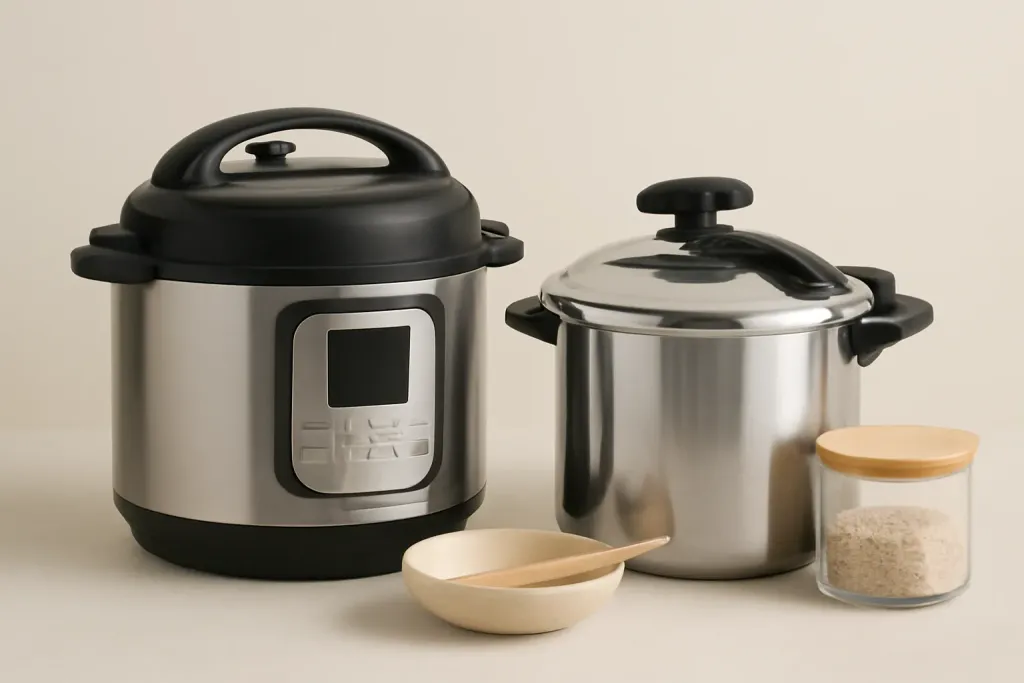
Electric vs Stovetop Pressure Cookers: The Basic Difference
When shoppers compare electric vs stovetop pressure cookers, the first distinction is not simply where the heat comes from. It is how the cooker manages pressure, how much control the cook keeps during the process, and how involved the cooking workflow feels from start to finish. Both styles use a sealed, pressurized environment to cook food differently than a standard covered pot.
An electric pressure cooker is a countertop appliance with its own heating element and control system. It is designed to handle much of the timing and temperature management internally. A stovetop pressure cooker, by contrast, relies on an external burner. That gives the cook direct responsibility for adjusting heat and watching how the cooker responds on the range.
For many households, the decision comes down to convenience versus control. Electric models tend to attract people who want presets, a more automated routine, and less burner monitoring. Stovetop models often appeal to cooks who prefer a traditional format, quicker heat response, and a tool that works with the stove already in the kitchen. Neither type is automatically better; the better choice depends on how you cook and how much attention you want to give the pot.
How Each Type Works
Pressure cooking depends on steam trapped inside a sealed vessel. As pressure rises, the cooking environment changes in a way that allows many foods to cook under conditions different from ordinary simmering. The core principle is the same for both styles, but the control system is different.
Electric models use built-in sensors and programmed settings to regulate heat. Many offer modes for beans, rice, soup, stews, or slow cooking. That can make them appealing if you want a set-it-and-wait experience. Because the appliance contains its own heating element, it does not depend on the stove to create the cooking environment.
Stovetop pressure cookers use the burner as the heat source. That gives the cook direct influence over how quickly pressure builds and how strongly it is maintained. Some people like the immediacy of this response, especially if they are used to cooking on the range and want a more hands-on rhythm. The tradeoff is that the cook must stay more engaged and make burner adjustments as needed.
In other words, electric models reduce day-to-day attention, while stovetop models offer more direct oversight. That difference is often the deciding factor in the electric vs stovetop pressure cookers comparison.
Speed, Control, and Cooking Results
It is easy to ask which type is “faster,” but speed alone does not answer the real question. The better question is which cooker helps you reach the result you want with the least hassle. Both styles are meant to be efficient, yet they reach that goal in different ways.
Stovetop pressure cookers tend to give the cook more immediate control because burner changes can alter heat relatively quickly. For someone who likes manual adjustments, that responsiveness can be a real advantage. It may feel easier to respond when a recipe needs pressure lowered or when a dish is sensitive to timing.
Electric pressure cookers are often chosen for consistency and convenience. Their controls are designed to reduce the need for constant watching, which can be helpful on busy days or when you want to step away from the kitchen. The downside is that they may feel less flexible if you want to fine-tune the heat mid-cook.
Cooking results also depend on more than appliance type. Ingredient size, liquid quantity, layering, and release method all matter. A pressure cooker is not a substitute for a well-structured recipe. It is a tool that works best when the recipe is designed for the appliance and the cook follows the instructions carefully.
Safety Features and User Comfort
Safety is a major consideration in any pressure cooker purchase. Modern models in both categories include features intended to help with safe operation, but the user experience is still different.
Electric pressure cookers are often seen as approachable because they usually include locking lids, pressure indicators, and automatic programs. The appliance takes on more of the temperature management internally, which can reduce the amount of active oversight required from the cook. Even so, convenience is not a substitute for careful use. Users still need to follow the manual, respect fill limits, and use the recommended release method for the recipe.
Stovetop pressure cookers may feel more traditional and may ask more of the operator. The lid and indicator system are still important, but because the burner is external, the cook stays part of the control process throughout the meal. That is not a flaw; it simply means the person using the cooker has more responsibility for heat management.
For buyers who are new to pressure cooking, an electric model may feel less intimidating. For experienced stovetop cooks, a stovetop unit may feel straightforward and familiar. In either case, the key is to read the manufacturer’s instructions, avoid overfilling, and make sure the lid is fully sealed before cooking begins.
Browse our recommended products
Our featured picks refresh periodically. While we update them, our editorial guides can help you find the right pick.
See our guidesCapacity, Space, and Kitchen Fit
Another practical difference in electric vs stovetop pressure cookers is where they fit in the kitchen. Electric models occupy countertop or storage space and need room for the body, lid, and cord access. In a smaller kitchen, that footprint can matter as much as the cooking function.
Stovetop models do not require their own power source and can often be stored more compactly. They also integrate with the range you already own, which can be appealing if you do not want another plug-in appliance on the counter. The tradeoff is that they need a burner during use, so they compete with other cookware for stovetop space.
Capacity matters too. A larger cooker may be useful for batch cooking or family meals, but size alone does not determine ease of use. Electric models can be bulkier to move and store, while stovetop units may be lighter or more compact depending on design. Either way, buyers should think about where the cooker will live, how often it will be used, and whether the kitchen layout supports a countertop appliance or a burner-based tool.
Cleanup and Ongoing Maintenance
Cleanup is a meaningful part of ownership, and the two styles feel somewhat different even when the basic job is similar. Both usually include a pot or vessel, a lid, a sealing ring, and other removable parts that need regular washing after use.
Electric pressure cookers often have inner pots that can be removed, which makes the main vessel easy to wash separately. The lid assembly can be more involved because it may include vents, seals, and other small components that need attention. Owners should rely on the manual for cleaning directions rather than assuming that every part is dishwasher-safe or suitable for soaking.
Stovetop pressure cookers can have a simpler overall structure, but they still need routine care. The gasket, lid, and pressure-control parts should be cleaned as directed by the manufacturer. Because stovetop units sit directly on the burner, the exterior may also show heat marks or discoloration over time. That does not necessarily affect day-to-day use, but it is part of normal ownership.
If easy cleanup matters most, look closely at the parts that come apart, the cleaning instructions, and whether replacement seals are easy to find from the manufacturer. Neither type should be treated as maintenance-free.
Which One Fits Your Cooking Style?
The easiest way to choose is to match the cooker to your actual routine rather than to a marketing promise. If you want a largely hands-off appliance with preset functions, an electric model may fit better. That can be useful for busy households, smaller kitchens that already rely on countertop appliances, or anyone who prefers a more guided start.
If you like direct heat control and want a pressure cooker that behaves more like a traditional pot on the stove, a stovetop model may be the better match. Many seasoned cooks appreciate being able to adjust burner heat quickly and work within a familiar stovetop workflow. A stovetop cooker can also be appealing for people who do not want another large appliance occupying counter space.
Meal habits matter as well. Electric models often suit repetitive routines and one-pot meals where automation is helpful. Stovetop models can suit cooks who switch recipes often and want the freedom to make quick manual changes. Neither type is locked to one cuisine or one skill level, but each supports a different style of kitchen behavior.
If you are comparing electric vs stovetop pressure cookers for a first purchase or a gift, consider the recipient’s habits. Do they value convenience, or do they enjoy direct control? Do they have room for a countertop appliance, or is storage tight? Do they want one device with many programs, or a straightforward pot they can use on the stove? Those questions usually reveal the better fit faster than brand names do.
Bottom Line for Buyers
There is no universal winner in the electric vs stovetop pressure cookers debate. Each style solves the same core problem in a different way. Electric pressure cookers emphasize ease of use, preset control, and less active monitoring. Stovetop pressure cookers emphasize direct control, flexibility, and a familiar place in the existing cooking setup.
A careful buyer should focus on practical fit rather than big claims. Look at lid design, capacity, cleaning requirements, safety instructions, and how much attention you want to give the pot during cooking. Think about the meals you make most often and the amount of space you are willing to dedicate to the appliance. If you want a more automated experience, electric may make sense. If you want more manual control and a traditional cooking feel, stovetop may be the better choice.
For an independent shopper, the smart comparison is not about hype. It is about finding the pressure cooker that makes cooking simpler in your kitchen, with your habits, and at your comfort level.