Why Handle Material Matters
When people compare pots and pans, the handle is easy to overlook. That is a mistake, because handle material affects comfort, cleaning, heat transfer, storage, and how confidently you can move cookware around the kitchen. In a guide to cookware handle materials explained, the main question is not which material wins in every case, but which one fits your routine, your heat source, and the way you prefer to lift and pour.
Handle material also shapes the overall feel of the pan. A light skillet with a sturdy metal handle may feel balanced, while a heavier pan with a thin handle may seem awkward even if the cooking surface is excellent. Some materials are chosen for high heat compatibility, some for a cooler feel in normal stovetop use, and some for a more traditional look. Because cookware design varies so much, the handle should be judged as part of the whole piece rather than as an isolated feature.
Maintenance is another practical factor. Some handles need nothing more than a wipe-down, while others need careful drying or attention to manufacturer care instructions. Some are better suited to oven use than others. If you are shopping for cookware as an everyday tool, the handle material can matter nearly as much as the pan body itself. A handle that fits your habits can make simple tasks feel smoother, while one that does not can become a small but constant annoyance.
Stainless Steel Handles
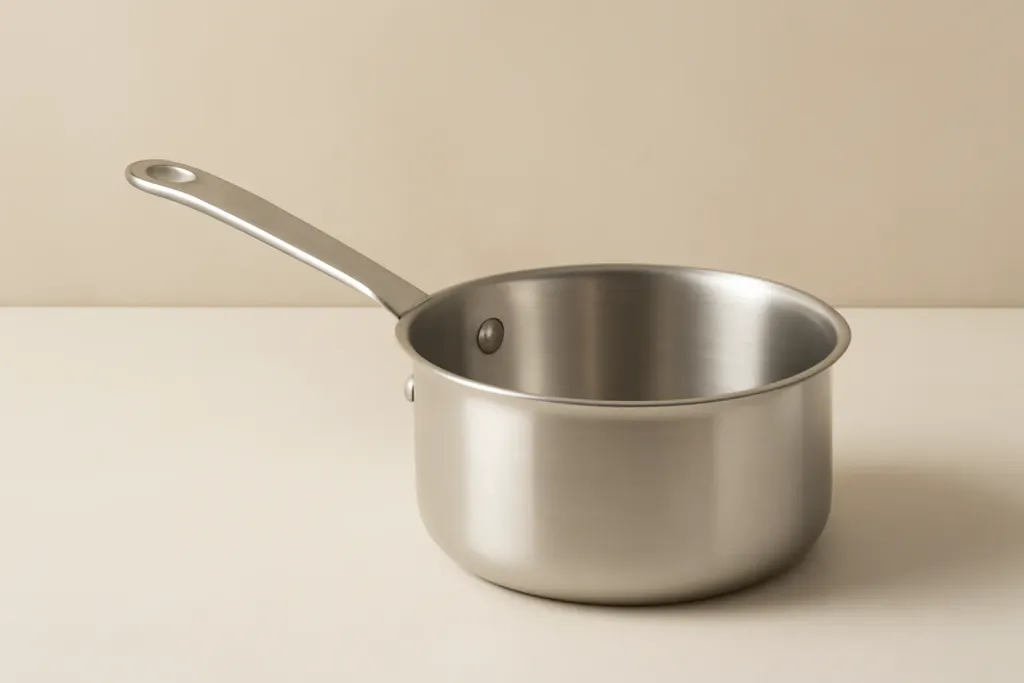
Stainless steel is one of the most common handle materials on modern cookware. It appears on sauté pans, saucepans, stock pots, and many clad pans because it is sturdy, straightforward, and broadly compatible with different cookware styles. For shoppers looking for cookware handle materials explained in practical terms, stainless steel is often the first material to compare because it is so widely used.
One reason it remains popular is its flexibility. Metal handles are often used on cookware that is intended for stovetop-to-oven cooking, and they are usually simple to clean. They do not require conditioning or special treatment in the way some other materials do. Many designs also use flattened profiles, thumb rests, or curved shapes to improve grip and control. Those details can matter as much as the base material itself.
There are tradeoffs, though. Stainless steel can transfer heat from the pan body, so the handle may become hot during cooking. A towel or mitt is often needed. A bare metal handle may also feel less secure if it is wet or greasy. Some people like the firm, rigid feel of stainless steel; others prefer something with more insulation. It is a dependable choice, but not automatically the most comfortable one for every cook or every task.
Cast Iron and Carbon Steel Handles
Cast iron and carbon steel cookware often use handles that are formed from the same metal as the pan body. That one-piece approach is common in skillets, grill pans, and Dutch ovens, and it gives the cookware a solid, unified feel. When cookware handle materials explained are discussed from a construction standpoint, these handles are a clear example of function first design.
A built-in metal handle can support a heavy piece of cookware without adding extra joints or separate attachments. That can be appealing if you want a simple design and are comfortable using a mitt or towel when needed. These handles are also usually compatible with high heat, depending on the manufacturer’s guidance, which is part of why this style remains common in classic heavy-duty cookware.
The main limitation is heat transfer. Cast iron, in particular, can hold heat for a long time, and the handle may become hot enough that careful handling is necessary. The weight of the pan can also make lifting, pouring, or transferring more tiring. Some larger pieces include helper handles to make movement easier, but a helper handle is not a substitute for good technique. These pans suit cooks who want rugged construction and do not mind a more hands-on approach to handling.
Wood Handles
Wood handles are often chosen for their warmer feel and lower heat transfer during normal stovetop use. They are common on some fry pans, specialty skillets, and cookware with a traditional look. Among the many cookware handle materials explained, wood is often the option buyers associate with comfort and a classic appearance.
A wood handle can feel pleasant in the hand and may stay cooler longer than bare metal under typical cooking conditions. It also adds a visual warmth that some shoppers prefer, especially if the cookware will be stored on hooks or displayed on open shelving. For people who value a familiar, less industrial look, that can be an important part of the buying decision.
Wood does come with care considerations. It should not be soaked for long periods, and it usually needs prompt drying after washing. Depending on the cookware and the maker’s instructions, wood may not be the best choice for prolonged oven use or dishwasher cleaning. The finish can also wear with time if the handle is not cared for carefully. That does not make wood a poor choice; it simply means the material suits cooks who are comfortable giving the handle a little extra attention.
Browse our recommended products
Our featured picks refresh periodically. While we update them, our editorial guides can help you find the right pick.
See our guidesSilicone and Soft-Touch Handles
Silicone and similar soft-touch materials are designed to improve comfort and reduce heat transfer. They are common on modern cookware, especially saucepans, nonstick pieces, and some sets built around easy handling. For many shoppers, these handles represent a practical middle ground between bare metal and more delicate materials.
A soft-touch handle may feel more comfortable during everyday tasks like stirring, draining, or moving a pan from one burner to another. Some designs include texture or inserts that help with grip when the handle is slightly damp. That can be useful in busy kitchens where quick movement matters more than a formal or polished look. In consumer terms, silicone and soft-touch materials are often about convenience.
The tradeoffs are important. These materials are not automatically suited to every oven temperature, broiler setting, or direct flame exposure. Exact limits depend on the cookware and the maker’s stated guidance. Soft-touch finishes can also show wear, residue, or discoloration more readily than plain stainless steel. If you want a handle that feels easier in the hand during routine cooking, this category can be appealing, but it still deserves a close look at the product instructions before purchase.
Plastic, Resin, and Bakelite-Style Handles
Plastic, resin, and Bakelite-style handles are common on budget-friendly cookware and some nonstick pans. They are often chosen because they are lightweight, easy to shape, and comfortable for everyday stovetop use. In a discussion of cookware handle materials explained, these materials often come up as practical options for buyers who want a cooler-feeling handle without moving to a more expensive construction style.
One advantage is that they typically do not conduct heat as quickly as bare metal. That can be useful for short cooking sessions and routine tasks where comfort matters more than high-heat flexibility. Manufacturers can also mold these materials into finger grooves, wider grips, or rounded shapes that feel secure in the hand. For people who lift pans often, that can be a meaningful advantage.
These materials do have limits. They are generally less suited to high oven heat and may not be appropriate for broiling. Some can scratch, dull, or discolor with repeated use and aggressive cleaning. Because the formulas and construction methods vary, the maker’s care guidance matters a great deal. These handles are usually a better fit for cooks who want basic comfort and simple stovetop use than for people who need broad temperature flexibility.
Rivets, Fasteners, and Handle Construction
The handle material matters, but the way the handle is attached matters too. A stainless steel handle fixed with solid rivets may feel different from a welded design, and a soft-touch handle over a core structure behaves differently from a one-piece metal handle. If you are studying cookware handle materials explained carefully, attachment style belongs in the same conversation.
Rivets are common because they create a strong connection between the handle and the pan body. They can also leave small contact points or seams on the interior, which may need extra attention when cleaning. Welded or seamless designs can be easier to wipe down, but the quality still depends on the specific product. Some cookware also uses helper handles or side loops to make lifting larger pieces more manageable, though those features do not remove the need for careful handling.
Stability is worth checking before buying if possible. A handle should feel secure and well balanced, not loose or top-heavy. Even a good material can feel unsatisfactory if the shape, attachment, or balance is poorly executed. Product descriptions that explain oven compatibility, care needs, and handle design can help you narrow the field before you choose.
How to Choose the Right Handle Material
The best handle material depends on how you cook most often. If you like moving cookware from stovetop to oven, stainless steel or another all-metal design is usually the most flexible option. If you cook mostly on the stovetop and want a handle that feels more comfortable in the hand, silicone, soft-touch, or certain plastic-resin handles may be more appealing. If you prefer a traditional look and are willing to do a little extra care, wood can be a sensible choice.
It also helps to think about the cookware itself. A lightweight nonstick skillet may pair well with a cooler-feeling handle, while a heavier saucepan may benefit from the rigid support of metal. The shape of the handle matters too. Length, curve, thickness, and texture can all affect how secure the grip feels, especially when transferring a full pan. Two handles may be made from the same material and still feel very different in practice.
Before buying, check the care instructions and temperature guidance carefully. That is especially important if you want dishwasher convenience, oven use, or broad versatility across different cooking methods. The most practical choice is usually the handle that fits your habits without requiring workarounds. Material alone does not tell the whole story, but it is one of the clearest clues to how the cookware will feel day to day.